We use cookies on our website to provide you with the best experience. Most of these are essential and already present.
We do require your explicit consent to save your cart and browsing history between visits. Read about cookies we use here.
Your cart and preferences will not be saved if you leave the site.
play

Dominique Bassal

Axet Remperimos Te (Blu-ray Audio)

Label: empreintes DIGITALes

Format: Blu-ray Audio

Genre: Electronic

In process of stocking

€11.80
VAT exempt
+
-
A single 70-minute work in seven rooms by Dominique Bassal, composed for 7.1 channels between 2014 and 2017: sound atmospheres from the ruined castle of an imaginary empire born when history skipped Antiquity altogether. Blu-ray audio.

Axet Remperimos Te is a single work in seven movements that Dominique Bassal composed in his studio in Montréal between August 2014 and December 2017, for 7.1-channel fixed medium. It lasts just over seventy minutes and is presented here on Blu-ray audio, mastered by the composer himself.

The piece rests on a uchronia. An accident on the main line of history erased Antiquity, and humanity jumped straight from the Neolithic to a medieval, absolutist planetary empire, mixing Roman implacability, pharaonic totalitarianism and the cruelty of dynastic China. The title is its motto, of uncertain meaning, something like “accept to crawl”. In the ruins of the castle that housed the world government, explorers find strange rooms in good condition, perhaps lairs of non-human masters, perhaps traps set by a resistance of mutants. Each movement reproduces the atmosphere of one room: Room 414, The Concession, with its falling glass pillars and mechanical lament; Room 103, Calculations and Metals, a factory of scribes and boiling cauldrons; Room 4, Knowledge, where science is reduced to memorised arithmetic; the 15-minute Room 1015, Junk Food, a gastric parlour for an obese elite; Room 635, Procession; and the grotesque fair of Room 752, Assorted Tricks. The booklet describes each room in a short, very dark text.

Born in Cairo in 1955, Bassal studied electroacoustic music, then worked for years in commercial music as arranger, producer and studio manager before returning to electroacoustics in 2001. He won Jeu de temps / Times Play in 2002, wrote The Practice of Mastering in Electroacoustics, and has been the mastering engineer of empreintes DIGITALes since 2004.

Blu-ray Audio (BD-R) in OGpak, empreintes DIGITALes IMED 20166, 2020.
Details
Cat. number: IMED 20166
Year: 2020
A mixture between the implacability of the Romans, the Greek hypocrisy, the totalitarianism of the Pharaonic civilization, the ethereal cruelty of dynastic China and, of course, the unfathomable stupidity of the Western Middle Ages. It is this uchronia that is described in the album we open tonight…Read more

Ha habido un accidente en la línea principal de la historia y como consecuencia se ha perdido toda la Antigüedad. El sueño de los Maestros del Universo se hizo realidad antes de tiempo: saltamos directamente del Neolítico al Medievo, fundando una civilización planetaria absolutista.

Una mezcla entre la implacabilidad de los romanos, la hipocresía griega, el totalitarismo de la civilización faraónica, la etérea crueldad de la China dinástica y, por supuesto, la insondable estupidez de la Edad Media occidental. Es esta Ucronía la que se describe en el disco que abrimos esta noche de Dominique Bassal titulado axet remperimos te. Ni siquiera estamos muy seguros del significado preciso de este lema del Imperio, algo así como “acepta gatear” o “acepta o te romperán”.

El compositor e ingeniero de sonido Dominique Bassal, estudió música electroacústica en un momento en el que esa disciplina estaba a la vanguardia de la tecnología de audio. Comenzó a trabajar en la producción de música comercial como arreglista y gerente de estudio, donde aplicó técnicas de vanguardia al mundo de la música pop, muy estricto y conservador en ese momento.

Bassal è entrato nel settore dell’elettroacustica e della produzione finalizzata al mastering e al sound designer nel 2001, diventando ben presto un punto di riferimento per la empreintes DIGITALes ed i suoi artisti (tra i tanti interventi potrei ricordare quelli su Andrew Lewis, Elizabeth Hoffman e Pierre Alexandre Tremblay).Read more

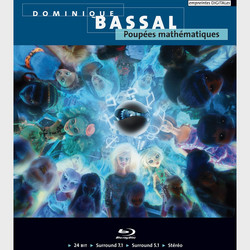
Bassal è entrato nel settore dell’elettroacustica e della produzione finalizzata al mastering e al sound designer nel 2001, diventando ben presto un punto di riferimento per la empreintes DIGITALes ed i suoi artisti (tra i tanti interventi potrei ricordare quelli su Andrew Lewis, Elizabeth Hoffman e Pierre Alexandre Tremblay). Nella musica acusmatica è quasi sempre difficile mediare il profilo tecnico con quello esclusivamente estetico e Bassal stesso ha avuto una trasformazione già intorno al 2012 quando pubblicò Poupées mathématiques, una raccolta di composizioni che cercava di dare una risposta ad un problema dei nostri tempi: “Is it possible to reconcile audiences with the notion of avant-garde creativity freed from “rebel” sonic attitudes?…” si chiedeva Bassal.

axet remperimos te è un pozzo di ricercatezze sonore e di riferimenti segreti che passano nelle grinfie dell’ucronia, in sintesi la narrazione di una storia alternativa a quella verificata; Bassal si inventa la perdita della storia dell’intera antichità umana, che si trova a vivere nel Medioevo in un clima di totale assolutismo dei governi.

Gli argomenti di Bassal non sono naturalmente lontani da quegli incubi che tartassano la mente delle persone intelligenti e degli stolti di ogni età, ossia un mondo di cui si percepiscono solo le rovine, sia in senso fisico che metaforico. Ma dentro le rovine Bassal pone l’accento sulle stanze che sono riuscite a conservare il loro aspetto ma delle quali si fa fatica a comprenderne l’utilità. In axet remperimos te Bassal ci ricorda indirettamente l’importanza del Il nome della Rosa di Umberto Eco, del cinema alla Brazil di Terry Gilliam, dei fumetti di Dylan Dog, della Fatherland di Robert Harris, dell’ambient music di Steve Roach e di tutta la materia trattata in soundtrack sull’argomento fantastico. Meglio di almeno 40 colonne sonore di Morricone.