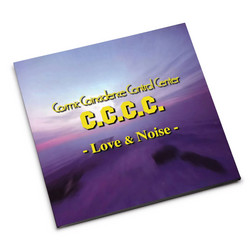
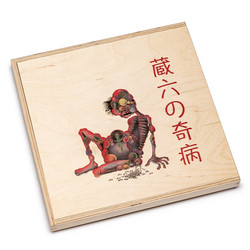
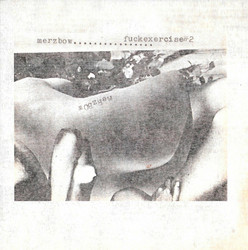
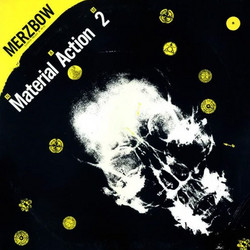
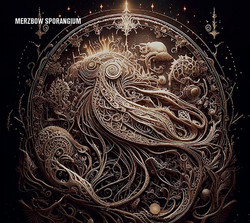
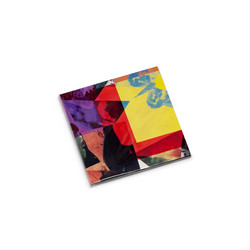
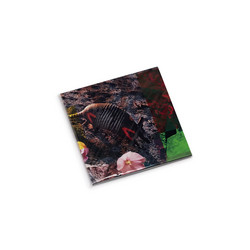
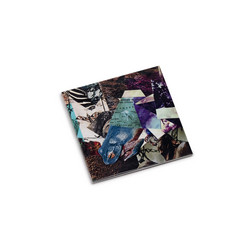
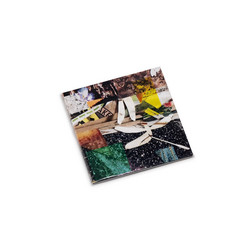
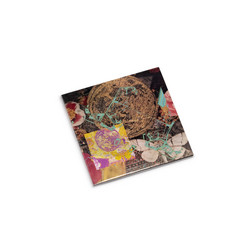
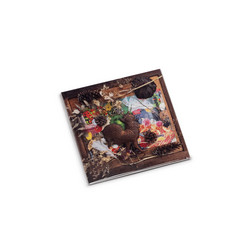
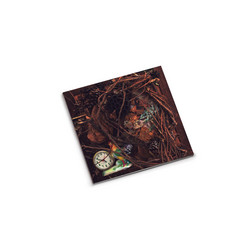
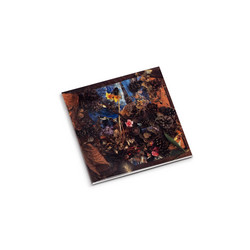
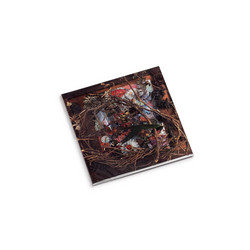
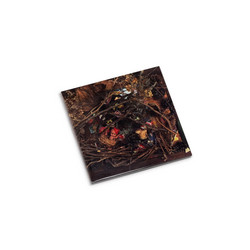
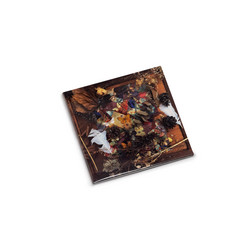
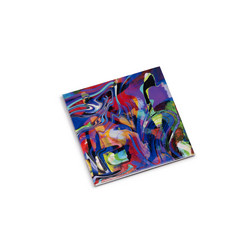
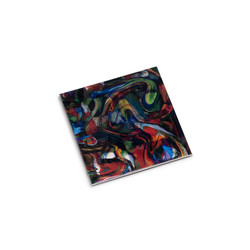
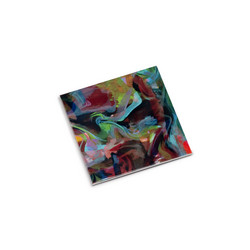
** Edition of 45 ** The Merzbow 108 CD Box is not a retrospective in the usual sense. It does not reduce Merzbow’s immense catalog to a manageable canon, package a career into a few representative gestures or pretend that radical sound can be summarized. Instead, it takes the opposite route: 108 compact discs of archive excavations, previously unreleased albums, alternate versions, rehearsal material, rarities and newer recordings, gathered into one immense edition by Osaka’s Slowdown Records. The number is deliberate. In Buddhist philosophy, 108 represents the bonnō, the worldly desires or afflictions that bind human beings to suffering. Here, it becomes both a conceptual frame and a fitting measure for the work of Masami Akita, whose music has spent more than four decades converting excess, pressure, decay and transformation into a rigorous art of listening.
Slowdown Records began working with Merzbow in 2018, initially considering a chronological campaign of out-of-print cassettes and archival material. At the time, however, several overseas labels were already pursuing reissues of the artist’s 1980s cassette catalog. Rather than join a race to reproduce familiar history, Slowdown chose a more difficult and more valuable path: to investigate the deeper reaches of the archive, releasing material that could not simply be found elsewhere. The result was a carefully structured series. Six individual CDs would appear, then be collected into a six-disc box named for the musical temperament of its period. Across eighteen such boxes, the project became less like a reissue program than a parallel discography - a new way of hearing Merzbow’s career from inside its unfinished rooms.
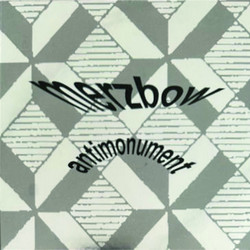
The archive is overwhelmingly made up of previously unreleased material. It includes complete albums such as Agni Hotra, Mighty Mice, Tensinkaku and Cat of Shell; alternate mixes linked to works including Battōtai with Memorial Gadgets, Antimonument, Ecobondage, Cloud Cock oo Grand, Tentacle, Arijigoku and Coma Berenices; outtakes from Tauromachine and Medamaya; and material originating in live rehearsals. Familiar titles and rare editions do appear - including Early Cassettes Box, Enclosure, Crosier Dsi Nezumi, 1633+, Gman + and Shōhin-shū - but the essential character of the project lies in discovery rather than repetition. This is the archive as a living organism, not a mausoleum.
Chronology provides the organizing principle, though it does not impose a false sense of stylistic progress. Merzbow’s history does not move in a straight line from noise to refinement or from analogue abrasion to digital abstraction. It branches, loops, tears itself apart and reconvenes under new conditions. Some periods yield torrents of material. Double Beat Sequencer, for example, fills six discs with recordings of strikingly consistent character, evidence of both the richness of the surviving sources and the depth of Akita’s commitment to a given process. Other chapters are more heterogeneous, shaped by the practical reality of what remained unreleased and by the series’ six-disc format. Together, the boxes show a body of work defined not by one sound but by sustained reinvention.
That range reaches far beyond the classic 1980s and 1990s cassette era most familiar to collectors. International labels have thoroughly mined much of that earlier material, while recordings from the 2000s have only more recently begun to re-emerge. Slowdown’s archive reaches decisively into the 2010s and beyond, revealing a continuing abundance of unreleased music from an artist whose productivity has never been a matter of mere volume. The box also incorporates 2017-2020, initially issued as a five-disc collection of original Slowdown albums - Kaoscitron, Kaerutope, Indigo Dada, Suzume-iro 1 and Suzume-iro 2 - now expanded to six discs with the addition of the 2025 work Mimesis. The inclusion completes the 108-disc total and folds new creation into the archival project rather than treating the past as a closed territory.
The scale of the edition is therefore inseparable from its argument. Merzbow’s work has always challenged the consumer fantasy that music should arrive as a stable, self-contained object. A recording can be a document of a particular instrument chain, a rehearsal procedure, an acoustic circumstance, a rhythmic obsession, a shifting ethical concern or a technical experiment still in motion. These discs make that process audible. They reveal not a single definitive Merzbow, but many Merzbows - analogue and digital, dense and skeletal, programmed and physical, corroded and strangely luminous.
Slowdown has already issued a substantial sequence of digital titles, including Mimesis and further recent material, extending the project beyond the finite physical monument of the 108-disc box. Yet this edition remains its defining statement: a limited set of 45 copies that realizes the long-held ambition to release 108 Merzbow titles through Slowdown.
6CD BOX-1 Early Sessions
6CD BOX-2 Early Cassettes Box
6CD BOX-3 Loop & Collage
6CD BOX-4 Strings & Percussion
6CD BOX-5 Tapestry Of Noise
6CD BOX-6 Metallic
6CD BOX-7 Green & Orange
6CD BOX-8 Laptop Noise
6CD BOX-9 Go Vegan
6CD BOX-10 Ship Of Chicken
6CD BOX-11 Arrangement
6CD BOX-12 Drum & Noise
6CD BOX-13 Horizon
6CD BOX-14 Double Best Sequencer
6CD BOX-15 2017-2020+Mimesis
6CD BOX-16 After Hours
6CD BOX-17 New Ear Control
6CD BOX-18 Fantail Vision
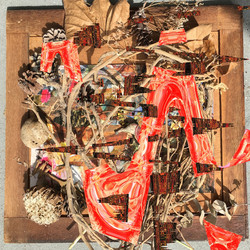
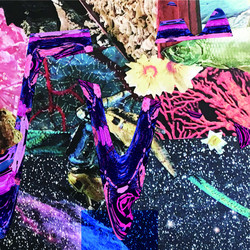
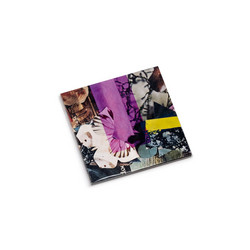
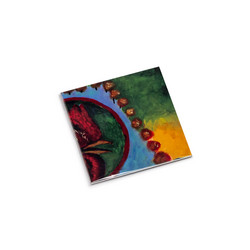
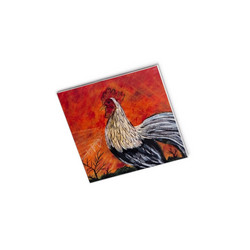
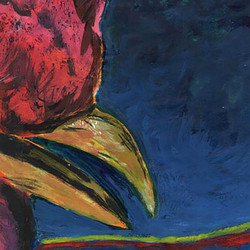
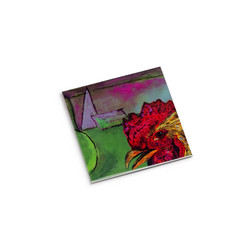
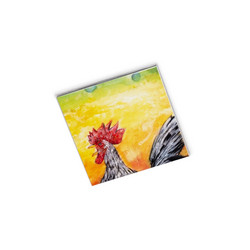
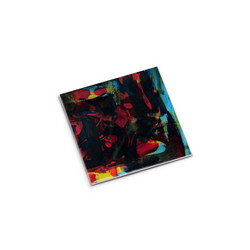
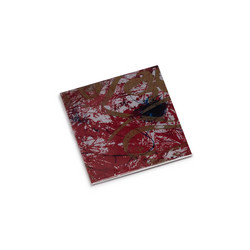
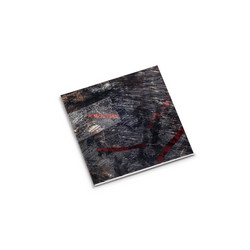
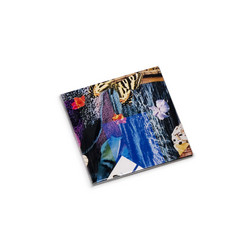
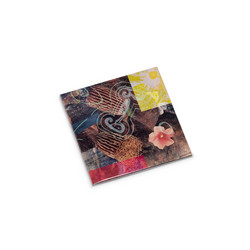
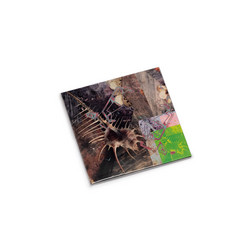
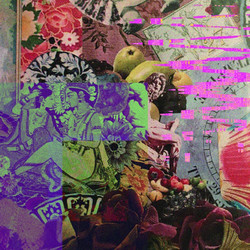
The 18 boxes are plain white, with a sticker applied, packed in a 50 x 14 x 14 cm carton (19.7 x 5.5 x 5.5 inches) with new color artwork by Masami himself.