Concealed Class
No Obituary
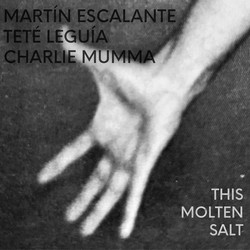
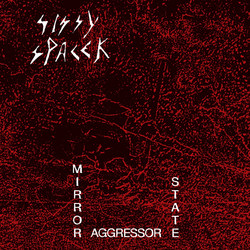
No Obituary introduces Concealed Class without ceremony, as if the project had always been operating at the edge of audibility and only now torn open a hole big enough for us to hear. The duo of Charlie Mumma and Matt Purse arrives with no soft framing and no narrative arc, only a slab of recording released by Helicopter/Troniks that feels like stepping straight into a room already on fire. Both artists are deeply embedded in the harsher ends of experimental music. Mumma’s work in Sissy Spacek, Sewer System and Unexamine has repeatedly driven grindcore, free improvisation and electronics toward collapse, finding form in implosion rather than riff or groove. Purse, via Unsustainable Social Condition, has cultivated a language of unrelenting electronic saturation and pressure, where the sound system itself seems to become the instrument.
Concealed Class doesn’t blend these histories so much as strip them down to their most unforgiving common denominator. No Obituary distils years of work with drums, tapes, vocals and junk metal into a singular focus on absolute electronics. The record is not a journey from one state to another; it is a sustained condition of overload. Electronics rupture and fold inward at punishing volume thresholds, scorched frequencies grinding into one another until any sense of “signal” and “noise” becomes meaningless. Feedback systems are allowed to roam just beyond control, continuously destabilising orientation: channels flip, phantom pulses appear, patches of near‑silence suddenly give way to sheets of searing high‑end or collapsing low‑frequency roar. Rather than building in recognizable arcs, the sound behaves like a pressure chamber in which the walls are always on the verge of giving out.
Yet within that extremity there is a clear, almost austere precision. No Obituary refuses the lazy chaos that sometimes passes for harshness. The density is tightly controlled, with layers of distortion grinding against each other in ways that constantly reconfigure depth and proximity. A particular band of feedback may dominate for a moment before being swallowed by a thicker, more granular field; clipped low‑end pulses chew tiny holes in the texture, only to be filled by a different strain of hiss. Presence and absence become compositional tools: what’s removed is as important as what remains, and each subtraction changes the pressure in the room. The recording rejects the comfort of build‑and‑release structures; instead, it maintains a brutal plateau where micro‑shifts carry the entire narrative weight.
The title, No Obituary, hints at the project’s refusal to frame destruction as an event with a before and after. There is no sense here of documenting wreckage from a safe distance, or of ritualising collapse into something cathartic. Concealed Class situates the listener directly inside the burn. Any separation between impact and aftermath is erased; the sound is both catastrophe and its lingering residue, experienced in real time. That refusal to step back also extends to aesthetics. There are no decorative textures, no atmospheric padding, no symbolic gestures to “darkness” or “violence.” What remains is the bare fact of electronic sound driven to the point where it starts to eat its own structure.
In this light, No Obituary reads as a statement of intent as much as a debut. It marks a point where two long‑running practices, already oriented toward extremity, choose to abandon everything except the core of what they do: manipulate electricity, space and volume until listening becomes indistinguishable from physical exposure. The record doesn’t offer lessons or redemption. It offers a field of unstable energy, relentlessly tuned and meticulously harsh, in which the only narrative is whether you stay inside it or step away.