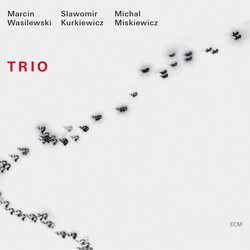
Soul of Things is the album on which Tomasz Stańko brought his young Polish band to ECM, after label projects that had mostly used international line-ups. It is a single suite of thirteen numbered variations, mostly ballads, played around the dark, low trumpet tone he had made his own. Released in March 2002, it also introduced the trio of pianist Marcin Wasilewski, which would later record for ECM under its own name.
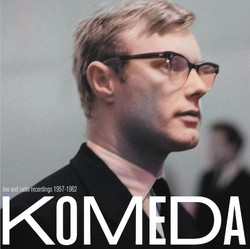
Wasilewski, bassist Sławomir Kurkiewicz and drummer Michał Miśkiewicz had played with Stańko since their teens, and together they were roughly his age combined. The quartet recorded in August 2001 at Rainbow Studio in Oslo, with Manfred Eicher producing. All thirteen pieces are Stańko's. The album followed From the Green Hill, his ECM set with a pan-European group, and Litania, his tribute to the composer Krzysztof Komeda.
The variations are not built on one shared theme. They work rather as a sequence of moods, and the band treats each as a short, open song. Jazzwise found the writing theme-heavy and poised, yet often close to the blues, which is surprising in music this abstract. The first sets a film-noir atmosphere, with brushed drums and an attentive bass under the trumpet. Later pieces move between modal improvisation and written passages, and in the eleventh variation Stańko lets out a raspy cry that Miśkiewicz answers with a rising wash of cymbals. ECM's notes hear memories of Miles Davis and Chet Baker in his soliloquies, while Jazzwise also caught the ghost of Clifford Brown.
The record won a Diapason d'Or, a Choc in Jazzman and a CD des Monats in Stereoplay. In Jazzwise, Stephen Graham called it "a deft, beautiful work" and argued that as a composer Stańko "is a natural and equal successor to the great Krzysztof Komeda". Chris Parker, for BBC Music Magazine, heard "music of great intimacy, basically meditative in overall tone". In Die Zeit, Peter Rüedi traced its allusions back to the Hejnał, the trumpet call of Kraków, mentioned in the liner notes.
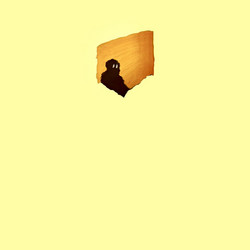
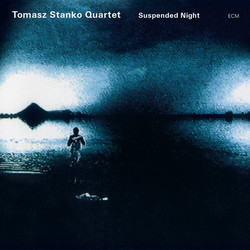
This is the CD edition, ECM 1788, first released in March 2002. It runs about 75 minutes, and the cover is a still from Jean-Luc Godard's Éloge de l'amour on the cover.