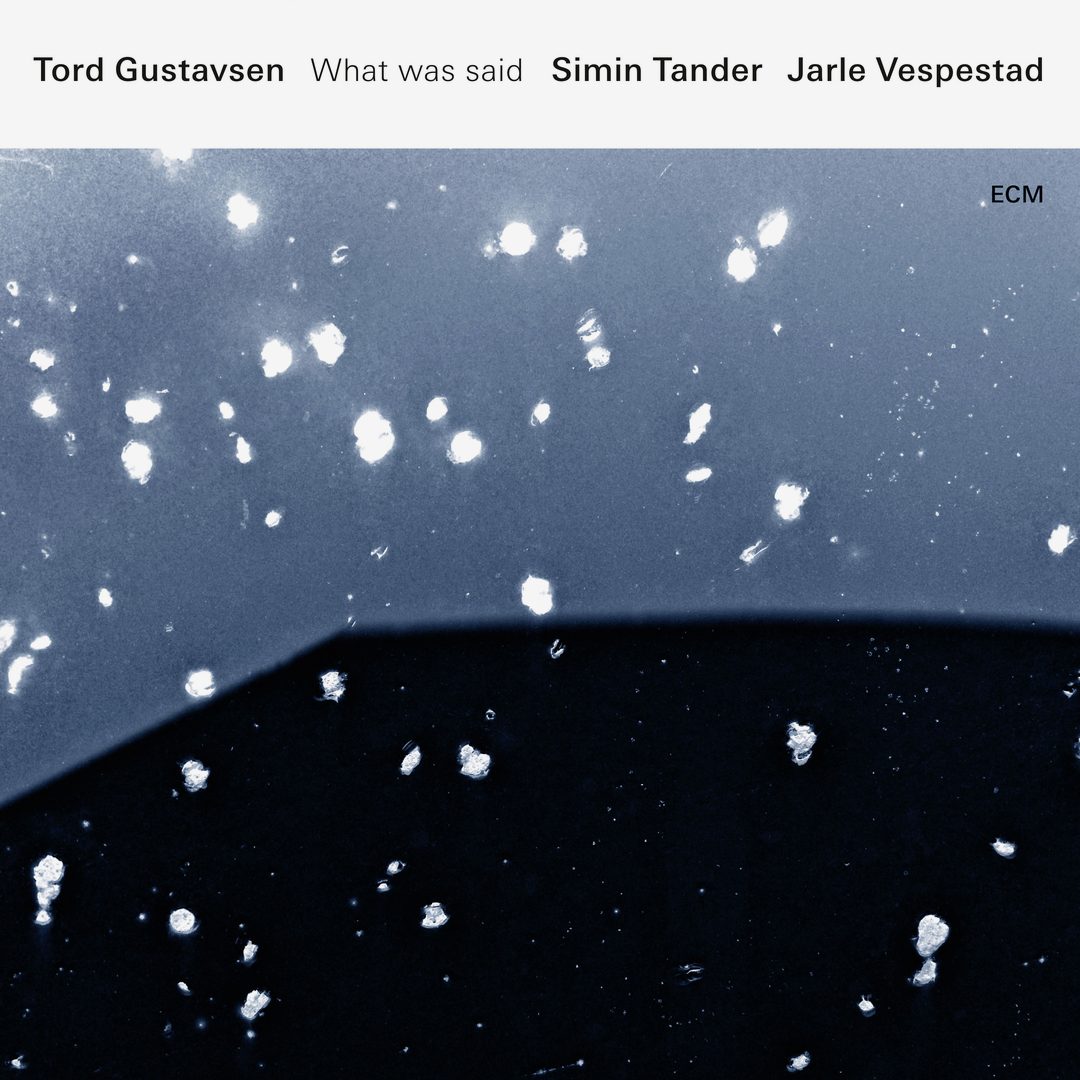
Tord Gustavsen, Simin Tander, Jarle Vespestad
What Was Said
FormatCDLabelECM RecordsGenreJazz & Improvisation
Arriving from the supplier (ships as soon as it reaches us)
Tracked express shipping from Italy, no customs or import VAT in the EU. Shipping costs
On What Was Said the Norwegian pianist Tord Gustavsen returns to the hymns he grew up with, now sung in Pashto by the German-Afghan vocalist Simin Tander. With his longtime drummer Jarle Vespestad completing a trio without bass, it is the most vocal record of his ECM output and the first to bring electronics into his acoustic sound.
Gustavsen and Vespestad had played together since Changing Places, the 2002 trio album that opened Gustavsen's ECM catalogue. According to The Jazzmann, the bassless format began with a duo concert in Paris, after a cancelled flight kept the bassist and saxophonist away. For this project Gustavsen and Tander worked with an Afghan poet to translate and reshape the Norwegian hymns into Pashto. Gustavsen described the result as a space "where I feel that Sufism and Christianity actually meet". Tander also sings, in English, verse by the Persian mystic Jalaluddin Rumi and the American poet Kenneth Rexroth. Gustavsen plays piano, electronics and synth bass. The album was recorded in April 2015 at Rainbow Studio in Oslo, with Jan Erik Kongshaug engineering and Manfred Eicher producing.
The thirteen pieces alternate hymn settings, poems and instrumentals. I See You, a Brorson hymn, introduces the discreet electronics alongside Tander's wordless improvising. I Refuse, on the Rexroth poem, is sung in English and sits at the centre of the album. In What Was Said to the Rose a Rumi text leads into Hassler's O Sacred Head, played as a long instrumental dialogue between piano and drums. The instrumental Rull recalls the earlier trio, and the closing Sweet Melting Afterglow starts from an improvisation on voice, mallets on cymbals and an organ-like drone.
In The Guardian (2016), John Fordham heard "a beguiling new Gustavsen collaboration", built on Tander's "hummed tones, sighing note-bends and pristine inflections". Ian Mann, in The Jazzmann, called it Gustavsen's "most personal and spiritual album to date", the furthest removed from conventional jazz of his records so far. Mark Sullivan in All About Jazz noted that the group works as a true trio, not as a singer with accompanists.
CD edition, ECM 2465, released on 29 January 2016.
Release notes
Recorded April 2015 Rainbow Studio, Oslo An ECM Production ℗ © 2016 ECM Records GmbH, München
| 1 | Your Grief | 2:45 | |
| 2 | I See You | 5:08 | |
| 3 | Imagine The Fog Disappearing | 6:20 | |
| 4 | A Castle In Heaven | 4:46 | |
| 5 | Journey Of Life | 7:21 | |
| 6 | I Refuse | 5:38 | |
| What Was Said To The Rose / O Sacred Head | |||
| 7.1 | What Was Said To The Rose | ||
| 7.2 | O Sacred Head | ||
| 8 | The Way You Play My Heart | 3:01 | |
| 9 | Rull | 3:02 | |
| 10 | The Source Of Now | 4:19 | |
| 11 | Sweet Melting | 3:20 | |
| 12 | Longing To Praise Thee | 4:26 | |
| Sweet Melting Afterglow | |||
| 13.1 | Part I – Afterglow | ||
| 13.2 | Part II – Sweet Melting | ||
- Sascha Kleis
- Design
- Jarle Vespestad
- Drums
- Jan Erik Kongshaug
- Engineer
- Tord Gustavsen
- Lyrics By [Lyrics Edited By] (2, 4, 5, 11, 12, 13.2), Piano, Electronics, Synth [Synth Bass]
- Max Franosch
- Photography By [Cover Photo]
- Francesco Saggio
- Photography By [Liner Photos]
- Øyvind Hjelmen
- Photography By [Liner Photos]
- Manfred Eicher
- Producer [Produced By]
- Naqib Sermelwall
- Translated By [In Cooperation With] (2, 4, 5, 11, 12, 13.2)
- Simin Tander
- Translated By [In Cooperation With] (2, 4, 5, 11, 12, 13.2), Voice