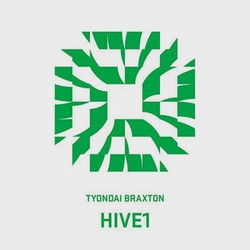
Tyondai Braxton’s Splayed Werks (his first full-length since the 2022 Telekinesis sessions) opens a new chapter: over 70 minutes of electronics and detailed sound design spread across 15 tracks, most under five minutes, favoring shorter forms over his previous long-format work. The album merges recent compositions with pieces written across the last decade—reworked, remastered by Matt Colton, and sequenced into a single continuous statement that reads less like a compilation and more like a realized, evolving project. Included are prior singles (Dia / Phonolydian, Multiplay), commissioned pieces (“4 Zones,” “K Space”), and unreleased material, all reshaped to trace a compositional arc in real time.
Sonically and contextually, Splayed Werks reflects both global shifts in experimental music and Braxton’s personal evolution. Its episodic, atmospheric scope balances darkness and light, rhythm and texture, raw playfulness and precision—situating the record at the intersection of club-ready energy, art-installation sensibility, and academic rigor. The album’s forms respond to a music ecosystem altered by streaming, algorithmic exposure, and blurred lines between “album” and “collection,” while leaning into intuitive, handcrafted production rather than purely algorithmic aesthetics. Braxton’s two-decade trajectory—from co-founding Battles and collaborating with Philip Glass, to composing for leading new-music ensembles and presenting large-scale installation/performance works—feeds directly into the record’s hybrid character.
On a personal level, Splayed Werks channels changes in Braxton’s life: fatherhood, a Princeton composition professorship, and the stability of a home studio have shifted his priorities toward finishing work without over-preciousness. That freedom yields a diverse yet cohesive palette—dance-leaning minimalism, IDM influences (Aphex Twin, Autechre), and contemporary immersive artists—while remaining distinctly his. Tracks range from jittery, rhythm-driven pieces (“Nimble FX,” “Multiplay”) to sprawling, textural closers (“4 Zones,” “K Space”), mixing synthetic grit with pastoral touches (birdcalls) and moments of unexpected grandeur. The result is a multidimensional, instinctive record that, as Braxton says, becomes its own personality once finished—and captures who he is in 2026.