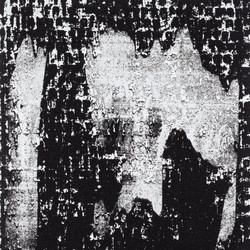
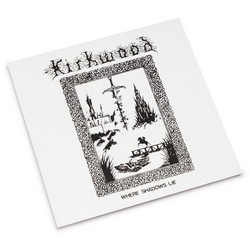
Through a Dark Glass finds Jim Kirkwood deep in the world he has been patiently etching for decades: a twilight borderland between British pagan folklore, dungeon synth atmospherics, and early symphonic black‑metal romanticism. Working once again as a solitary architect, Kirkwood builds the album from brooding synthesizers, spectral choirs, chiming melodies and slow, processional rhythms that feel more like ritual steps than rock beats. The “dark glass” of the title is both an image and a method: everything here is seen indirectly, as if reflected in tarnished mirrors or stagnant water, familiar fantasy tropes warped by time and personal obsession.
Musically, the record leans into Kirkwood’s gift for long‑form narrative composition. Themes emerge slowly from low‑lying drones, gathering colour and detail as string‑like pads, bell tones and wordless voices are added to the frame. At crucial moments, martial percussion or tolling, organ‑like chords push the music into more dramatic territory, but the overall pacing remains patient, even stately. Where some dungeon synth sketches suggest quick vignettes, Through a Dark Glass feels more like a sequence of chapters in a single, unfolding tale. Motifs recur across tracks, transformed and refracted, creating the sense of an inner mythology revisited from different angles.
Through a Dark Glass finds Jim Kirkwood deep in the world he has been patiently etching for decades: a twilight borderland between British pagan folklore, dungeon synth atmospherics, and early symphonic black‑metal romanticism. Working once again as a solitary architect, Kirkwood builds the album from brooding synthesizers, spectral choirs, chiming melodies and slow, processional rhythms that feel more like ritual steps than rock beats. The “dark glass” of the title is both an image and a method: everything here is seen indirectly, as if reflected in tarnished mirrors or stagnant water, familiar fantasy tropes warped by time and personal obsession.
Musically, the record leans into Kirkwood’s gift for long‑form narrative composition. Themes emerge slowly from low‑lying drones, gathering colour and detail as string‑like pads, bell tones and wordless voices are added to the frame. At crucial moments, martial percussion or tolling, organ‑like chords push the music into more dramatic territory, but the overall pacing remains patient, even stately. Where some dungeon synth sketches suggest quick vignettes, Through a Dark Glass feels more like a sequence of chapters in a single, unfolding tale. Motifs recur across tracks, transformed and refracted, creating the sense of an inner mythology revisited from different angles.