Pablo's Eye
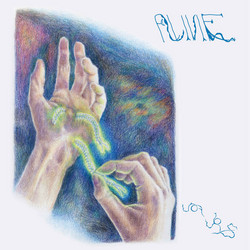
Everything You Giveaway (LP)
Tracked express shipping from Italy, no customs or import VAT in the EU. Shipping costs
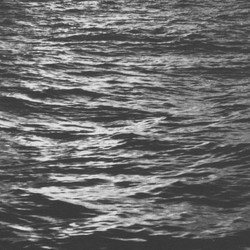
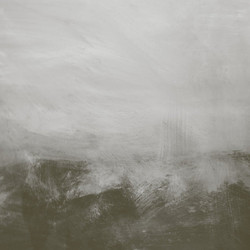
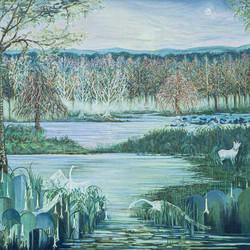
Everything You Giveaway feels like a record built around a single, small gesture: a woman sitting by the sea, unconsciously loosening one jade earring while the man beside her skims green pebbles into the waves. The moment passes almost unnoticed, but later, in bed, she discovers that one earring is gone. Instead of panic, she feels relief. In her mind’s eye, she sees it lying on the seabed, indistinguishable from the stones he threw. “The best place to hide a leaf is in a tree,” she thinks, echoing the logic at the heart of Richard Skinner’s poem “a remoteness from the centre” (from the light user scheme, Smokestack Books, 2013). That line – and the short narrative wrapped around it – becomes the emotional axis for Everything You Giveaway.
In typical Pablo’s Eye fashion, the text is not treated as a literal script but as a set of images to be dissolved into sound. The waves breaking become slow, undulating pulses; the green pebbles, small percussive or melodic events that vanish almost as soon as they appear; the jade earrings, bright timbral flashes that suddenly go missing from the texture. The music hovers in a state of “remoteness from the centre,” circling around implied themes rather than landing on them. What matters is not the dramatic revelation of the loss, but the quiet, inward turn that follows – the sense that giving something away, or losing it, can sometimes feel like placing it more deeply inside the world, hidden in plain sight.
The album’s title, Everything You Giveaway, makes Skinner’s line universal. It’s not just about earrings and pebbles, but about all the things we let slip – relationships, secrets, fears, versions of ourselves – and how they might be absorbed by the environments we move through. The seaside setting is both literal and metaphorical: a place at the edge, where solid ground meets shifting water, and where it’s easy to imagine objects sinking out of view, merging with their surroundings. Pablo’s Eye use this as a frame for their sound-world: a gentle, porous music where elements arrive, mingle and recede, and where the distinction between foreground and background is constantly eroded.
This approach aligns with the group’s long-standing interest in spoken word, ambient drift and cinematic suggestion. Here, the poem’s final line operates almost like a compositional rule: hide things in their own element. Melodies surface only to dissolve back into textures that resemble them; voices appear briefly and then disappear into a murmur of similar frequencies; a motif is introduced, then later “lost” inside a denser arrangement. As listeners, we are invited to experience the same subtle shift the woman feels: the movement from anxiety to acceptance, from clinging to an object to recognising its place in a larger pattern.
Everything You Giveaway thus becomes less a straightforward adaptation of Skinner’s poem than a kind of extended footnote to it. By dwelling on that moment by the sea – the waves breaking, the casual gestures, the delayed discovery – Pablo’s Eye offer a sonic meditation on how we hide, how we surrender, and how the world quietly absorbs everything we let go.