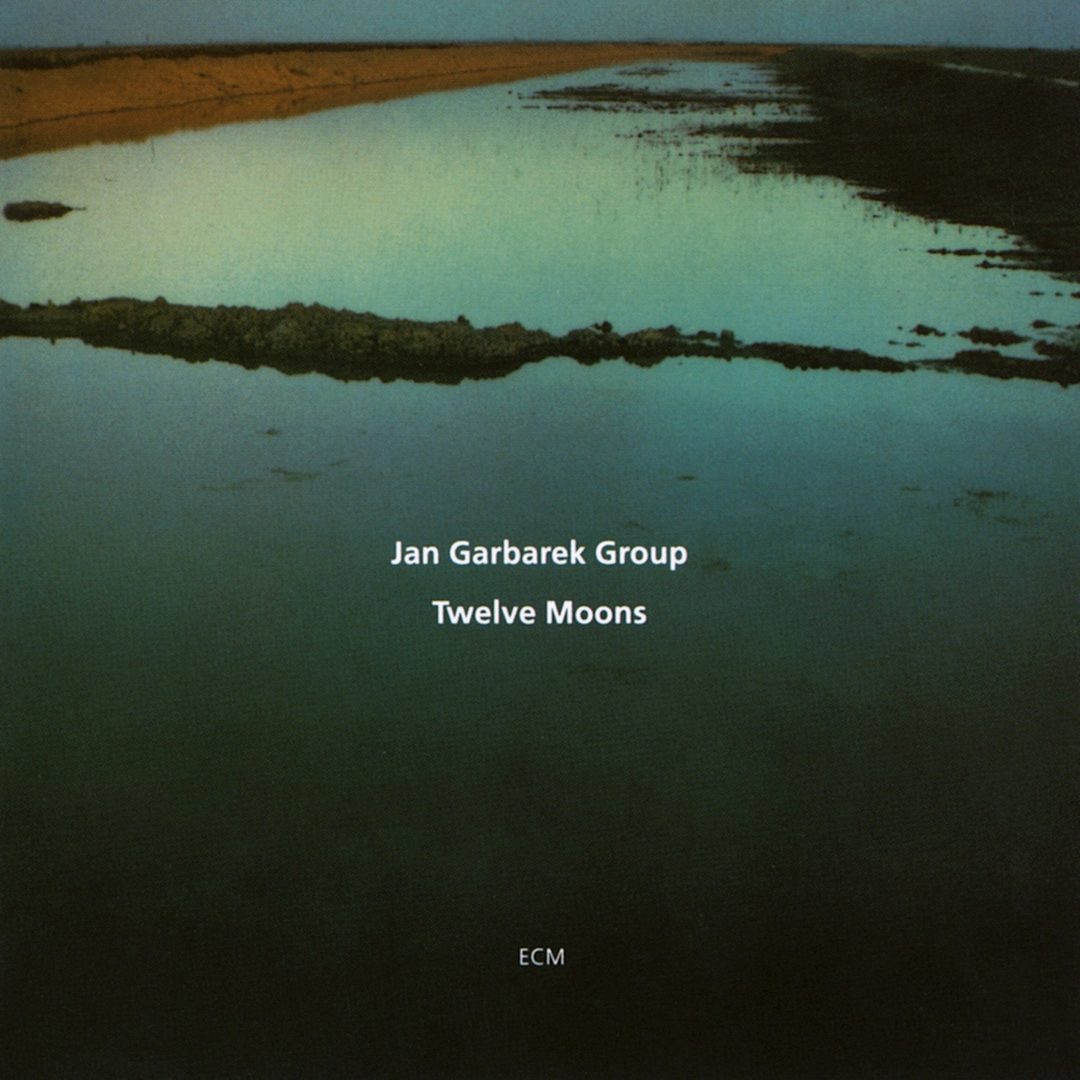
Jan Garbarek Group
Twelve Moons
FormatCDLabelECM RecordsGenreJazz & Improvisation
Arriving from the supplier (ships as soon as it reaches us)
Tracked express shipping from Italy, no customs or import VAT in the EU. Shipping costs
Released in April 1993 as ECM 1500, the label's five-hundredth catalogue number, Twelve Moons is one of the broadest albums by the Jan Garbarek Group. The Norwegian saxophonist sets his own themes beside traditional songs, a piece by Edvard Grieg, a song by the singer Mari Boine and a tune by Jim Pepper. The sound is spacious and melodic, carried by a strong rhythm section and two guest voices.
Garbarek plays soprano and tenor saxophones and synthesizers, with Rainer Brüninghaus on piano and synthesizers, Eberhard Weber on bass, Manu Katché on drums and Marilyn Mazur on percussion. Mari Boine sings on her own composition, and Agnes Buen Garnås on one of the traditional pieces. The album was recorded at Rainbow Studio in Oslo in September 1992, produced by Manfred Eicher with Jan Erik Kongshaug as engineer. The line-up changes from track to track, and only a few pieces use the whole group.
The title track, in two parts, opens the album with soprano saxophone and synthesizers over drums and percussion. Psalm sets a traditional melody with words by Elling Hansen, sung by Agnes Buen Garnås over soprano saxophone, bass and percussion. On Darvánan Boine's voice meets Garbarek's tenor alone, without the band. Grieg's Arietta becomes a slow piece for soprano saxophone, piano, bass and percussion. Gautes-Margjit, another traditional melody, is a twelve-minute piece for tenor and the full group, with Katché's drums prominent. The closing Witchi-Tai-To by Jim Pepper is a tune Garbarek had already recorded as the title piece of his 1974 quartet album with Bobo Stenson.
In Jazz Journal in October 1993, Michael Tucker found the album fitting for the 500th ECM release. He heard its range of material as closer to a concert than Garbarek's more unified earlier records. Its roots, for him, lay in the jazz of the late 1950s and 1960s and in Nordic folk music. He wrote that There Were Swallows ... could "recall the poise and potency of Weather Report at their best", and ended with "Thoroughly recommended, both to long-term enthusiasts and anyone who wishes to sample the poetry".
This is the CD edition, catalogue number ECM 1500, of the album first released in April 1993.
Release notes
arvato written in Matrix / Runout Universal logo appears 4 (four) times in matrix / runout Recorded September 1992 at Rainbow Studio, Oslo An ECM Production
| Twelve Moons | |||
| 1.1 | Part One: Winter-Summer | ||
| 1.2 | Part Two: Summer-Winter | ||
| 2 | Psalm | 6:32 | |
| 3 | Brother Wind March | 10:17 | |
| 4 | There Were Swallows ... | 8:36 | |
| 5 | The Tall Tear Trees | 5:45 | |
| 6 | Arietta | 6:21 | |
| 7 | Gautes-Margjit | 11:53 | |
| 8 | Darvánan | 4:54 | |
| 9 | Huhai | 7:29 | |
| 10 | Witchi-Tai-To | 5:43 | |
- Eberhard Weber
- Bass
- Barbara Wojirsch
- Design [Cover Design]
- Manu Katché
- Drums
- Jan Erik Kongshaug
- Engineer
- Rainer Brüninghaus
- Keyboards
- Marilyn Mazur
- Percussion
- Jan Jedlička
- Photography By
- Manfred Eicher
- Producer
- Agnes Buen Garnås
- Vocals [Vocal]
- Mari Boine
- Vocals [Vocal]