Alan Licht's minimal Top Ten
Alan Licht's revelatory lists of rare and obscure minimalism releases.
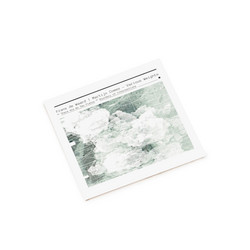
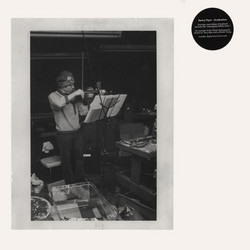
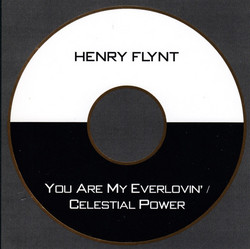
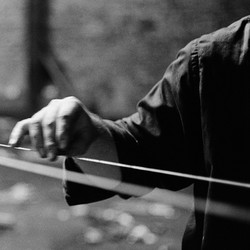
See allCD with an eight-page booklet of notes by the artist. One continuous take of forty-two minutes, recorded at Inroads, a loft performance space in lower Manhattan, on 16 June 1981. Henry Flynt plays solo electric violin. The tambura drone underneath it is played by Catherine Christer Hennix, who appears twice more in this selection under her own name. The two of them on one record is the closest this music ever came to a summit meeting, and almost nobody heard it: the recording sat unreleased until 1986, when it came out on a German cassette in an edition of 350.
Flynt described the sound as an open plain that could absorb anything, and was specific about why the instrument had to be electric: the timbre, he said, was what let him crush the diverse styles into a unity. Those styles are southern blues, Appalachian fiddle, modal jazz and North Indian raga, held together over a single unmoving drone and not alternated but fused. His own name for the genre was New American Ethnic Music. Elsewhere he called it avant-garde hillbilly.
He was born in Greensboro, North Carolina, in 1940, played classical violin as a child, and went to Harvard on a scholarship as a mathematics major, where Tony Conrad was a classmate. In 1961 he coined the term concept art, meaning art whose material is concepts, which came out of his critique of the foundations of mathematics and has little to do with the Conceptual Art the galleries later adopted. In 1963 he picketed the Museum of Modern Art and Lincoln Center with Conrad and Jack Smith. In 1964 he demonstrated twice against Stockhausen, on the charge of white supremacy and cultural imperialism. In 1966 he played briefly in the Velvet Underground, standing in for John Cale. As Flynt writes in the liner notes, "The electric violin timbre is crucial; it allows me to crush the diverse styles into a unity. I imagined the genre as open, radiant improvisation ... an open plain that could absorb anything." Incorporating themes and melodic phrases from his earlier work, Everlovin' becomes Flynt's own Gesamtkunstwerk – a work that is at once rooted in and liberated by the drone, revealing the profound mutability and utter singularity of this American iconoclast.
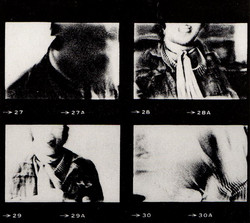
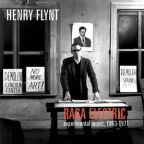
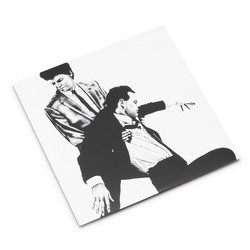
He also studied with Pandit Pran Nath, which is the thread running through half the records in this list. The photograph on the sleeve is by Peter Moore, the man who photographed Fluxus.