Phill Niblock
Rhymes With Water (LP)
LabelGod RecordsGenreExperimental
In stock (ships within 1-2 working days)
Tracked express shipping from Italy, no customs or import VAT in the EU. Shipping costs
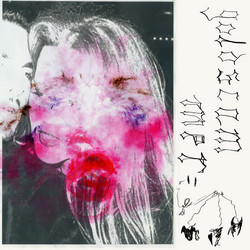
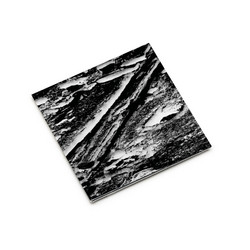
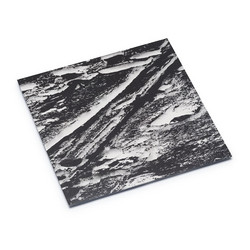
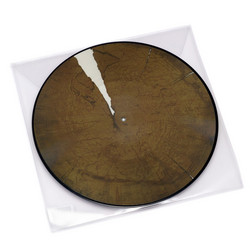
LP on God Records, Vienna, 2017. Two pieces, one per side, nineteen and twenty-one minutes. Both were commissioned by the players themselves rather than by an institution, which is unusual and says something about the standing Phill Niblock had among the people who actually had to perform this music.
DreGliss, from 2015, is for Erik Drescher and the glissando flute. The instrument is worth explaining, because the piece is unthinkable without it. It is a normal Boehm flute fitted with a headjoint invented by Robert Dick, who got the idea from the whammy bar on an electric guitar and developed it with three flutemakers. The headjoint telescopes: a silver tube slides inside a carrier, worked by two wings that extend from the lip plate, so the player can lengthen the air column while blowing. The bend available depends on the note. A first-finger C natural will slide all the way down to A flat; the low B moves a whole tone. Somewhere between a major third and a major second, continuously, on any note.
Give that to Niblock and the result is predictable and still startling. He takes tones that already refuse to sit still and layers them until the tuning between them is no longer decidable. Drescher's tones were recorded in Cologne, at Piethopraxis, by Marcus Schmickler. Nataliawork, from 2005, is for Natalia Pschenitschnikova on bass flute and voice, with tones recorded in Berlin by Thomas Ankersmit. The voice is what makes this side different from most of the catalogue. It arrives briefly and sits in a slightly discordant relation to something close to tonality, which is not a place Niblock usually goes, and it puts a body back into music that normally hides the person producing it.
The rest is the method he used for fifty years. Single sustained tones, tuned fractionally apart, stacked until the intervals beat and throw off notes that exist in the room rather than on the record. It changes with the acoustics of the space and with the position of your head, and it wants volume.