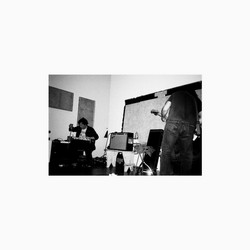
Within ATMO’s division of labour, Hassan works with keyboards, voice and percussion, shaping each piece around the grain of her delivery and the contour of her lyrics. Sometimes she speaks, sometimes sings; sometimes her voice slips toward chant or incantation, threading through the mix as much as riding on top of it. Buletti, in turn, tends the rhythmic and infrastructural side: drum computers, sequencing and electronics provide the underlying scaffolding, a lattice of pulses and tonal beds. Yet this is not a strict digital/analog split. The programmed elements are continually extended and disturbed by acoustic sources – balafon, rumba box, flutes, shakers, ceramics, stray field recordings – that add a lived, tactile dimension. The music grows out of the friction and fit between these elements, the way a rigid grid can be softened by the touch of hands and the unpredictability of air in a flute or a shaker in a room.
Across seven tracks, Attacco morbido unfolds through gently insistent rhythmic patterns and fragments of text that feel as if they’ve been overheard mid‑thought. Rather than telegraphing clear verse‑chorus structures, ATMO favour songs that seem to assemble themselves in real time: a drum‑machine figure repeats until the smallest shift feels seismic; a keyboard line appears, then reappears in altered form; a vocal phrase circles, mutters, opens into fuller melody. Programmed structures and acoustic gestures overlap – sometimes locking together in brief moments of alignment, sometimes drifting out of phase and back again. That interplay is shaped by proximity and attention: you can hear the musicians leaving space for each other, adjusting touch and density as if they were navigating a shared, invisible map.
The album was recorded over several sessions between autumn 2024 and spring 2025, giving the material time to settle and change shape. Buletti handled recording and mixing, preserving the music’s hushed, close‑mic’d intimacy while allowing small details – a breath on the mic, a stick on wood, a radio‑like hiss – to remain audible inside the arrangements. Mastering by Giovanni Conti at Artefacts Studio in Berlin sharpens the contours without flattening the dynamic range, keeping the “soft attack” of the title intact: sounds arrive gently but leave clear impressions. The closing piece, “Ech na (sognando una barca)”, has a particular history within the sequence. It had lived for some time in Hassan’s live sets in various forms; here, it finds a definitive incarnation, its dream of a boat carrying the album out into open water.
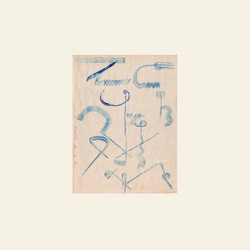
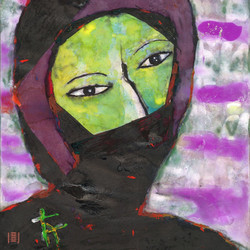
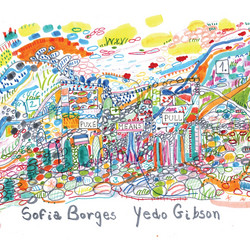
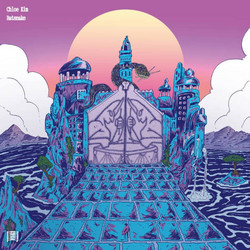
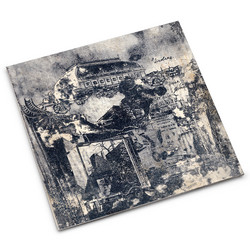
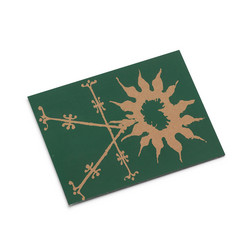
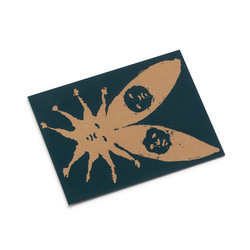
Visually, Attacco morbido is framed by artwork from Chago, with risography by Laconcongrelos and serigraphy by Luis Bazán, extending the project’s tactile, small‑scale sensibility into the printed object. Taken together, these elements present ATMO not as a one‑off studio pairing but as a slowly evolving collaboration rooted in shared histories, parallel practices and a common trust in what can happen when machines are allowed to breathe and songs are given room to arrive at their own pace.
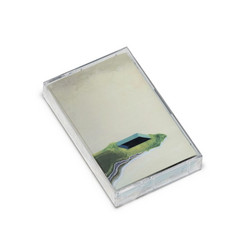
Locally screen-printed cardboard envelope with eco-friendly water based ink. Risograph printing card.