Hans Werner Henze
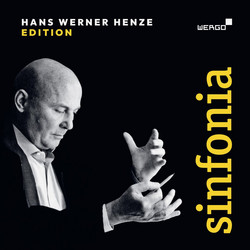
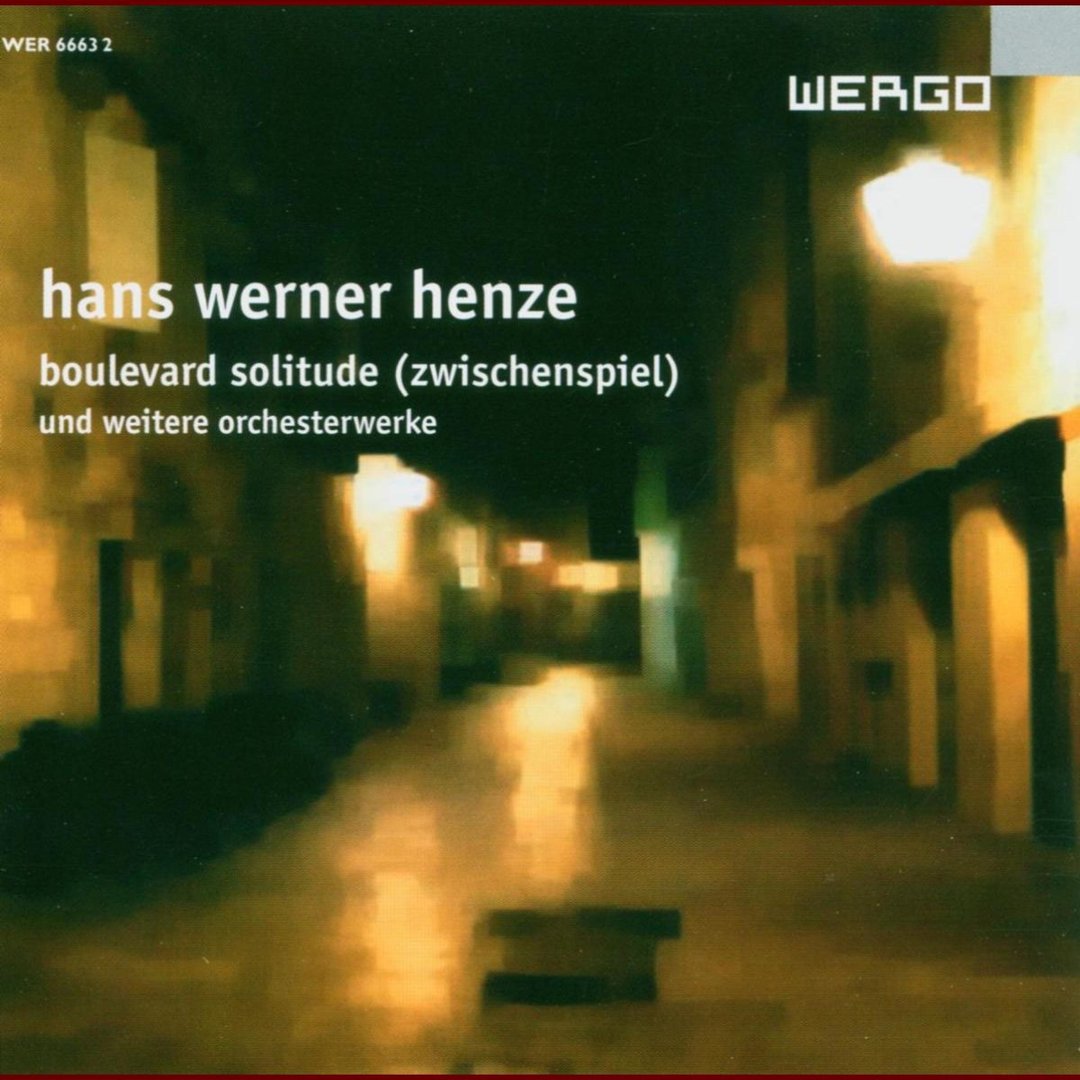
Boulevard Solitude Zwischenspiele / Ballett-Variationen / Kammerkonzert / Concertino / Rosa Silber
FormatCDLabelWergoGenreComposition
Arriving from the supplier: On backorder (ships as soon as it reaches us)
Tracked express shipping from Italy, no customs or import VAT in the EU. Shipping costs
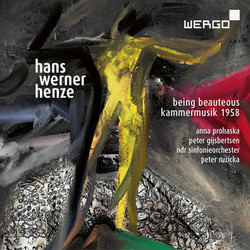
Five works from Hans Werner Henze's early years, 1946 to 1951, in which the music seems to dance. The programme moves from the Ballett-Variationen and the Klee-inspired Das Vokaltuch der Kammersängerin Rosa Silber to the symphonic interludes of his full-length opera Boulevard Solitude, with two concertante pieces for piano in between.
Henze was born in Gütersloh in 1926 and died in Dresden in 2012. After the war he returned to his studies in Heidelberg in 1946 with Wolfgang Fortner, and he attended the Darmstadt courses from their first year. In 1953 he settled in Italy. The NDR Sinfonieorchester is conducted by Peter Ruzicka, with Christopher Tainton at the piano and Matthias Perl on flute. The sessions took place between September 2002 and August 2003 in coproduction with Norddeutscher Rundfunk. The booklet includes an interview with Henze conducted by Ruzicka.
The Kammerkonzert for piano, flute and strings (1946), with a central recitative and aria, recalls Fortner. It was first played in Darmstadt in September 1946, with Carl Seemann at the piano. Seemann was also the soloist when the Concertino for piano and wind orchestra with percussion (1947), an amusing thing in the manner of Spielmusik that refers to French music of the time, was premiered in Baden-Baden under Werner Egk. The Ballett-Variationen (1949, revised 1992) is a plotless ballet for large orchestra in six movements, first heard in concert in Düsseldorf in 1949. Das Vokaltuch der Kammersängerin Rosa Silber (1950, revised 1990) is ballet music after a picture by Paul Klee, subtitled an exercise with Stravinsky. Ferenc Fricsay conducted its premiere in Berlin in May 1951.
The four interludes from Boulevard Solitude (1951) close the disc. The opera, a lyrical drama on the Manon Lescaut story with a libretto by Grete Weil, was premiered in Hanover in February 1952 and soon entered the repertoire. Heard together, these scores show the young Henze in dialogue with Stravinsky, with the French music of the time and with his teacher Fortner.
CD, Wergo WER 6663 2, released in 2004 in the series Hans Werner Henze at Wergo, 72 minutes.
Release notes
Recording dates: - tracks 1-6 on Sep 18-19, 2002 - tracks 7-9 on Jul 30-Aug1, 2003 - tracks 10-15 on Jul 2, 2003 - tracks 16-18 on Mar 25 & Jul 1, 2003 - tracks 19-22 on Sep 17-18, 2002
| Ballett-Variationen (Handlungsloses Ballett Für Grosses Orchester, 1949, Rev. 1992; Neuschrift 1998) | |||
| 1 | Allegro Con Brio | 3:27 | |
| 2 | Allegretto Con Grazia | 1:05 | |
| 3 | Vivace | 1:19 | |
| 4 | Allegramente | 1:33 | |
| 5 | Valse Lente | 2:27 | |
| 6 | Finale. Allegro Maestoso | 5:29 | |
| Concertino (Für Klavier Und Blasorchester Mit Schlagzeug, 1947) | |||
| 7 | Allegretto | 4:21 | |
| 8 | Allegro Pesante | 4:19 | |
| 9 | Molto Vivace | 4:12 | |
| Das Vokaltuch Der Kammersängerin Rosa Silber - Exercise Mit Strawinsky (Ballettmusik Über Ein Bild Von Paul Klee, 1950, Rev. 1990) | |||
| 10 | Introduction | 2:00 | |
| 11 | Pas D'Action | 3:10 | |
| 12 | Variationen A Und B | 1:52 | |
| 13 | Intermède | 2:03 | |
| 14 | Pas de Deux | 2:51 | |
| 15 | Conclusion | 3:14 | |
| Kammerkonzert (Für Klavier, Flöte Und Streicher, 1946) | |||
| 16 | Lebhafte Halbe | 5:07 | |
| 17 | Rezitativ Und Arie | 5:08 | |
| 18 | Sehr Lebhaft | 2:48 | |
| Sinfonisches Zwischenspiel Aus Dem Lyrischen Drama "Boulevard Solitude" (1951) | |||
| 19 | Intermezzo I | 4:10 | |
| 20 | Intermezzo II | 2:48 | |
| 21 | Intermezzo III | 5:49 | |
| 22 | Intermezzo IV | 2:19 | |
- Norddeutschen Rundfunk
- Co-producer
- Hans Werner Henze
- Composed By, Interviewee [in booklet]
- Peter Ruzicka
- Conductor, Interviewer [in booklet]
- hj.kropp
- Cover
- Hans-Michael Kissing
- Edited By, Engineer
- Suse Wöllmer
- Edited By
- Johannes Kutzner
- Engineer
- Matthias Perl
- Flute (16-18)
- NDR Sinfonieorchester
- Orchestra
- Christopher Tainton
- Piano (7-9, 16-18)