Hans Werner Henze
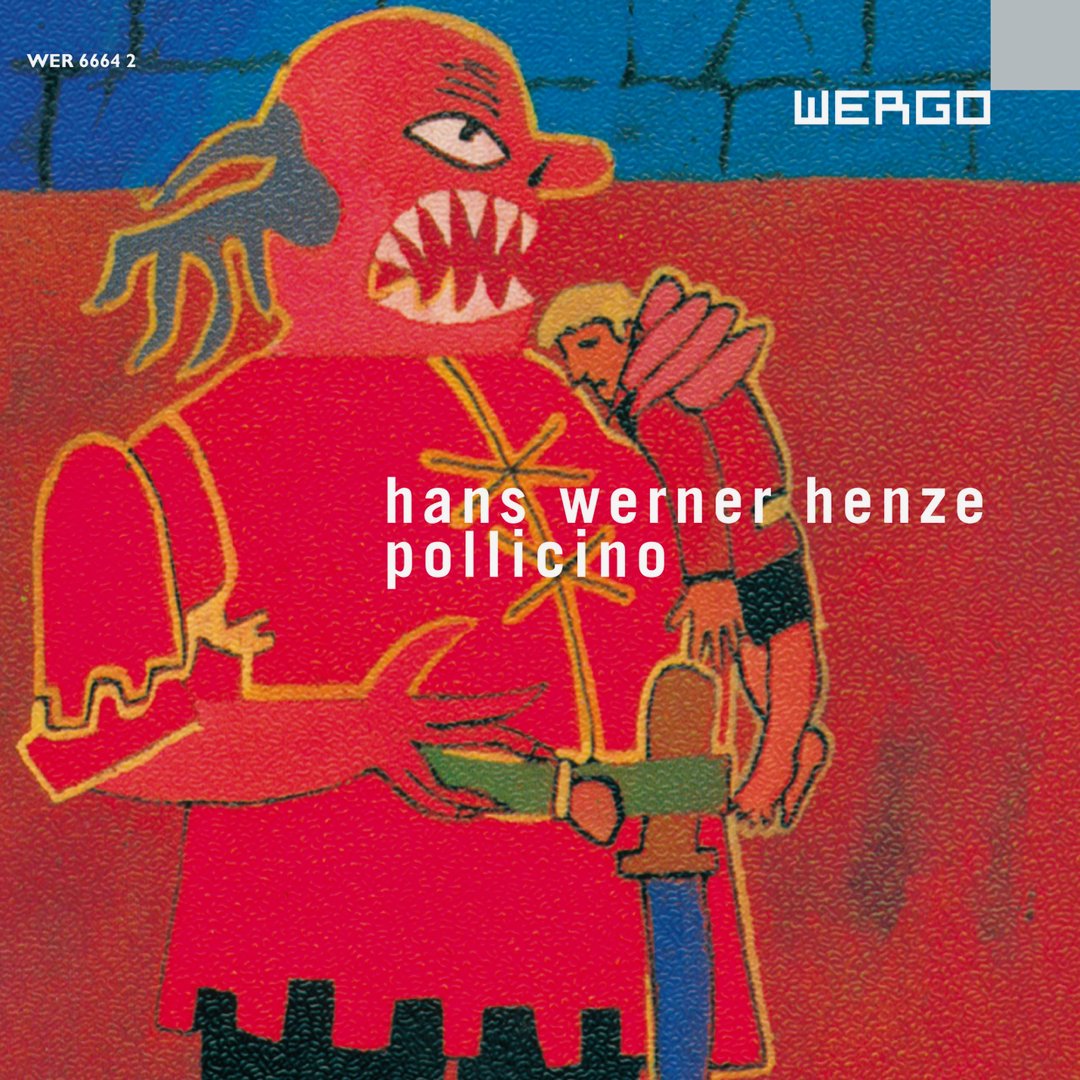
Pollicino (2CD)
Format2CDLabelWergoGenreComposition
Arriving from the supplier: On backorder (ships as soon as it reaches us)
Tracked express shipping from Italy, no customs or import VAT in the EU. Shipping costs
Pollicino is the opera Hans Werner Henze called a fairy tale for music, written in his adopted homeland of Italy and dedicated to the children of Montepulciano. It is based on the tale of Tom Thumb as told by Collodi, Grimm and Perrault, with a libretto by Giuseppe Di Leva. This is its first recording, sung in German and played by children and young musicians, and it won an Echo Klassik in 2004 in the category Classics for Children.
Henze (1926-2012), born in Gütersloh, studied with Wolfgang Fortner, settled in Italy in 1953 and in 1976 founded the Cantiere Internazionale d'Arte in Montepulciano. Pollicino was composed in 1979 and 1980 and first staged there on 2 August 1980, at the fifth Cantiere, with children and adults of the town, conducted by Jan Latham-Koenig and directed by Willy Decker. On this recording the title role is sung by Philipp Holstein, with Laila Fischer as Clotilde and Stefan Lisewski as Orco the ogre. Pollicino's parents are Therese Affolter and Thomas Schendel, and others take the remaining parts. The choir and orchestra are students from several Berlin music schools, prepared by Karola Marckardt and Stefan Vanselow and conducted by Jobst Liebrecht. Maria Pflüger plays solo violin and Moritz Eggert solo piano.
The story deals with life and death, difficult relations between parents and children, poverty and hunger, and escape from inhuman conditions. Driven from home by poverty, Pollicino and his six brothers seek shelter in the house of the man-eater Orco, whose daughters are Clotilde and her six sisters. After several adventures the children together turn their fate for the better. Henze writes it as a sequence of short numbers: a waltz, a cabaletta, a Polacca gastronomica, a tango, carillons, a passacaglia interlude and a closing Canzone toscana.
The roles are written for amateur singers. Beside flute, strings, guitars, piano and harmonium, it calls for a family of recorders from sopranino to bass, crumhorns, glockenspiels, xylophones and bowed psalteries, with timpani and five percussionists. The forest animals, among them an owl, a fox, a hare, a hedgehog, a wild boar and a wolf, have parts of their own. The twelve scenes and five interludes last 87 minutes, and the set comes with an extensive booklet and a German-English libretto.
Two CDs with a 112-page booklet in a slipcase, Wergo WER 6664 2, released in 2003 in the series Hans Werner Henze at Wergo.
| Pollicino, Musical Fairy Tale Opera | |||
| 1-1 | Vorspiel | 1:47 | |
| 1-2 | 1. Szene - Allegro "Was Gibt's Zu Essen Heute Abend?" | 0:28 | |
| 1-3 | 1. Szene - Recitativo "Ach Meine Buben" | 0:22 | |
| 1-4 | 1. Szene - Walzer "'s Ist Leichter Zu Sagen" | 0:33 | |
| 1-5 | 1. Szene - Moderato "Und Die Herrschaft Aus Dem Dorfe" | 1:30 | |
| 1-6 | 1. Szene - Vivace "Zu Mir" | 0:11 | |
| 1-7 | 1. Szene - Moderato "Pollicino, Worauf Wartest Du?" | 0:48 | |
| 1-8 | 1. Szene - Cabaletta "Diese Rübe Schmeckt Abscheulich" | 0:46 | |
| 1-9 | 1. Szene - Andantino "Ja Ich Kochte Diese Sohle" | 1:30 | |
| 1-10 | Finale Der 1. Szene - Alla Breve "Diese Rüb Ist Keine Rüb" | 0:55 | |
| 1-11 | 2. Szene - Moderato Assai "Du Must Einsehn" | 2:15 | |
| 1-12 | 3. Szene - Recitativo "Schon Morgen" | 0:55 | |
| 1-13 | 3. Szene - Aria "Schau An, Die Sterne" | 1:33 | |
| 1-14 | 4. Szene - Marcia "Oh Weh! Oh Weh!" | 2:56 | |
| 1-15 | Zwischenspiel I | 3:10 | |
| 1-16 | 5. Szene - Pastorale | 0:23 | |
| 1-17 | 5. Szene - Canzone "Und Wir Sammeln Zweiglein" | 1:15 | |
| 1-18 | 5. Szene - "Lasst Uns Versteck Spielen" - Pastorale | 1:26 | |
| 1-19 | 5. Szene - Marcia Lenta "Wohin Sind Sie Verschwunden" | 2:10 | |
| 1-20 | Zwischenspiel II | 1:03 | |
| 1-21 | 6. Szene - Rigorosamente Lo Stesso Tempo "Und Nach Dem Guten Essen" | 0:54 | |
| 1-22 | 6. Szene - Aria "O Weh" | 1:30 | |
| 1-23 | 6. Szene - Allegretto "'s Ist Schon Zu Ende" | 2:01 | |
| 1-24 | 7. Szene - Moderato "Die Lieben Kleinen" | 1:04 | |
| 1-25 | 7. Szene - Polacca Gastronomica "Feste Essen Bis Zum Platzen" | 1:17 | |
| 1-26 | 7. Szene - Concertato "Aber Wie Habt Denn Den Weg Zurück Gefunden?" | 0:36 | |
| 1-27 | 7. Szene - Arietta "Ja Gestern Abend" | 2:02 | |
| 1-28 | Finale Der 7. Szene - "Ach Wie Schön Ist Die Familie" | 1:23 | |
| 2-1 | Zwischenspiel III | 2:13 | |
| 2-2 | 8. Szene - Lo Stesso Tempo "Zu Hilfe!" | 2:01 | |
| 2-3 | 9. Szene - "Seht Nur, Die Armen Kleinen Menschen" | 3:07 | |
| 2-4 | 9. Szene - Ballade "Also: Dei Eltern Haben Uns Im Stich Gelassen" | 1:44 | |
| 2-5 | 9. Szene - Carillon I | 0:25 | |
| 2-6 | 9. Szene - "Nun Dann , Ihr Kinder" | 1:12 | |
| 2-7 | 9. Szene - Carillon II | 0:47 | |
| 2-8 | 9. Szene - "Nun Wir Wollen Keinesfalls Den Guten Wolf Beleidigen" | 0:38 | |
| 2-9 | Finale Der 9. Szene -. Szene - Meno Mosso "So Lebet Wohl Denn, Ihr Kinder" | 1:53 | |
| 2-10 | Zwischenspiel IV | 1:28 | |
| 2-11 | 10. Szene - Lo Stesso Tempo "Was Ist Geschehen, Ihr Kinder?" | 0:17 | |
| 2-12 | 10. Szene - Recitativo "Gute Frau" | 1:33 | |
| 2-13 | 10. Szene - Maestoso | 1:06 | |
| 2-14 | 10. Szene - Allegretto Barbaro "Das Essen!" | 1:19 | |
| 2-15 | 10. Szene - "Hallo? Einen Augenblick" | 1:00 | |
| 2-16 | 10. Szene - "Schnuffti, Schnuffti" | 1:34 | |
| 2-17 | 10. Szene - Allegro Mostroso "Ha, Sieh An" | 2:26 | |
| 2-18 | 10. Szene - Lento "Ach, Wie Gut, Dass Ich Euch Gefunden Hab" | 0:44 | |
| 2-19 | 10. Szene - Moderato Cantabile "Manchmal Denk Ich" | 2:57 | |
| 2-20 | 11. Szene - Orcos Frau Bringt Pollicino Ins Andere Zimmer | 0:49 | |
| 2-21 | 11. Szene - "Meine Töchter Haben Die Angewohnheit" | 0:56 | |
| 2-22 | 11. Szene - Tango "Du, Ja Du Schläfst Nicht" | 1:17 | |
| 2-23 | 11. Szene - "Du Bist Gut, Nicht Wahr?" | 2:20 | |
| 2-24 | 11. Szene - Coro "Habt Doch Keine Solche Angst" | 0:57 | |
| 2-25 | 11. Szene - Marcietta | 1:33 | |
| 2-26 | 11. Szene - Recitativo E Cavatina "So Was, So Was" | 2:43 | |
| 2-27 | 11. Szene - Allegro Vivace "Was Seh Ich?" | 1:37 | |
| 2-28 | 11. Szene - Der Menschenfresser Tanzt Seine Wut | 0:53 | |
| 2-29 | Passacaglia (Zwischenspiel V) | 4:12 | |
| 2-30 | 12. Szene - Molto Eccitato "Ist's Unerlässlich" | 2:28 | |
| 2-31 | 12. Szene - "Clotilde, Bist Du's?" | 0:48 | |
| 2-32 | 12. Szene - Canzone Toscana "Es War Einmal" | 1:43 | |
- Chor aus Schülern Berliner Musikschulen
- Chorus
- Hans Werner Henze
- Composed By
- Jobst Liebrecht
- Conductor
- Stefan Lang
- Editor
- Henri Thaon
- Engineer
- Giuseppe Di Leva
- Libretto By
- Orchester aus Schülern Berliner Musikschulen
- Orchestra
- Moritz Eggert
- Piano
- Frank Schneider
- Recording Supervisor
- Susanne Beyer
- Technician [Sound Technician]
- Maria Pflüger
- Violin
- Laila Fischer
- Vocals
- Lore Brunner
- Vocals
- Philipp Holstein
- Vocals
- Stefan Lisewski
- Vocals
- Therese Affolter
- Vocals
- Thomas Schendel
- Vocals