Buon Vecchio Charlie
Buon Vecchio Charlie
Recorded in 1972 and unreleased for nearly twenty years, Buon Vecchio Charlie’s self-titled album belongs to that select category of works that, despite not seeing the light of day at the time of their creation, have over time managed to carve out a prominent place in the history of Italian progressive rock.
The band formed in Rome in the early 1970s, within a particularly fertile musical scene, centered around guitarist and composer Luigi Calabrò and keyboardist Alessandro Centofanti. After just a few but significant live performances, including a concert at the Piper in Rome that caught the attention of RCA, the project moved into the studio. A very young Richard Benson also participated in the recordings, performing part of the material and co-writing “Evviva la Contea di Lane.” The heart of the album, however, is the long suite “Venite giù al fiume,” composed by Luigi Calabrò, who also wrote the closing track “L’uomo che raccoglie i cartoni.”
Despite the interest it generated at the time, the original master remained in Calabrò’s possession until the first CD release in the early 1990s, when it began circulating among collectors and progressive rock enthusiasts worldwide. Musically, it is one of the most fascinating examples of Italian symphonic progressive rock from the early 1970s: complex compositions, strong classical influences, and a continuous interplay between flute, guitar, organ, and keyboards, supported by arrangements that alternate between lyrical passages, melodic openings, and moments of intense instrumentation. A musical language that fits perfectly alongside the work of PFM, Banco del Mutuo Soccorso, Le Orme, and Quella Vecchia Locanda, while still maintaining its own recognizable identity.
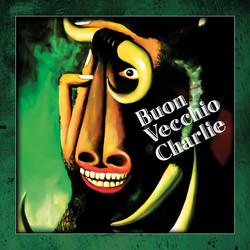
Originally released by AMS Records in 2011, it is now available again on CD digipack and vinyl, featuring the historic cover art used for the first CD edition. For this reissue, Luigi Calabrò has also written new and expanded liner notes, in which he recounts firsthand the band’s formation, the Roman music scene of the time, the 1972 recordings, and the album’s incredible rediscovery many years later.