Changeless is the album on which the trio of Keith Jarrett, Gary Peacock and Jack DeJohnette left the songbook behind. Recorded on an American tour in October 1987 and released by ECM in 1989, it holds four long pieces credited to Jarrett and created on stage, with no standards at all. It is the clearest record of how far the standards trio could go on pure invention.
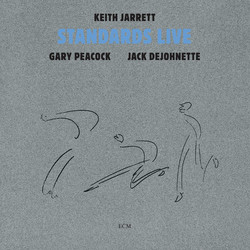
The three had recorded together on Peacock's Tales of Another in 1977. They came back as a trio in January 1983 at the suggestion of Manfred Eicher, and those New York sessions gave both Standards volumes and Changes, built on two long Jarrett originals. Four years on, the music here was taken from concerts in Lexington, Dallas, Houston and Denver between 9 and 14 October 1987. Jarrett plays piano, Peacock double bass and DeJohnette drums. The concerts were recorded digitally by Tom McKenney, and Jan Erik Kongshaug later remixed the tapes. Eicher produced, and Jarrett wrote the liner note.
Each piece grows from a repeated figure in Jarrett's left hand, and the changes inside it come slowly, so the four concerts sound like one continuous set. Dancing opens on a long improvised leap, with Peacock's bass setting a groove under the ostinato and DeJohnette pulling the listener in. Endless, at more than fifteen minutes the longest track, lives up to its name, its patterns rotating until the hands seem to fall out of phase. In Lifeline Peacock takes the lead before Jarrett returns, inward and determined, and Ecstacy closes the album.
Critics heard in it a link between the trio and Jarrett's solo concerts. At AllMusic, Richard S. Ginell called it "a triumph", since Jarrett had brought "the organically evolving patterns of his solo concerts" to the group. In The Penguin Guide to Jazz, Richard Cook and Brian Morton found the original material subversive of the jazz tradition while respectfully aware of it. Writing for ECM Reviews in 2012, Tyran Grillo singled out Lifeline, where "Peacock's soloing is revelatory".
This is the CD edition of ECM 1392, first released in 1989. The cover reproduces a painting by Gyokusei Jikihara.