Eliane Radigue
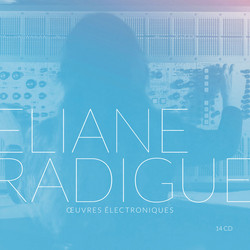
The Complete Feedback Works (6LP Box Set)
LabelAlga MarghenGenreElectronic
Out of stock
Tracked express shipping from Italy, no customs or import VAT in the EU. Shipping costs
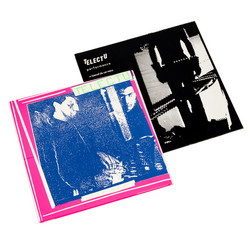
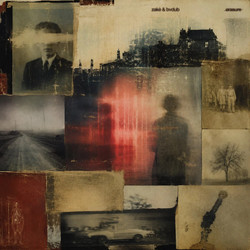
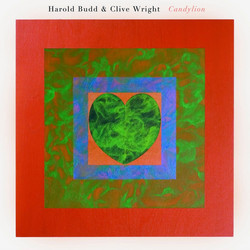
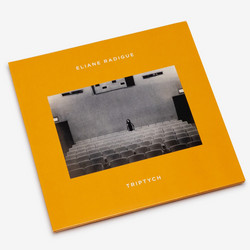
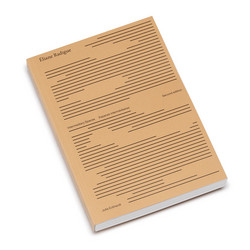
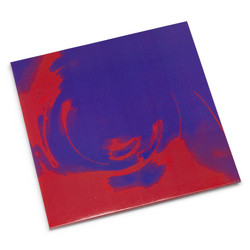
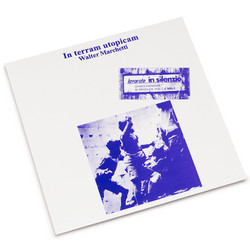
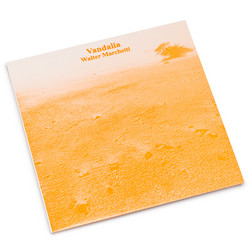
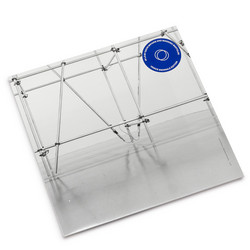
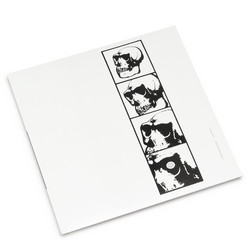
Numbered edition of 200 copies. Six LPs in a box, with restored original artwork reprinted in monochrome blue. Each record comes with its own extra materials: inserts, booklets, postcards and posters. Between 2011 and 2022 Alga Marghen devoted an archival series to the early, unreleased magnetic tape and feedback works of Éliane Radigue: five LPs, issued in small runs and repressed only in tiny quantities, that quietly rewrote the story of where her music came from. A few months after the composer's passing, the label gathers the whole series for the first time into a single object. Complete Feedback Works is a new edition in every sense: the original artwork of each sleeve has been restored and reprinted in monochrome blue, and every record is accompanied by its own set of printed matter drawn from the composer's archive - photographs, scores, texts, traces of the happenings and galleries where these works were first heard.
The box contains:
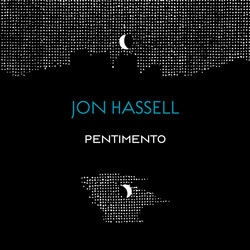
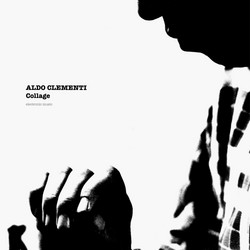
- Jouet Electronique / Elemental I (LP)
- Feedback Works 1969-1970 (LP)
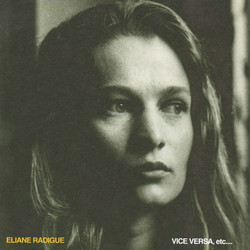
- Vice - Versa, Etc. (LP)
- Opus 17 (2LP)
- In Memoriam-Ostinato / Danse des Dakinis (LP)
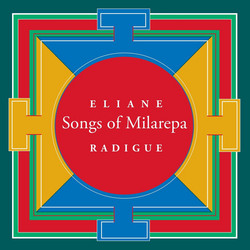
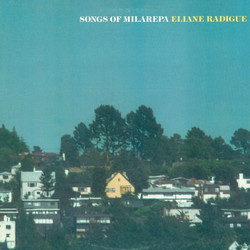
There is no artist, in the history of experimental sound, more important than the French composer Éliane Radigue. She was a shining light who, for more than half a century, quietly blazed trails with a body of work that is as creatively visionary as it is sublime. Born in 1932, she began her musical endeavours in Paris during the late 1950s and early '60s, working under Pierre Schaeffer and Pierre Henry, before quickly outstepping her mentors. Initially working predominantly in tape, during the early 1970s she made the radical switch to modular synthesis, beginning a decades long exploration of the ARP 2500 that drew on her practice as a Buddhist and pushed the notions of musicality endlessly forward. During the early 2000s she set aside her synth and, unexpectedly, began to compose with and for acoustic instrumentalists, a phase that grew into the Occam Ocean series. It was during roughly that same moment that Alga Marghen embarked upon its archival series, offering an unprecedented sense of dimension to the breadth of her career. The five albums gathered here document the period, between 1967 and 1970, when the composer worked predominantly with magnetic tape and feedback, many of them predating her first LP, 1983's Songs of Milarepa, by more than a decade.
Jouet Electronique / Elemental I
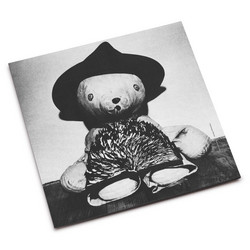
Two sublime pieces, Jouet Electronique (1967) for feedback on magnetic tape and Elemental I (1968) for feedback of natural sounds on magnetic tape, both recorded at Pierre Henry's Studio Apsome in Paris and unpublished before this series. Between 1967 and 1968 Radigue was Henry's assistant, mainly for the editing of L'Apocalypse de Jean, and was also put in charge of organizing his sound archive. Sometimes she set the studio machines to do some little work of her own: Jouet Electronique and Elemental I were born this way, as a kind of recreation during her time as a studio assistant.
Working with feedback is something Radigue learned through Henry, but she soon preferred two reel tape machines to a microphone: the first set on recording while the other was playing, the accidents of that phase making the feedback richer. With some fine-tuning you could reach very beautiful results: low pulsations, very high-pitched sounds, sometimes both at the same time, or long sounds, all of which could be slowed down or accelerated. Elemental I was the first attempt at something very important to her, based on the theme of the basic elements: water, fire, air and earth. She had the chance to record in open air thanks to a small Stellavox that Arman gave her at the beginning of the 1960s. Still living in Nice, she went for walks to record the sea, the wind, the rain, the fire, building a very minimal sound library of not more than ten reel tapes. In 1968 she used these recordings for her work with two Tolana reel tape machines. With a text by Emmanuel Holterbach and a photo portrait by Arman.
Feedback Works 1969-1970
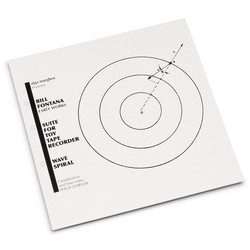
The complete documentation of Radigue's sound installations from 1969-1970, including the broad tectonic vibrations of Omnht, the celestial voices of Usral and the massive chant of Stress Osaka. It is amazing that she could build such formidably organic sonic edifices in her home studio with the primitive machines given to her by Pierre Henry: three tape recorders, a mixing board, an amplifier, two loudspeakers and a microphone. Created ten years after her experience at the Studio d'Essai of the R.T.F., where she worked from 1955 to 1957, the feedback works immediately take a new direction from the explorations of musique concrète. Her adventure intuitively goes towards flux, towards contemplative stasis: a music of continuous sounds, of apparently simple structures, which permits the revelation and expansion of rich acoustic phenomena. It is as if her musical work was in some way a martial art, as if she meditated for ten years before striking the first blow, with impressive precision.
Omnht was composed in 1970 for the architectonic spaces of the visual artist Tania Mouraud titled One More Night, presented at the Gallery of the Rive Gauche in Paris; Usral (a phonetic compression of "ultra-sons ralentis", ultrasounds slowed down) is one of the first works by Radigue to be given in public, as a sound environment for a sculpture by Marc Halpern at the Salon des Artistes Décorateurs at the Grand Palais in 1969; Stress-Osaka was conceived when the artist was invited to create a sonic environment for the International Fair in Osaka in 1970. Includes a 16-page LP-size booklet with original photos, scores and liner notes.
Vice - Versa, Etc.
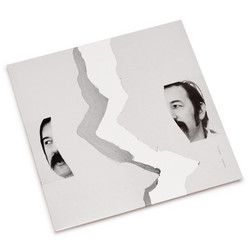
Vice-Versa, Etc. was originally a small handmade box, signed and numbered, released on the occasion of a show at Lara Vincy's gallery in 1970. The box contained a reel of magnetic tape and the instructions for use, indicating that all playback speeds are possible, forward or backward, as well as any combination of two channels, on several recorders, ad libitum. This LP presents two versions realized by Emmanuel Holterbach following Radigue's indications to the letter. There is no doubt that her vocabulary is based on observing and entering into dialog with the fundamental behavior of sounds: pulsing, beating, sustained, very light, a subtle and delicate evolution. When she moved from feedback to the ARP synthesizer she naturally continued the same music, a continuity in which the original use of feedback stands out for its cruder and more savage inner character. One could say that it is the very texture of the sounds which leads the form of her compositions, and that this approach favors an intense sensuality in the listening.
Opus 17
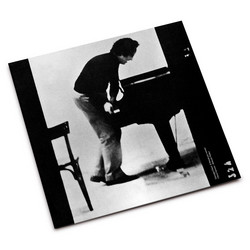
Completed in 1970, Opus 17 represents a crucial juncture in Radigue's work. It is the last composition in her oeuvre to have been created with feedback materials, before she dedicated herself to modular synthesis. Created at the Artistic Center of Verderonne through relatively rudimentary means, it can be regarded as the culmination of a practice cultivated and honed in her studio over the preceding years. Beginning with a captured fragment of piano music, over the course of nearly an hour and a half Radigue transforms her source material into an endlessly evolving expanse of sonority, shifting between durational passages of bubbling ambiences and bristling movements of atonal texture and pulsing tonality, at once harsh and granular, while possessing a striking quality of tactility. Upon hearing the work shortly after her arrival in New York in 1970, Rhys Chatham recalled: "What I heard changed the course of my life as a composer. (...) That piece, an impressive source of inspiration, gave the impression of being in a grand cathedral, both for the sensation of immensity of being in such a large cathedral, as for the effect of being so close to God." Easily among the most important works in the history of electronic music.
In Memoriam-Ostinato / Danse des Dakinis
The final chapter of the series, two previously unreleased works. Among the pieces of fixed duration from the feedback period, In Memoriam-Ostinato (1969) is the link between Jouet Electronique and Opus 17, and allows you to understand the evolution of her approach: a game of mirroring symbols which glide into a non-measured, bent and elastic temporality. Commissioned for the happening Mémorial, a sort of secular procession to the castle of Verderonne, where the pools were lit and everyone was dressed in mauve, it was played by Radigue in one of the grand salons of the castle. Across its 23 minutes, low rumbles of textural noise form a bedrock into which strange, warbling tones of feedback pulse and dance with a palpable sense of tension.
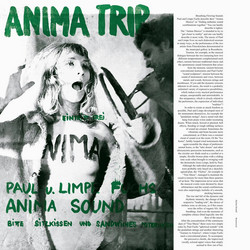
Not to be confused with the third part of Adnos III, which bears the same name, Danse des Dakinis is a peculiar work in Radigue's oeuvre. Invited to a workshop at Mills College in 1998, she could not travel with her bulky ARP 2500 and left with just a few tapes from her own collection, drawn from different periods, composing the piece with those old elements: a feedback ostinato conceived around 1969, the sound of a creek recorded on the Mills campus, field recordings from the beginning of the 1960s made on the coasts of the Mediterranean Sea, the same elements that construct Elemental I, and some discreet interventions on the ARP. A curious self-portrait in sound, an intimate and wild symphony, alive and unpredictable, and the next-to-last gesture of the composer before completely stopping her work with electronics.