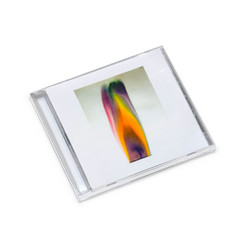
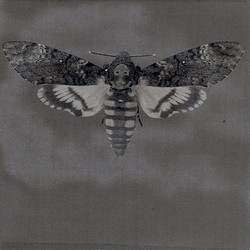
Few records dissolve the boundary between document and composition with the patience and rigour of Akira Rabelais' Hollywood. A single hour-long work, edited from nearly four hours of location recordings made on a Tascam recorder along a stretch of Hollywood Boulevard - specifically, between the Walk of Fame stars belonging to Betty Grable and Rod Serling - and has long since become one of the more elusive entries in the composer's catalogue.
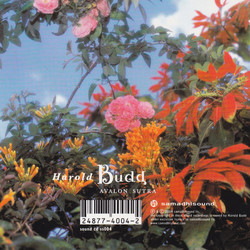
Born in South Texas and based in Los Angeles, Rabelais occupies an unusual position within the landscape of contemporary experimental music. Composer, poet, programmer, and author of the audio processing software Argeïphontes Lyre, a tool that has shaped his own practice and quietly informed the work of others, he is best known for the haunted Icelandic laments of Spellewauerynsherde, issued in 2004 on David Sylvian's Samadhi Sound, and for collaborations with Harold Budd, Björk, and Stephan Mathieu. Hollywood sits apart from those works. It is the document of a single afternoon, August 26th, 2006, treated with the same quiet attention Rabelais brings to a digitised lament or a processed piano figure. The city itself becomes the instrument.
What unfolds is not a postcard but a slow drift through the texture of a place. Snatches of tourist chatter, the syncopation of footsteps on pavement, traffic edging in and receding, fragments of music leaking from shopfronts and passing car stereos, one tune dissolving into another, never quite resolving, the way a city actually sounds when you stop trying to listen for anything in particular. There are no studio tricks, no obvious manipulations. The intervention is in the editing - the patient compression of hours into a single arc, the way certain frequencies are allowed to bloom while others recede into the background hum of the boulevard. It has the quality of a long exposure photograph rendered in sound, everything that passes through the frame leaving its faint trace.
The lineage is worth naming. Hollywood sits comfortably alongside the anecdotal field recording practice of Luc Ferrari, the patient urban listening of Toshiya Tsunoda, and the cinematic ear of Chris Watson, while sharing a certain Los Angeles specificity with the photographic vocabulary of Ed Ruscha or the prose of Joan Didion - artists who have understood that the city's surfaces are not empty but densely encoded, and that to record them attentively is already a form of composition.
A patient, unhurried, deeply located work from one of the most singular figures working at the edges of contemporary composition.