Anton Webern
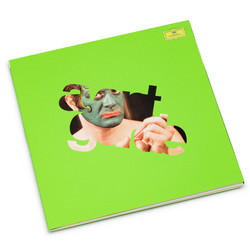
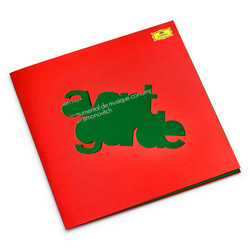
Passacaglia Op. 1 / Fünf Sätze Op. 5 / Sechs Stücke Für Orchester Op. 6 / Symphonie Op. 21 (LP)
condition (record/cover): NM / NM | Herbert von Karajan’s 1974 recording with the Berliner Philharmoniker for Deutsche Grammophon is widely considered a landmark in the interpretation of the Second Viennese School. Passacaglia, Op. 1: Critics praise Karajan for his "seamless projection of structure and expression" in this late-romantic work, often described as a bridge between tradition and modernism. Reviewers highlight the "brightly lit" orchestral timbres, ranging from delicate solo flutes to "snarling brass" at the climax. Fünf Sätze, Op. 5: Recorded in its version for string orchestra, these movements are noted for their "exemplary immediacy" and the "chilling" quality of the Berlin strings. Sechs Stücke für Orchester, Op. 6: Karajan utilizes the 1928 revised version, emphasizing its expressionistic, "nightmarish underbelly". While some critics occasionally find Karajan’s approach more late-romantic than the clinical precision of Pierre Boulez, this performance is often cited as one of the "best-ever" recordings of the work.