1
2
3
4
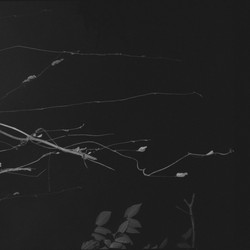
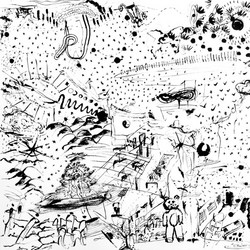
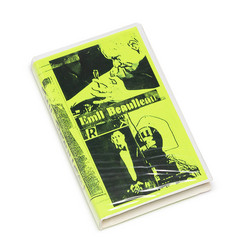
Modern Obscure Music presents The Bubble of Love, a new collaborative album by Pedro Vian together with Ustad Nawab Khan and Naved Nawab Khan — the 9th and 10th generation of a distinguished santoor lineage from Rajasthan, India.
Recorded during an intense week of sessions at Pedro Vian’s studio in Barcelona, the album captures a rare and concentrated encounter between traditions, generations, and sonic languages. Ustad Nawab Khan, a 9th-generation master of the santoor and founder of Raaga Science, has devoted his life to exploring the emotional and psychological dimensions of Indian raaga music. His philosophy, “Raag se Ras utpan” — the creation of emotional states through specific raagas — forms a conceptual backbone for the project. Carrying the lineage forward, Naved Nawab Khan represents the 10th generation, bringing a contemporary global awareness while remaining deeply rooted in classical tradition.
The Bubble of Love unfolds through four meditations that create a dialogue between ancient tonal systems and modern electronic exploration. In three of the four pieces, the chromatic subtleties and traditional scales of the santoor intertwine with Pedro Vian’s unexpected synthesizers and electronic textures. These compositions form a bridge between Occidental and Oriental musical worlds, where resonance becomes a shared language. In the fourth and final meditation, the collaboration shifts toward a more experimental dimension. While maintaining the same instrumental foundation — santoor and electronics — Pedro Vian explores alternative notes and scale structures, expanding the harmonic field. This movement reflects both understanding and incomprehension, alignment and tension between cultures. Rather than resolving differences, the music inhabits them, transforming contrast into a space of discovery.
Released on Modern Obscure Music, The Bubble of Love is not merely a fusion record. It is a concentrated meeting point — lineage and futurism, discipline and experimentation — crystallized in a week of deep listening and creative exchange within an intimate studio environment. At moments, the record subtly echoes earlier attempts to translate ancient traditions through emerging technologies. It recalls the spirit of experimentation found in projects where Moog synthesis sought to interpret the tonal worlds of classical instruments — from the dialogues between Ravi Shankar and Philip Glass, to the exploratory journeys of Ariel Kalma, whose music continues to resonate powerfully in the very walls where this album was recorded.
In this broader historical context, The Bubble of Love also resonates with the pioneering electronic explorations documented in The NID Tapes — the collection of early Indian electronic works recorded between 1969 and 1972 at the National Institute of Design in Ahmedabad. Founded with the support of composer David Tudor, who installed a Moog modular system in 1969, the NID studio became a radical space of post-independence experimentation, where composers such as Gita Sarabhai, I.S. Mathur, Atul Desai, S.C. Sharma and Jinraj Joshipura explored analogue synthesis, tape collage, voice and field recording — forging a meeting point between Western and Indian avant-garde traditions.
Uncovered and restored through the long-term research of British artist Paul Purgas, and later presented alongside the publication Subcontinental Synthesis: Electronic Music at the National Institute of Design, India 1969–1972, The NID Tapes revealed a visionary chapter in South Asia’s sonic imagination — one where electronic instruments did not replace tradition, but refracted it into new forms. While separated by decades and geography, The Bubble of Love inhabits a similar philosophical terrain: not the fusion of opposites, but the coexistence of lineages — where electronic sound becomes not an imposition, but a listening device. A way of approaching tradition with curiosity rather than control. In this sense, the album stands both as a continuation and a renewal — a contemporary meditation on the enduring dialogue between heritage and experimentation, between memory and future sound.
The Bubble of Love unfolds through four meditations that create a dialogue between ancient tonal systems and modern electronic exploration. In three of the four pieces, the chromatic subtleties and traditional scales of the santoor intertwine with Pedro Vian’s unexpected synthesizers and electronic textures. These compositions form a bridge between Occidental and Oriental musical worlds, where resonance becomes a shared language. In the fourth and final meditation, the collaboration shifts toward a more experimental dimension. While maintaining the same instrumental foundation — santoor and electronics — Pedro Vian explores alternative notes and scale structures, expanding the harmonic field. This movement reflects both understanding and incomprehension, alignment and tension between cultures. Rather than resolving differences, the music inhabits them, transforming contrast into a space of discovery.
Released on Modern Obscure Music, The Bubble of Love is not merely a fusion record. It is a concentrated meeting point — lineage and futurism, discipline and experimentation — crystallized in a week of deep listening and creative exchange within an intimate studio environment. At moments, the record subtly echoes earlier attempts to translate ancient traditions through emerging technologies. It recalls the spirit of experimentation found in projects where Moog synthesis sought to interpret the tonal worlds of classical instruments — from the dialogues between Ravi Shankar and Philip Glass, to the exploratory journeys of Ariel Kalma, whose music continues to resonate powerfully in the very walls where this album was recorded.
In this broader historical context, The Bubble of Love also resonates with the pioneering electronic explorations documented in The NID Tapes — the collection of early Indian electronic works recorded between 1969 and 1972 at the National Institute of Design in Ahmedabad. Founded with the support of composer David Tudor, who installed a Moog modular system in 1969, the NID studio became a radical space of post-independence experimentation, where composers such as Gita Sarabhai, I.S. Mathur, Atul Desai, S.C. Sharma and Jinraj Joshipura explored analogue synthesis, tape collage, voice and field recording — forging a meeting point between Western and Indian avant-garde traditions.
Uncovered and restored through the long-term research of British artist Paul Purgas, and later presented alongside the publication Subcontinental Synthesis: Electronic Music at the National Institute of Design, India 1969–1972, The NID Tapes revealed a visionary chapter in South Asia’s sonic imagination — one where electronic instruments did not replace tradition, but refracted it into new forms. While separated by decades and geography, The Bubble of Love inhabits a similar philosophical terrain: not the fusion of opposites, but the coexistence of lineages — where electronic sound becomes not an imposition, but a listening device. A way of approaching tradition with curiosity rather than control. In this sense, the album stands both as a continuation and a renewal — a contemporary meditation on the enduring dialogue between heritage and experimentation, between memory and future sound.
Details