There Is Still Time brings together the cellist Frances-Marie Uitti and the writer Paul Griffiths in seventeen "scenes for speaking voice and cello". Griffiths reads his own poems and Uitti plays music she made for them, so that neither part simply accompanies the other. It was their first recording together, and the first time either appeared on ECM as a performer. Its reviewers agreed on one point: the record fits no ready category, and lies somewhere between melodrama, recitation and new chamber music.
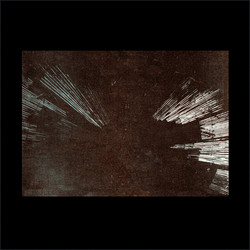
Uitti is a composer and improviser as well as an interpreter of new music. She developed a way of holding two bows in one hand that lets the cello sustain chords, and Scelsi, Kurtág, Nono and Jonathan Harvey are among the composers who worked with her. Griffiths is one of the best-known writers on twentieth-century music. He wrote the libretto for Elliott Carter's opera What Next?, and his novel Myself and Marco Polo won a Commonwealth Writers Prize. The album was recorded in August 2003 at Rainbow Studio in Oslo, with Jan Erik Kongshaug as engineer and Manfred Eicher producing. Griffiths also wrote the booklet text, and the cover shows a detail of Howard Hodgkin's Thunder.
The words grow out of Ophelia in Shakespeare's Hamlet. As Tyran Grillo explains in ECM Reviews, Griffiths allowed himself only the 482 words Ophelia speaks in the play, recombined into new poems. The disc opens with I cannot remember and closes with when this is over, at almost eight minutes the longest scene. Between them come four short without words pieces for cello alone. Griffiths speaks slowly and with restraint, returning to words until they change weight, while the cello moves through drones, cries and taps on the body of the instrument. In the Chicago Tribune, John von Rhein noted that some sounds seem electronically altered, though with Uitti's technique one cannot be sure.
Von Rhein heard the whole as "a kind of meditative melodrama for today", its tone "wistful, rueful, often bleak". Alan Rich of LA Weekly found that Griffiths uses his voice the way Uitti plays, and wrote that after its 55 minutes the disc is hard not to play again at once. For Marc Geelhoed in Time Out Chicago the two were equal partners, with neither fitting itself to the other. The Italian monthly Musica Jazz recommended the album and set the anxiety of the words beside the world of Beckett.
This is the CD edition of ECM New Series 1882, first released in October 2004, with a 28-page booklet.