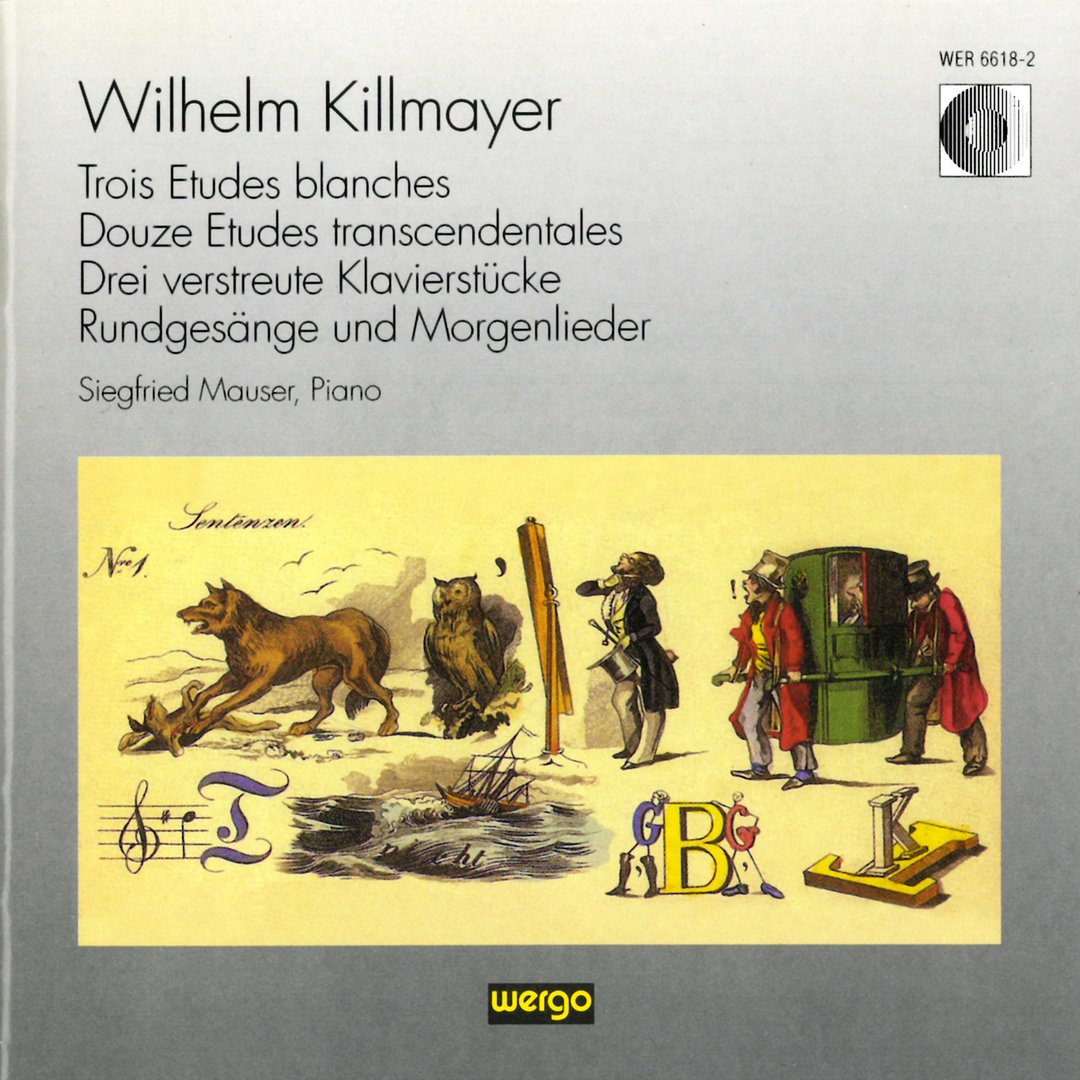
Wilhelm Killmayer
Trois Etudes blanches / Douze Etudes transcendentales / Drei verstreute Klavierstücke: Canto melismatico / Albumblatt / Frühlingslied / Rundgesänge und Morgenlieder
FormatCDLabelWergoGenreComposition
Arriving from the supplier: On backorder (ships as soon as it reaches us)
Tracked express shipping from Italy, no customs or import VAT in the EU. Shipping costs
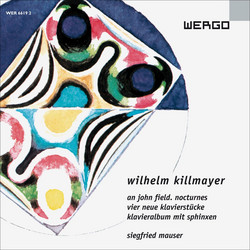
Released for Wilhelm Killmayer's seventieth birthday, this is a selection of his piano music played by Siegfried Mauser. It sets the étude collections and Rundgesänge und Morgenlieder, typical of his style in the 1990s, against three scattered pieces from different decades. The composer later gathered those pieces into a small cycle of their own.
Killmayer was a German composer, born in Munich on 21 August 1927 and died in Starnberg on 20 August 2017. Mauser, born in Straubing in 1954, is a German pianist and musicologist who studied with Killmayer and worked closely with him on his piano music. He is the only performer here, across twenty-four tracks and sixty-two and a half minutes.
The Trois Etudes blanches (1990/91) are three pieces of three to five minutes each. The Douze Etudes transcendentales (1991/92) borrow their title from the virtuoso tradition, yet most of the twelve last only a minute or two. "Lugubre", at almost four minutes, is the longest, and "Rasch dahin" is over in less than one. Their headings show the range: "Appassionato, espressivo", "Ländler d'exécution transparente", "Lugubre", "Im Schumann-Ton", "Con veto", a Presto and a closing "Choral. Mesto". The Drei verstreute Klavierstücke join the Canto melismatico (1957), the six-minute Albumblatt (1968) and a Frühlingslied. Rundgesänge und Morgenlieder, subtitled "Ein Klavierzyklus" (1993), alternates rounds and morning songs in six movements. Its markings run from "Anmutig" and "Ruhig singend" to "Glücklich - Sehr lebhaft", "Leichthin, locker" and a final "Reminiszenz".
The label notes the striking breadth of styles in the selection, even though the recent works take up most of the time. Heard together, the pieces show Killmayer's habit of writing short, sharply characterised movements and of naming them after older models, from the Ländler to Schumann and the transcendental étude. The forty-year span between the Canto melismatico and the cycles of the 1990s is audible in the writing, while the taste for brevity stays the same.
CD, Wergo WER 6618 2, released in 1997, total time 62'30".
Release notes
℗ 1997 Schott Wergo Music Media GmbH © 1997 Schott Wergo Music Media GmbH
| Trois Etudes Blanches (1990/91) | |||
| 1 | I | 5:25 | |
| 2 | II | 3:00 | |
| 3 | III | 3:02 | |
| Douze Etudes Trascendentales (1991/92) | |||
| 4 | Appassionato, Espressivo | 1:15 | |
| 5 | Ländler D'Exécution Transparente | 1:38 | |
| 6 | Lugubre | 3:56 | |
| 7 | Vergnügt, Leicht, Ohne Hast | 1:10 | |
| 8 | Ländler Solenne | 2:38 | |
| 9 | Leicht, Mit Anmut | 2:22 | |
| 10 | Im Schumann-Ton | 1:53 | |
| 11 | Presto | 1:14 | |
| 12 | Con Veto | 2:53 | |
| 13 | Schwungvoll | 1:49 | |
| 14 | Rasch Dahin | 0:54 | |
| 15 | Choral. Mesto | 3:17 | |
| Drei Verstreute Klavierstücke | |||
| 16 | Canto Melismatico. Rubato (1957) | 3:25 | |
| 17 | Albumblatt (1968) | 6:10 | |
| 18 | Frülingslied | 3:01 | |
| Rundgesänge Und Morgenlieder Ein Klavierzyklus (1993) | |||
| 19 | Rundgesang. Anmutig | 1:10 | |
| 20 | Morgenlied Und Rundgesang. Amabile - Presto | 2:39 | |
| 21 | Morgenlied. Ruhig Singend | 2:13 | |
| 22 | Morgenlied Und Rundgesang. Glücklich - Sehr Lebhaft | 2:43 | |
| 23 | Rundgesang. Leichthin, Locker | 2:08 | |
| 24 | Rundgesang. Reminiszenz. Anmutig | 1:35 | |
- Siegfried Mauser
- Piano