
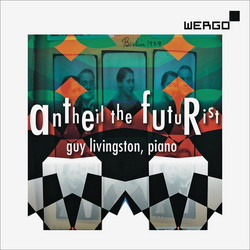
Antheil the Futurist
Piano music by George Antheil, mostly written in Berlin in 1922-23, including the Airplane, Death of Machines and Jazz sonatas, many in first recordings, played by Guy Livingston with Philippe Keler and Stéphane Leach.
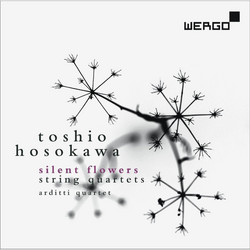
Silent Flowers
Six string quartets by Toshio Hosokawa from 1980 to 2009, including Blossoming, Silent Flowers and the first recording of Kalligraphie, played by the Arditti Quartet, recorded in Baden-Baden in February 2012 with Südwestrundfunk.
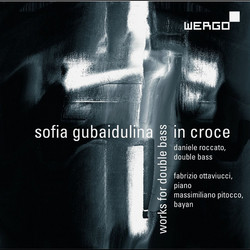
In Croce
Four works by Sofia Gubaidulina for double bass: Sonata and Pantomime with piano, In Croce with bayan and the Preludes for solo bass, played by Daniele Roccato with Fabrizio Ottaviucci (piano) and Massimiliano Pitocco (bayan).
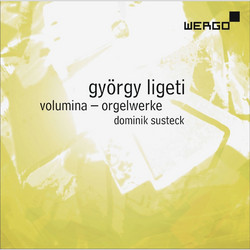
Volumina - Orgelwerke
György Ligeti's organ works Volumina, Harmonies and Coulée, with Musica ricercata arranged for organ, plus Dominik Susteck's improvisations Sprachsignale, played by Susteck on the organ of the Kunst-Station Sankt Peter, Cologne.
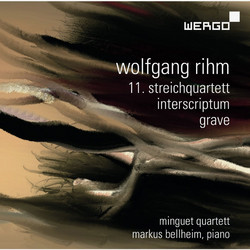
11. Streichquartett / Interscriptum / Grave
Wolfgang Rihm's 11th String Quartet (1998/2010), Interscriptum for string quartet and piano and Grave in memoriam Thomas Kakuska, played by the Minguet Quartett with pianist Markus Bellheim, a co-production with Deutschlandradio.
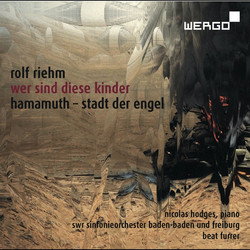
Hamamuth - Stadt der Engel / Wer sind diese Kinder
Rolf Riehm's Hamamuth - Stadt der Engel for piano (2005) and Wer sind diese Kinder for piano, orchestra in three groups and electronics (2009), with Nicolas Hodges and the SWR Sinfonieorchester Baden-Baden und Freiburg under Beat Furrer.
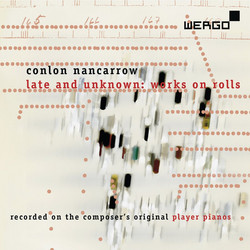
Late and Unknown: Works on Rolls
Late and previously unknown works for player piano by Conlon Nancarrow, including Study No. 48 for two superimposed rolls and For Ligeti, recorded on the composer's own instruments; a co-production of WDR and the Paul Sacher Stiftung.
Kammermusik
Six chamber works (2005-2008) by Benjamin Schweitzer, including Abgesang from the chamber opera Dafne and Anfänge/Netze after Calvino, played by the Dresden ensemble courage under Titus Engel, recorded in Berlin in December 2011.
Vox Amoris
Three works by Pēteris Vasks for violin and string orchestra (Vox Amoris, Tālā gaisma, Vientuļais eņģelis), played by Alina Pogostkina with Sinfonietta Rīga under Juha Kangas, recorded in Riga in June 2011.
Zeit(t)räume
Soprano Claudia Böttcher and pianist Jovita Zähl perform Stockhausen's Tierkreis (soprano and piano version) and Klavierstück IX and Berio's Sequenza III and Quattro Canzoni popolari, recorded in Cologne in 2011-2012.
Early Piano Pieces
Piano music by Morton Feldman from 1950 to 1977, from the Intermissions and Nature Pieces to Last Pieces and Piano, played by Sabine Liebner on two CDs, a coproduction with Bayerischer Rundfunk.
Da Lontano
Trombonist and tubist Mike Svoboda plays Scelsi's Mantram, Cage's Solo for Sliding Trombone in a version for eight trombones, Stockhausen's Signale zur Invasion and Nono's Post-prae-ludium per Donau with Holger Stenschke on live electronics.
Tierkreis
First CD recording of Karlheinz Stockhausen's Tierkreis in the version for organ, played by Dominik Susteck on the Willy Peter organ of St. Peter, Cologne, with four of his own improvisations.
Initiale
Complete songs and early chamber music by Bernd Alois Zimmermann (1939-1950), with soprano Anna Prohaska, pianist Cordelia Höfer, violinists Alessandro Cappone and Rachel Schmidt and the Trio Berlin, recorded 2009-2010 in Berlin.
As Fast as Possible
Works by Conlon Nancarrow for orchestra, ensemble and pianos, including Player Piano Studies in live transcriptions, plus Paul Usher's Nancarrow Concerto for pianola, with Ensemble Modern, WDR Sinfonieorchester Köln and Rex Lawson, WDR production 2004-2005.
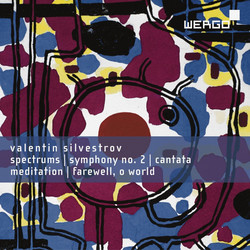
Spektren / Sinfonie Nr. 2 / Kantate / Meditation / „Welt, Leb Wohl ...!“
Early works by Valentin Silvestrov (1965-1977): Spectrums, Symphony No. 2, Cantata, Meditation and Farewell, O World...!, conducted by Igor Blazhkov in concert and studio recordings from Leningrad and Kiev, 1965-1991.
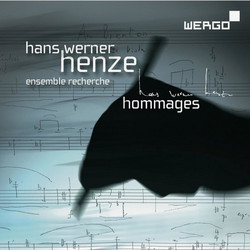
Hommages
Chamber and solo pieces by Hans Werner Henze dedicated to friends and colleagues, most in first recordings, performed by ensemble recherche, a coproduction with Westdeutscher Rundfunk.
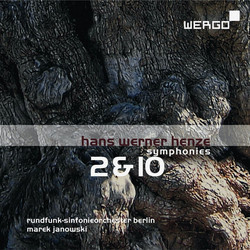
Sinfonien 2 & 10
Hans Werner Henze's Symphony No. 2 (1949) and Sinfonia N. 10 (1997-2000), Rundfunk-Sinfonieorchester Berlin under Marek Janowski, recorded in 2012 and 2013, completing their Henze symphony cycle.
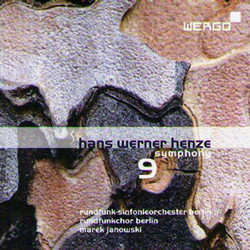
Sinfonia N. 9
Hans Werner Henze's Sinfonia N. 9 for chorus and orchestra, text by Hans-Ulrich Treichel after Anna Seghers's The Seventh Cross, with Rundfunkchor Berlin and Rundfunk-Sinfonieorchester Berlin under Marek Janowski, recorded November 2008.
Melusine
Live recording of Aribert Reimann's opera Melusine after Yvan Goll, libretto by Claus H. Henneberg, with Marlene Mild in the title role and the Nürnberger Philharmoniker under Peter Hirsch, Staatstheater Nürnberg, 12 May 2007.
Desires / Kybele / X für Verschlüsse / Roses / Spices 3
Five works by Gerhard Stäbler for percussion, soprano and percussion quartet, conception for any number of players, and percussion with tape, performed by Schlagquartett Köln with soprano Annette Robbert.
Concerto funebre / Burleske Musik / Konzert für Klavier, Bläser und Schlagzeug / Konzert für Viola und Klavier
Four concertante works by Karl Amadeus Hartmann (1931-1955), including the Concerto funebre, with Benjamin Schmid, Elisabeth Kufferath, Yorck Kronenberg, Florian Uhlig and the SWR Rundfunkorchester Kaiserslautern under Paul Goodwin, recorded 2004-2007.
Viatore
Three works by Latvian composer Pēteris Vasks, Musica adventus and Viatore for string orchestra and the Concerto for cor anglais, played by Sinfonietta Rīga with Normunds Šnē as conductor and soloist, recorded in Riga in June 2007.
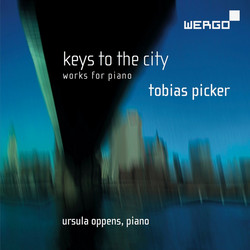
Keys to the City
Piano works by Tobias Picker, mostly first recordings, played by Ursula Oppens, with the composer at the second piano in Keys to the City; recorded September/October 2007 at the American Academy of Arts and Letters, New York.
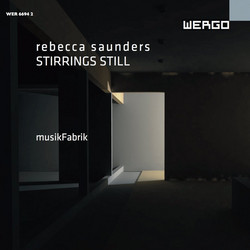
Stirrings Still
Five chamber works by Rebecca Saunders, four in first recordings, including blaauw for double-bell trumpet, vermilion and Stirrings Still, played by soloists of Ensemble Musikfabrik in coproduction with DeutschlandRadio.
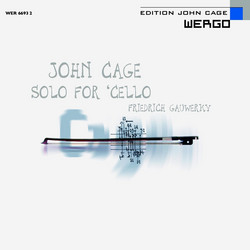
Solo for Cello ...
Works for cello by John Cage from 1953 to 1978, including Solo for Cello, 59 1/2 Seconds for a String Player, Atlas Eclipticalis for two cellos, Variations I and Etudes Boréales, played by Friedrich Gauwerky, coproduced with Bayerischer Rundfunk.
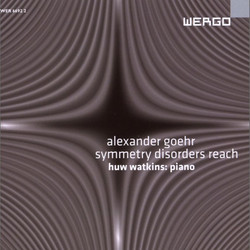
Symmetry Disorders Reach
Alexander Goehr's piano cycle Symmetry Disorders Reach op. 73 (2002), after W. H. Auden, played by his former pupil Huw Watkins, recorded on 20-21 December 2005 at the Jerusalem Music Centre.
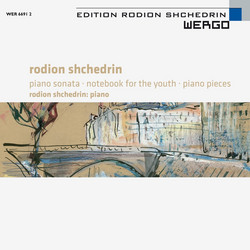
Piano Sonata / Notebook for the Youth / Piano Pieces
Rodion Shchedrin plays his Piano Sonata op. 25, Notebook for the Youth op. 59 and Piano Pieces op. 20, Melodiya recordings made at night in the Great Hall of the Moscow Conservatory, issued by Wergo in 2007.
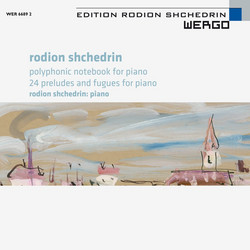
Polyphonic Notebook for Piano / 24 Preludes and Fugues for Piano
Rodion Shchedrin plays his Polyphonic Notebook op. 50 and the 24 Preludes and Fugues op. 29 and op. 45, Melodiya recordings made in Moscow in 1966, 1971 and 1973, issued on two CDs by Wergo in 2007.
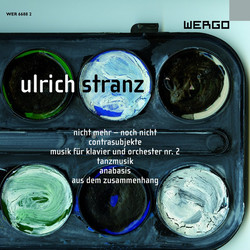
nicht mehr - noch nicht / Contrasubjekte / Musik für Klavier und Orchester Nr. 2 / Tanzmusik / Anabasis / Aus dem Zusammenhang
Portrait CD of Ulrich Stranz: six works from 1971-2001 for chamber ensemble, strings, piano and orchestra, winds and solo piano, with Tzimon Barto, Tonhalle-Orchester Zürich under Christoph Eschenbach, Münchener Kammerorchester, Banda Classica and Linos-Ensemble.
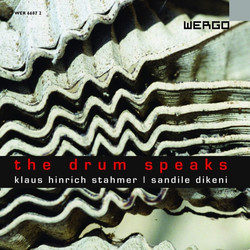
The Drum Speaks
Poems by South African poet Sandile Dikeni, recited from memory in Johannesburg in 2005, alternating with Klaus Hinrich Stahmer's works for flutes, piano, percussion, African drums and two pianos, recorded in Würzburg and Münster in 2004-2005.
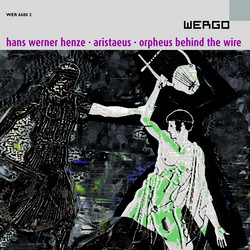
Aristaeus / Orpheus Behind the Wire
Hans Werner Henze's two Orpheus works: Orpheus behind the Wire for a cappella choir on Edward Bond, and the first recording of Aristaeus for speaker and orchestra, recorded live in Berlin on 1 February 2004 with Rundfunkchor Berlin and Rundfunk-Sinfonieorchester Berlin under Marek Janowski.
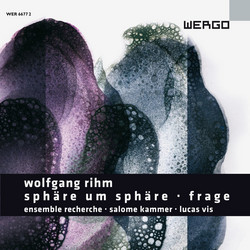
Sphäre um Sphäre / Frage
First recordings of Wolfgang Rihm's Sphäre um Sphäre for ensemble and Frage for female voice and ensemble, played by ensemble recherche, which premiered both, with Salome Kammer and conductor Lucas Vis. A coproduction with WDR.
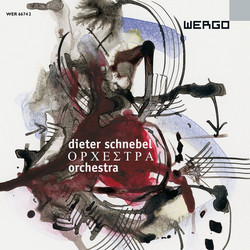
Orchestra
Live recording of Dieter Schnebel's Orchestra, symphonic music for mobile musicians, at his 70th birthday concert on 14 March 2000 at the Universität der Künste Berlin, played by students and teachers under three central conductors.
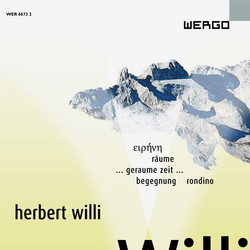
Eirene / Räume / ... geraume Zeit ... / Begegnung / Rondino
Five orchestral works by Herbert Willi, including the trumpet concerto Eirene and the concerto for flute and oboe ... geraume Zeit ..., with Reinhold Friedrich, Wolfgang Schulz, Hansjörg Schellenberger and the Rundfunk-Sinfonieorchester Saarbrücken, 1999-2004.
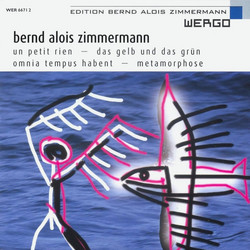
Un petit rien / Das Gelb und das Grün / Omnia tempus habent / Metamorphose
Bernd Alois Zimmermann's Un petit rien, Das Gelb und das Grün, the serial cantata Omnia tempus habent and the film music Metamorphose, with soprano Angelika Luz and the Collegium Novum Zürich under Peter Hirsch.
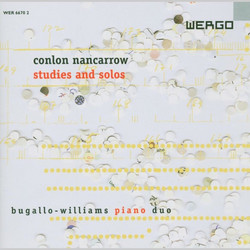
Studies and Solos for Piano
Conlon Nancarrow's Studies for Player Piano in transcriptions for piano four hands, the Three Canons for Ursula, Tango?, Blues, Sonatina and other pieces, played by the Bugallo-Williams Piano Duo (Helena Bugallo and Amy Williams).
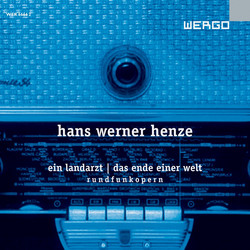
Ein Landarzt / Das Ende einer Welt
Hans Werner Henze's radio operas Ein Landarzt (after Kafka) and Das Ende einer Welt (libretto by Hildesheimer), revised versions, premiered live in the Cologne Philharmonie on 27 September 1996 with the WDR Sinfonieorchester under Markus Stenz.
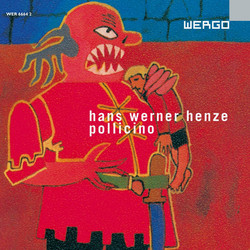
Pollicino
First recording of Hans Werner Henze's children's opera Pollicino, after Collodi, Grimm and Perrault, sung in German by young soloists with a choir and orchestra of Berlin music school students under Jobst Liebrecht. Echo Klassik 2004.