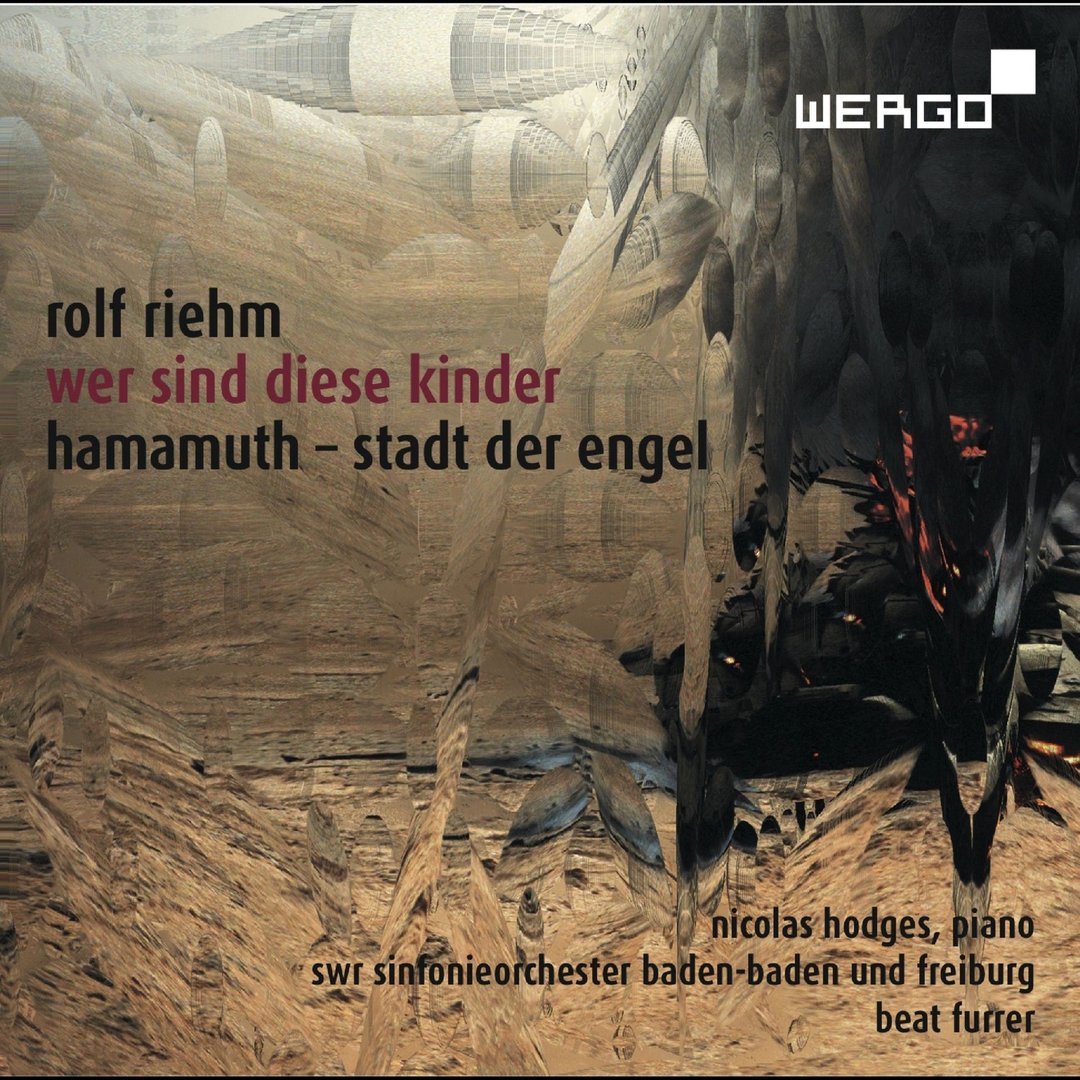
Rolf Riehm
Hamamuth - Stadt der Engel / Wer sind diese Kinder
FormatSACDLabelWergoGenreComposition
Arriving from the supplier: On backorder (ships as soon as it reaches us)
Tracked express shipping from Italy, no customs or import VAT in the EU. Shipping costs
Two large works by Rolf Riehm that try to widen the range of political music: Hamamuth - Stadt der Engel for solo piano, premiered at the Darmstadt Summer Courses in 2006, and the piano concerto Wer sind diese Kinder, premiered at the Donaueschingen festival in 2009. Both respond to the violence of the Iraq War, and both refuse to treat politics only as a matter of words or titles.
Riehm was a German composer, born in Saarbrücken on 15 June 1937, who died on 3 January 2026. The soloist in both works is Nicolas Hodges, for whom Hamamuth was written. He recorded it from 18 to 20 May 2012 in the Deutschlandfunk Kammermusiksaal in Cologne, as a pure DSD recording in 5.1 surround, produced by Frank Kämpfer and Rolf W. Stoll with Deutschlandradio. Wer sind diese Kinder is a live recording of the premiere at the Baarsporthalle in Donaueschingen on 14 and 18 October 2009, with the SWR Sinfonieorchester Baden-Baden und Freiburg conducted by Beat Furrer, in a production of Südwestrundfunk. Jörn Peter Hiekel wrote the liner notes. Hodges, born and trained in London and based in Stuttgart, has kept Riehm's music in his repertoire since.
Hamamuth - Stadt der Engel (2005) lasts almost half an hour. Riehm's long introductory text, printed in the score, begins by explaining that the "City of Angels" of the title refers to the pictures of devastation in Iraq regularly seen on television. The piece is about prevailing perceptions, about how such images reach us. Wer sind diese Kinder (2009), dedicated "für Hilde", continues that approach. It is scored for piano, a large orchestra divided into three groups and electronic playback, and runs for twenty-nine minutes.
In both works the political is not confined to the semantic level. The physical side of the music, the weight and texture of the sound, matters almost as much, so that the reflection on international conflicts and on how to deal with them is built into the fabric of the writing. That is what sets these pieces apart from political music that relies on text or programme alone.
SACD with 5.1 surround sound, Wergo WER 6755 2, released in 2013, 58 minutes, with a 38-page booklet.
Release notes
"Hamamuth – Stadt der Engel" für Klavier (2005) - für Nicolas Hodges Aufnahmen: 18.-20. Mai 2012, Deutschlandfunk Kammermusiksaal, Köln. Pure DSD Recording (1-bit 2.8224 MHz), 5.1ch Surround Sound "Wer sind diese Kinder" für Klavier, großes Orchester in drei Gruppen und elektronische Zuspielungen (2009) - für Hilde Live-Aufnahmen: 14./18. Oktober 2009 (Mitschnitt der Uraufführung), Baarsporthalle, Donaueschingen, Dounaueschinger Musiktage 2009. PCM-Aufnahme (24-bit 48 KHz), 5.1ch Surround…
| Hamamuth – Stadt der Engel | |||
| 1 | FIGUR | 1:18 | |
| 2 | FIGUR und LAUFWERK-PASSAGE | 1:18 | |
| 3 | "g"-Konzentration | 3:26 | |
| 4 | LAUFWERK mit FENSTERN | 1:56 | |
| 5 | AKKORDTRILLER 1 | 1:08 | |
| 6 | AKKORDTRILLER 2 | 0:38 | |
| 7 | AKKORDTRILLER 3 | 0:36 | |
| 8 | GETÖSE I | 2:41 | |
| 9 | VERKLUMPUNG 1–4 | 2:01 | |
| 10 | 1. und 2. PFEILER | 1:30 | |
| 11 | PFEILER und GETÖSE II | 3:48 | |
| 12 | GESANG SCHIBAM | 9:04 | |
| Wer sind diese Kinder | |||
| 13 | VORECHO | 0:16 | |
| 14 | EXPOSITION | 0:22 | |
| 15 | RUMPF | 1:52 | |
| 16 | EINFASSUNG | 0:39 | |
| 17 | Ende RUMPF, erneut Aufgriff BEGINN g-Moll-Sextakkord, mit Klavier- und Sprachexpansion | 1:28 | |
| 18 | g²-PANIK (Klavier) | 0:36 | |
| 19 | SKULPTUR, Zustand der Aufrichtung | 0:25 | |
| 20 | SKULPTUR, zerborstener Zustand | 0:27 | |
| 21 | Ende SKULPTUR, PLAQUES | 0:51 | |
| 22 | Ende PLAQUES | 0:12 | |
| 23 | Ende EXPOSITION | 0:41 | |
| 24 | BRAHMS, Schnelllauf (s. op. 118,6) | 0:09 | |
| 25 | BRAHMS-Luke, darin wieder: Schnelllauf | 0:17 | |
| 26 | STELE, darin: aufspringende Risse im Stein | 0:16 | |
| 27 | DOKUMENT, zerschlissen ... verliert sich in: | 0:17 | |
| 28 | HIMMELSPALÄSTE, Furor Homo Sacer | 0:10 | |
| 29 | BRAHMS-Luke | 0:41 | |
| 30 | WECHSELNOTEN-Brahms | 0:38 | |
| 31 | Ende HIMMELSPALÄSTE | 0:17 | |
| 32 | GESANG SCHIBAM ... verliert sich im Bereich PERSEPHONES WIESEN | 0:20 | |
| 33 | BRAHMS-Insert | 0:38 | |
| 34 | NICHTS-SCHAUM | 1:08 | |
| 35 | PERSEPHONES WIESEN, vereist | 0:59 | |
| 36 | erneut RUMPF | 0:49 | |
| 37 | Ende RUMPF | 0:11 | |
| 38 | Ende PERSEPHONES WIESEN | 0:57 | |
| 39 | g²-Panik auf a², mit Anschlagsschaum | 0:36 | |
| 40 | SPRACHEXPANSION, russisch | 0:31 | |
| 41 | g-Moll-Floskel-FUROR | 0:36 | |
| 42 | ACHSE, gefolgt sogleich von Fortsetzung g-Moll-Floskel-FUROR | 0:58 | |
| 43 | Ende g-Moll-Floskel-FUROR, sofort: DREI BLANKE TAKES (Klaviermonodie, Orchestertriller, Hölderlin auf arabisch) | 1:50 | |
| 44 | 6-Akkord-AUFFALTUNG | 0:45 | |
| 45 | RISS | 0:12 | |
| 46 | AUFFALTUNG, noch auf d², | 0:07 | |
| 47 | nun auf g², wuchert weiter und verliert sich unmerklich in: | 0:26 | |
| 48 | WUCHERUNG, darin: GROSSE SPRACHEXPANSION (aus: Hesiod, Theogonie) | 1:03 | |
| 49 | FUROR Dying Fields Germany | 0:57 | |
| 50 | Ende FUROR Dying Fields Germany | 0:16 | |
| 51 | Fortsetzung WUCHERUNG mit GROSSE SPRACHEXPANSION | 1:08 | |
| 52 | BRAHMS-Grundierung, 1. Durchlauf | 0:12 | |
| 53 | BRAHMS-Grundierung, 1. Durchlauf, neuer Beginn | 1:21 | |
| 54 | BRAHMS-Grundierung, 2. Durchlauf, verstolperter Einstieg | 0:32 | |
| 55 | Ende GROSSE SPRACHEXPANSION | 0:23 | |
| 56 | BRAHMS-Grundierung, 3. Durchlauf, sehr schnell | 0:59 | |
| 57 | letzter Aufgriff 6-Akkord-AUFFALTUNG, nun mit b¹ | 0:36 | |
- hj.kropp
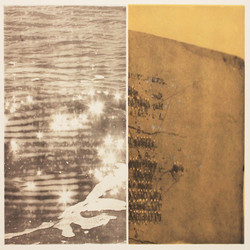
- Artwork [Cover Art]
- Ulrike Bretz-Faust
- Booklet Editor, Layout
- DeutschlandRadio
- Co-producer (1 to 12)
- Rolf Riehm
- Composed By
- Ute Hesse
- Engineer (13 to 57)
- Ingo Schmidt-Lucas
- Engineer [Tonmeister] (1 to 12), Mastered By [SACD-Authoring, CD-Mastering]
- Dorothee Schabert
- Engineer [Tonmeisterin] (13 to 57)
- John Patrick Thomas
- Liner Notes [English Translation]
- W. Richard Rieves
- Liner Notes [English Translation]
- Jörn Peter Hiekel
- Liner Notes [German]
- Reinhard Oechsler
- Management [Orchestra] (13 to 57)
- Frank Kämpfer
- Producer (1 to 12)
- Rolf W. Stoll
- Producer (1 to 12)
- Südwestrundfunk
- Producer [Produktion] (13 to 57)
- Armin Köhler
- Producer [Redaktion SWR] (13 to 57)