
★Moving Furniture Records
soccer Committee
**200 copies limited edition** "These songs were written between 2004 and 2005, when I had just discovered how I wanted to approach the phenomenon of 'song'. I had created songs with just voice for years, and now had found that the guitar could help tell me what mattered to me. I felt I could create a space by carefully experiencing and 'watching' voice, guitar, silence and overtones. I enjoyed this making of quiet songs, where I could voice things that would get lost in a crowd. I remember wond…

Less Is More
Recording of Orphax's live performance at Factor-IJ, Amsterdam in August 2021, part of the programme curated by Moving Furniture Records to accompany the Polderlicht-organised exhibition Less Is More. The full set is reproduced as recorded, without edits. The performance brings Sietse van Erve's recurring interest in minimalist aesthetics into conversation with his own drone practice, producing warm, organic atmospheres in which the listener's sense of time and place deliberately disintegrates.
Ursae Minoris
Seventh entry in Claudio F. Baroni's SoLo series, scored for double bass and loopstation and performed by Dario Calderone. Three movements derive their pitch material from a transcription of the celestial map of Ursa Minor, a method indebted to Cage's Atlas Eclipticalis but permitting performer freedom: pitches notated as loop sequences whose entry, exit and length the bassist controls, each tied to a specific extended technique. Acoustic drone of starfield variety.

Monoliths
**200 copies limited edition** "The occasion of this double album is to present the two different practices in my music, live performance and studio work. Although phenomenally coming from a different place, it is a result of years of experimentations to bring a simple yet complete electroacoustic set up both on stage and in studio. The original idea was to compose or perform with acoustic instruments generating sustained sounds in a way that, although electronically manipulated, would retain al…
John Duncan / T.R. Kirstein
First collaboration between Tobias R. Kirstein and John Duncan, prompted by a dream Kirstein had on 31 May 2019 - the day Roky Erickson died - in which Duncan repeated 'You Are Safe' against a backdrop of sine waves. Two long pieces result: Duncan voices texts (You Are Safe, the second 'Come To Me') sustained by Kirstein's slowly morphing electronic backgrounds, computer-generated drones that thicken into something close to insect resonance before settling. Process-led voice and electronics.

Additive Inverse
* Stunning collaborative work of field recordings and electronics by Jos Smolders and Jim O'Rourke * What if sounds were to fold in on themselves? Quite quickly after being 'born', even. Only to be released back into the 'normal' world of linear projection and moving waveforms from a resonant source to the ear drum to hearing and listening, some album length later? Through a looking glass of sorts, as if emerging from an anechoic chamber through the backdoor. From absolute silence into all heari…

Orphax Reworked (4CD Box)
Four-CD box collecting reworks of Orphax's 44 Sketches of 44 Seconds, in which Sietse van Erve handed forty-four short source sounds to friends with an open brief to take them outside their usual practice. The contributing artists - TVO/Ruaridh Law, Modelbau, Fani Konstantinidou, Machinefabriek, Jos Smolders, Elif Yalvaç, Siavash Amini and Orphax himself - produce over four hours of new music, each retaining their compositional fingerprint while submitting to a constrained shared palette.

Field Reports
First collaborative album by Philipp Bückle and Martijn Pieck (Cinema Perdu), grown out of their shared track for the Moving Music compilation. The vocabulary fuses field recordings with heavily treated modular synthesis to construct what the artists call a fictitious urban landscape on the other side of the door. Seven pieces unfold as a soundwalk through a city that does not exist - landmarks, brief encounters, machine sounds, muffled hallways - shot through with provisional sparks of light.

Rat Licker (7")
*300 copies * 2020 has been one of the worst years in recent history: a global pandemic with deadly outcomes, hateful police brutality leading to cold-blooded murder of countless black people and a wack conspiracy theory about a satanic, pederast network of the elite which further derailed society. These circumstances have been a direct inspiration for the Rat Licker 7” by Dead Neanderthals. Rat Licker is a scorching 12-tracks-in-9-minutes record that not only reminds us of the early days of De…

48 Hours
Third release in the MFR Contemporary Series. The Vonnegut Collective combines a recording of Thomas Adès's Piano Quintet (2000) - a dense, time-warping work requiring forty-eight hours of rehearsal - with a new commissioned piece by Tullis Rennie built around that process. Rennie's score interweaves rehearsal recordings and player interviews with improvised realisations of his own graphic score for the quintet, plus trumpet and electronics. Contemporary classical with embedded documentary.
Choosing Freedom
Second solo album by Gagi Petrovic, mastered by Jos Smolders. The pieces are performed on GEST, an instrument Petrovic designed himself with STEIM: a light-sensor interface that translates hand gestures breaking light beams into commands for a granular-synthesis environment built on audio recordings. The album frames itself as an exit from arbitrary expectations of what music should be, foregrounding intuitive performance and indeterminate structure within a precise compositional architecture.
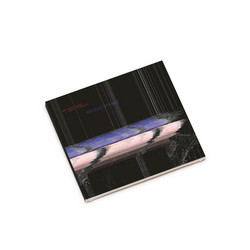
Recalcitrance
Philosopher of science Isabelle Stengers has studied the operations of states and their mobilization of technical practices to serve a presupposed general interest, which involves the production of rules and norms. Such rules and norms are blind to forms of knowledge that are denigrated as ‘local’ and ‘traditional’, and feature the correlative elimination of what does not conform and cannot be standardized – in other words, what is recalcitrant to objective evaluation. Anything that resists subs…

Vauville
Debut album by the young Belgian composer Ryan Van Haesendonck, mastered by Stephan Mathieu. The pieces grew from a week spent on the quiet beaches of Normandy, then continued in Brussels after his move from Antwerp. The vocabulary combines field recordings of church bells, improvised organ sessions, urban recordings of the new city and saxophone passages by Silke Bull, layered into eight short pieces. Cinema-informed ambient on the theme of solitude and self-preservation.
Soleils Noirs
First in a series of collaborations between artists already on the label. Bruno Duplant on church organ, Alfredo Costa Monteiro on synthesizer, composing remotely a single long-form piece. The vocabulary moves between mass, flow and slow combustion: tonal accumulation that the artists frame in alchemical terms as an athanor of doubt and dream, a continuous sublimation that renews itself. Slow drone built across the organ-synth axis, mastered by Duplant.

Continue
* Edition of 200 * With his new album “Continue” Richard Chartier presents four minimalist compositions with a focus on deep drones and apparent silences. The music is subtle, delicate and at moments fragile. Full, with details, like delicate patterns that unfold like ripples on water.
With a keen eye on details the compositions reflect Chartier’s earlier work, but also asks new questions. When is the creative process done? Is art ever finished or does it continue to develop? And how does the li…

Foliage
Foliage is a long-form graphic music score by Elliott Sharp, consisting of eighty risograph prints offered as abstract instructions open to any number of realisations by any instrumentalist or ensemble. Sharp works in the lineage of post-1945 graphic notation but with a contemporary twist: the score was produced by routing his own conventionally written music through graphics editing software, distorting, layering, inverting and blurring it until notation explodes into retinal artwork.
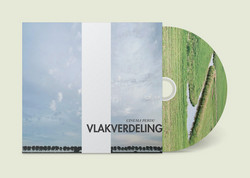
Vlakverdeling
Cinema Perdu's third album for the label, extending his investigation of human impact on landscape after Interventions in a Landscape and Amsterdam CS. The material here is drawn from trips through the Frisian polder, where the strict demarcations of the Dutch countryside change atmosphere with weather and light but above all with the geometric clarity of human marking. Field recordings are read as abstract forms and colours, then translated back into new compositions.

En De Stilstaande Tijd
Continuation of the same piano source material used on the Piano Music 7-inch, here developed into a long-form work. Orphax takes a postcard he bought in a Spanish village in 2001, while studying geology, as imaginative axis: the tranquillity of small houses, church and sand road as a place where time appears to stand still. The album builds organ-like, slightly dissonant tonal fields whose slow evolution renders that frozen-time atmosphere as patient, quiet, nostalgia-saturated ambient drone.
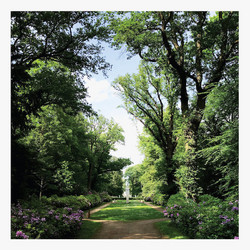
Haarlemmerhout
Polack returns to the park in south Haarlem made famous by Nicolaas Beets's Romantic 1839 novel Camera Obscura, and uses it as the field for an exercise in urban escapism. Local recordings (pigs from the petting zoo, birds migrating north from Africa) are torn apart and rebuilt with layers of synthesis and electronics, blurring the line between unprocessed source and synthetic counterpart. Field-recording ambient in the lineage of Chris Watson, but tilted toward romantic synthesis.
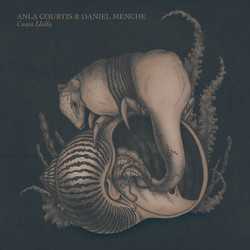
Cuspa Llullu
Second collaboration between Anla Courtis and Daniel Menche, recorded across Portland and Buenos Aires. Two side-long pieces traverse a kaleidoscopic sound labyrinth: Side A moves through metallic, multi-layered corridors in constant mutation, Side B opens outdoors and gradually visits a sequence of interior regions toward a final climax. The sound material is treated as living, vibrating matter rather than inert sample, a study in frequency-as-organism on the drone-noise threshold.

Ridge Of Humming Spoils
Final volume of Haarvöl's trilogy. After the noisy beginning of Bombinate and the move toward the periphery of Peripherad Debris, the trio arrives at the frontier as a psychoanalytic empty signifier: an edge that holds both interior and exterior. The album is built from what they call 'whispering remains', material left behind by previous compositional decisions, here treated as a vantage point looking both backward and forward. Drone microsound at the limit of the project's own grammar.
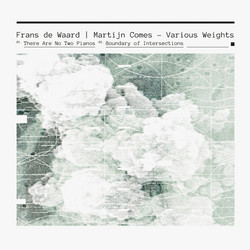
Various Weights
First collaboration between Frans de Waard and Martijn Comes, deliberately built without an underlying concept. Each artist supplied the other with a pool of source sounds: de Waard sent Comes Korg MS20 and Koma Field FX recordings and field material; Comes sent de Waard a processed stylophone, a loop and recordings from the University of Twente's web Software-Defined Radio. Two epic pieces result: Comes's harmonic deep-sonority drone, de Waard's quieter acousmatic-minimalist hover.
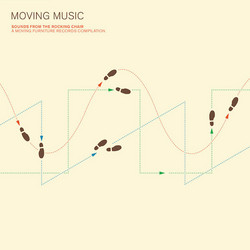
Moving Music - Sounds From the Rocking Chair
Compilation that grew out of the label's December 2019 crowdfunding campaign. Twenty-four musicians contributed across sixteen tracks, mixing solo pieces with ten new collaborations (TVO & Jos Smolders, Radboud Mens & BJ Nilsen, Kouw & Petrovic, and others). The set holds together with surprising consistency across modular composition, minimalist ambient drone and electroacoustic experiment, functioning as a cross-section of the label's network at a precise moment.
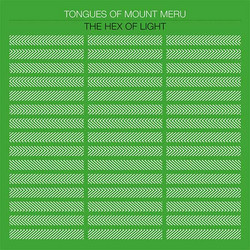
The Hex of Light
Long-form duo work by Jon Wesseltoft and Lasse Marhaug, ongoing since 2008 as an investigation into psycho-acoustics and the phenomenology of sustained sound. The Hex of Light, recorded in 2013, consists of two stringently close-knitted pieces built around microtonal frequency interaction and slowly unsettling shifts; each gradually blooms within its own sonic time, exposing binaural beats, ghost overtones and microscopic tonal motion. Trance-inducing drone in the most rigorous sense.
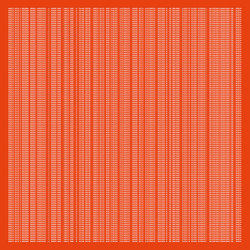
Broken Landscapes
Follow-up to Atsusaku (2016) by Gareth Davis (bass clarinet) and Merzbow. The earlier theme of mechanical compression is here extended into a meditation on the fears of mechanisation in the natural environment: North Sea wind farms, Southern Californian industry, the survival of animals in overrun habitats. Three tracks of impenetrable manipulated field recordings against saturated bass clarinet midrange and Merzbow's analogue/digital crossfire, with brief recognisable voices flashing through.

Winter Trilogy / The Big Fall
The Winter Trilogy and The Big Fall trilogies were realized between 2015-2019 in the Netherlands and implemented into a sequence of live shows during the same period. Both inspired by cultural sonic imprints, the Winter Trilogy (computer & accordion) and The Big Fall (computer & analogue synthesizer) explore the potential and the antitheses between analogue versus digital while expressing a personal view of particular rural landscapes.

States
States grew from a live-electronics setup developed by Tijs Ham (Tapage) in 2016: analogue feedback routed through digital manipulation to form a self-balancing, self-generating chaotic system, capable of producing its own deep melodic and textured material once the performer steps back. The 2017 sessions at Steim with bass clarinetist Gareth Davis insert a reed voice into this recursive system, opening it to spacious interplay between acoustic gesture and the autonomy of the patch.
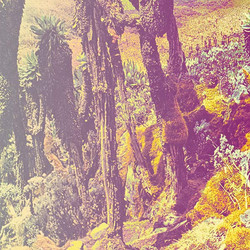
Assemblée, Relâche, Réjouissance, Parade
Two compositions on the social and ritual function of music, drawn obliquely back into the experimental frame. The first piece, L'Anglard de St-Donat, takes a Central-French mazurka recorded from Alfred Mouret as its hidden source, building solid drones and recurrent structures from bowed and struck metal objects with quasi-melodic counterpoint. In Le désir the strategy inverts: detuned organs provide the rigid harmonic context within which bowed metal sticks are tuned.

Terreng
Long-form duo work between Balázs Pándi (percussion) and Jon Wesseltoft (electronics), shaped as an open landscape of contrasts articulating space in both time and depth. The two players alternately trade and merge their instrumental identities, generating zones of improvised openness alongside densely constructed electroacoustic narrative. The vocabulary moves between quiet, ritually framed rhythmic space and saturated information, held as deliberate counterweights.

Breach
Zeno van den Broek's most aggressive work for the label, framed around chaotic systems and the energetics of protest and riot. Sine waves, noise and grid logics from his architectural-conceptual practice are pushed into pitch-black metal-electronic territory, with polyrhythmic structures driving the buildup and release of accumulated tension. A formal study of chaos that retains his rigorous minimalist vocabulary while shifting it into visceral, high-energy mass.
2
Second half of a two-part album by Mens and Kouw, recorded live in studio in December 2014 and following directly from the first volume. The two long-form pieces extend the duo's pursuit of precisely tuned analogue synthesis: deep, warm drone fields that gradually disclose, to patient listening, a rich substructure of resonances, artefacts and slowly shifting collages of texture. Material that resists time as event-based articulation and proposes it instead as immersive sonic sculpture.

Piano Music
Two short pieces built from piano recordings made by Orphax at De Ruimte in Amsterdam Noord during summer 2017. The 7-inch marks a deliberate break with his usual drone vocabulary, foregrounding more openly melodic ambient writing and treating the piano as the primary voice rather than as raw material. One of his most personal works to date, dealing in textural terms with closure, regret and the slow effort of moving on.
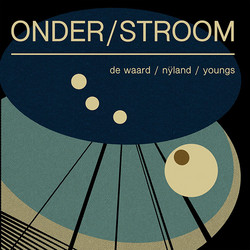
Onder/Stroom
Title and concept play against Extrapool's short-lived Zonder Stroom programme (performances entirely without electricity). One bleak winter afternoon the trio decided to do the inverse, using every keyboard, synthesizer and piece of electronics they could lay hands on. The album collects mixes and remixes of that single session: a joyful, dense electroacoustic improvisation with Richard Youngs's experimental folk instincts threading through de Waard's and Nÿland's electronic vocabulary.

Dead Beats
Dead Beats: A new composition by American avant-garde composer Alvin Curran for Dutch pianist Reinier van Houdt, brought together with the first ever recording of Inner Cities No 9 '9-11-01' The piano has always been at the core of Alvin Curran's oeuvre. Granted, you'd expect a statement like that from the liner notes to a collection of his piano pieces. In this case, however, he's said so himself, in a candid interview with sound artist Andrew Liles: "It’s the focal point and kind of a totem fo…

Not Knowing
Costa Monteiro's fifth solo accordion album, and the one in which he deliberately reverses his earlier recording strategy. Where previous works placed microphones almost inside the instrument to foreground materiality, structure and deconstruction, Not Knowing instead treats the accordion as an object in space, with the architecture of the recording room becoming essential to the work. The result blurs the limits of identification, holding the instrument's identity in productive uncertainty.

Horizontal Alliances, Vertical Conflicts
Nine years after Play Cat's Cradle, Rose and Sandy return to the same ecclesiastical source - here an auto-harp from the same convent - for a second extended collaboration, again played and processed live. The album divides into nine spectral bands functioning as strings to be stopped, muted or amplified, and reads the intervening years as a shift from devotion and idealism to entropy and conflict. The acoustic body remains, but its overtones now turn cold, shrill, fractured.

Fean
**200 copies** Fean started as a musical artist-in-residence project in a little church in the Frysian village Katlyk. The group consists of Jan Kleefstra, Romke Kleefstra, Mariska Baars and Rutger Zuydervelt (Machinefabriek), who also form the quartet Piiptsjilling. For Fean they are accompanied by Belgian guests Annelies Monseré, Sylvain Chauveau and Joachim Badenhorst. The Fean project gets its inspiration from the ecological decay of peatland in the Dutch province Friesland and in other part…

Spaces
**200 copies** "Spaces is a series of compositions based on recordings in museums. Each work builds on a binaural recording of the environmental sounds a museum and each has been processed based on different concepts. The approach for processing and adding of electronic sounds was inspired by an artwork that was hanging in the museum space. So space and artwork form a unity. As a composer and mastering engineer I am extremely sensitive to the sounds around me. But I’m also a keen visitor of muse…
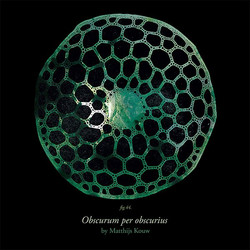
Obscurum per oscurius
The Latin title - 'explaining the obscure by means of the more obscure' - frames a collection of drones composed by Kouw across an extended period, in which the initial moments of inspiration are deliberately obscured in the final material. Long-form ambient drone work, mostly close to alien stillness with the occasional submerged rhythmic emergence, the album positions itself in the alchemical lineage where the act of explanation projects further mystery into what it claims to clarify.

Siticidelhous
Companion volume to Parkustomnie, drawn from the same 2016 sessions at the Conservatorio Jesús Guridi in Vitoria-Gasteiz. Guionnet (church organ) and García (electronics) again use volume as a compositional variable: the music is engineered so that at low playback levels the performance feels restrained and exquisitely subtle, while at high volume entirely new sonic strata emerge in overwhelming detail. Electroacoustic improvisation that turns the amplifier into part of the score.