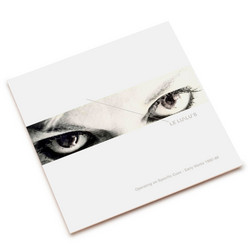
Maurizio Bianchi
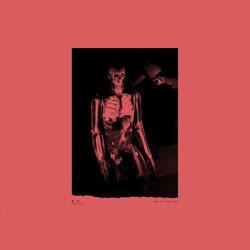
Archives (5LP box)
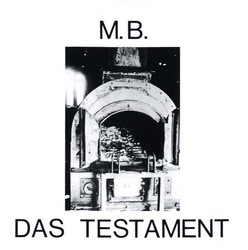
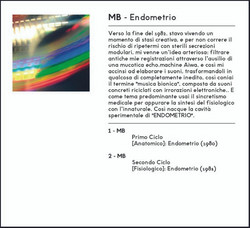
Archives stands as one of the most revealing documents in the vast and often labyrinthine discography of Italian industrial trailblazer Maurizio Bianchi, the Milan‑based artist better known under the moniker M.B. Emerging in the late 1970s from the mail‑art and cassette underground, Bianchi developed a singular approach to electronic sound: ascetic, concept‑driven and rigorously unconcerned with conventional musicality. Where many of his contemporaries still flirted with rock structures or sci‑fi theatrics, his work reduced everything to raw signal - sinews of feedback, lab‑cold synth tones, scraped frequencies and machine hum arranged like clinical diagrams of decay. Archives pulls together a selection of this formative material, originally scattered across tiny runs of tapes and obscure editions, and presents it as a stark, unflinching dossier of his early investigations.
What these recordings capture is less “songs” than a process of noise archaeology. Bianchi treats tape, oscillator and cheap electronics as strata to be eroded, corroded and re‑exposed, scraping away at loops and drones until their internal rust shows through. Long, airless passages of grey‑scale sound are punctured by sudden surges of high‑end whine or low‑frequency throb; overloaded channels buckle into grainy distortion, then flatten back into an almost motionless line. Rather than building toward cathartic climaxes, the pieces often feel like fixed environments - zones of toxicity or abandonment that the listener is invited to inhabit for uncomfortable stretches of time. In that sense, Archives underlines how closely Bianchi’s work aligns with the most severe strands of power electronics and medical‑themed industrial, even as it retains a strangely contemplative, almost meditative core.
He has often framed his output in terms of “degeneration” and “disintegration,” and the works in Archives bear that stamp: tones seem to rot as they repeat, rhythmic figures crumble into irregular patterns, and the very medium of tape becomes audibly stressed, saturated and exhausted. There is an austerity here that borders on the monastic - no samples, no narrative voice‑overs, no horror‑movie shock tactics, just a relentless focus on the microscopic life of noise itself. Yet within that narrow bandwidth, subtle shifts in density, texture and spectral balance take on outsized emotional weight, suggesting landscapes of ruin, institutional coldness or post‑apocalyptic stillness without ever resorting to explicit depiction.
As an archival release, Archives serves several functions at once. For those already immersed in Bianchi’s world, it is a crucial consolidation of elusive works that previously existed only in fragile, long‑vanished cassette editions and low‑circulation pressings. For newer listeners tracing the genealogy of industrial, noise and dark ambient music, it offers a direct line back to one of the genre’s foundational, if notoriously hard‑to‑follow, figures. Heard today, these pieces retain their capacity to unsettle, but they also read as starkly beautiful in their refusal of adornment - studies in entropy and repetition that prefigure whole swathes of later experimental practice.