**2026 Stock** Embrace 3: Magnetron/Quarz/Obsidian finds Polwechsel continuing their deep investigation into how composition, improvisation and fixed media can be threaded together, this time with a particular focus on translation: from tape piece to score, from software mock‑up to graphic notation, from imagined sound to real‑time ensemble negotiation. Joined by Andrea Neumann, the group shape a set of works that are as much about process as result, yet never feel dry. Instead, they unfold like detailed studies in how different kinds of structure can guide – and gently misdirect – four players who know each other’s habits almost too well.
In “Quarz”, Burkhard Beins begins not with notes on a page but with an acousmatic audio piece that becomes the score itself. The basis track is built from the opening and closing sounds of elevator doors, each movement revealing a new room ambience behind it. This composite is then given, separately, to each musician (including Beins) as a fixed reference. Playing and recording alone, none of them knows what approach the others will take, nor how Beins will later edit and mix their contributions. There are no instructions about how to respond to the “audio score”; the only shared anchor is the timing and the sequence of sonic situations in the reference track. When Beins later assembles the piece, coordinated events and material choices emerge almost cryptically: different players make decisions that, unknown to each other, are keyed to the same elevator thud, the same shift in virtual room tone, the same imagined doorway. The original reference never appears in the final version; what remains is the web of responses, the shadow of a space that only ever existed in their headphones.
“Obsidian” takes an almost inverted path. Here, Beins first “simulates” the entire piece in audio software, using instrumental samples of each player and/or analogue synth sounds as placeholders. These mock multitracks are treated like sketch models: a way to hear how density, register and gesture might behave over time. Screenshots of the multitrack sessions then become raw material for a graphic score. Beins transcribes the blocky visual shapes into lines, bands and symbols on the page, adds a time scale and some broad indications of material, dynamics and tempo – and hands this new, abstracted map back to the quartet. The actual musical substance still has to be discovered. Through repeated work phases, each player proposes instrumental “solutions” for every given situation: how to realise a certain block of colour or density on cello or bass, what kind of percussion texture might correspond to a particular swarm of rectangles, how electronics might thicken or hollow out a passage.
Throughout Embrace 3, the core line‑up – Michael Moser (cello), Werner Dafeldecker(double bass, electronics), Burkhard Beins (percussion) and Martin Brandlmayr (percussion) – operate like a tightly coupled system. In “Quarz”, their individually recorded parts interlock with uncanny precision around the absent elevator piece, giving the music a strange, dislocated sense of shared space: events line up and diverge as if the players were moving through the same building at different times. In “Obsidian”, the graphic score’s demands for specific densities and durations result in a music that feels both highly controlled and acutely sensitive; tiny shifts in bow pressure, stick choice or electronic grain become the key variables within each pre‑figured section. The presence of electronics on Dafeldecker’s side adds another layer of ambiguity, blurring the border between “instrumental sample” origins and their fully embodied counterparts.
The two works were recorded under very different conditions, emphasising their conceptual contrast. The individual parts for “Quarz” were captured by the musicians themselves at different locations during 2022, reinforcing the idea of a dispersed, headphone‑bound ensemble brought together only at the mixing stage. “Obsidian”, by contrast, was recorded in July 2021 at ORF Argentinierstrasse by Andreas Karlberger, with Ingrid Song assisting, situating the group once again in a shared acoustic room where the graphic instructions could be negotiated face to face. Both pieces were then mixed by Beins and Dafeldecker and mastered by Wolfgang Musil, whose touch preserves the fine gradations of space and texture that are central to the project.
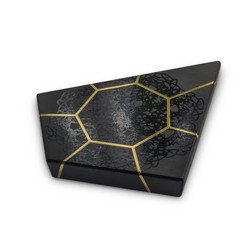
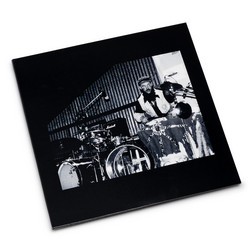
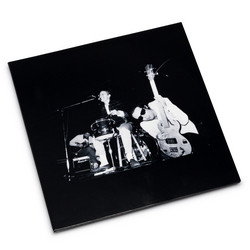
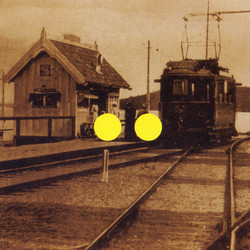
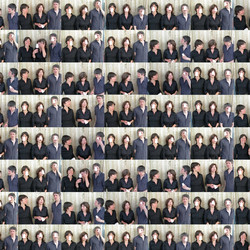
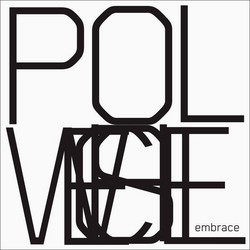
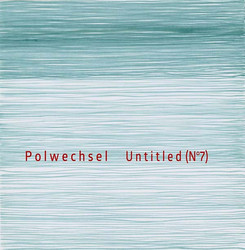
As with the other entries in the Embrace series, visual presentation is integral. Artwork by Teresa Iten and LP cover art by Michael Moser echo the music’s concern with layering, opacity and fracture: Quarz’s invisible source spaces, Obsidian’s black glass surfaces and internal reflections. Together, sound and image underline the sense that Embrace 3 is less a collection of pieces than a pair of related experiments in how far you can stretch the notion of “score” while still trusting four players to find themselves – and each other – inside it.