We use cookies on our website to provide you with the best experience. Most of these are essential and already present.
We do require your explicit consent to save your cart and browsing history between visits. Read about cookies we use here.
Your cart and preferences will not be saved if you leave the site.
play

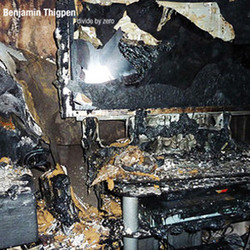
Benjamin Thigpen

Flux

Label: empreintes DIGITALes

Format: CD

Genre: Electronic

In process of stocking

€11.80
VAT exempt
+
-
Two multi-part Ina-GRM commissions by Benjamin Thigpen made in Visby, Stockholm and Paris: still (2007-09), built from untransformed recordings of common objects, and pulse (2010-15), made entirely on a Buchla 200 modular synthesizer.

Flux pairs two large works by Benjamin Thigpen, both commissioned by the Ina-GRM and developed over several years in Sweden and France: at the Visby International Centre for Composers, at EMS in Stockholm and at the GRM in Paris. Conceived for 5 and 5.2 channels, they are presented here in stereo versions made by the composer. Each is a suite of movements, four for still and three for pulse, and each opens with a line from Taoist writing.

still (2007-09), headed by a verse from Lao Tzu, is about stillness in movement: attention fixed on a single point, stability within an endless flow. All its sounds are recordings of common objects used without transformation, with only equalization, compression and reverberation applied. The complete work premiered in 2012 in the GRM's Multiphonies series.

pulse (2010-15) goes the opposite way in its sources: every sound comes from a Buchla 200 modular analog synthesizer. Under a line from Zhuang Zhou, it presents small fragments of a pulsating universe, arising and subsiding, with images of clouds, leaves in the wind, waves and the changing colours of the northern sun. It premiered at the Présences électronique festival at the Centquatre in Paris in 2015. Christian Zanési and the staff of the Swedish studios are thanked for both pieces.

Born in Wilmington, Delaware, in 1959 and naturalized French, Thigpen came back to music through electronic composition after studying literature and aesthetics. He has taught computer music at Ircam and now teaches at the Conservatoire royal de Mons, and performs in the duo Rust with Jean-François Laporte. For him, music is not a language but “a lived visceral experience”.

CD in OGpak, empreintes DIGITALes IMED 17144, 2017.
Details
Cat. number: IMED 17144
Year: 2017
Here’s someone who was born in the USA, now official inhabitant of France, but who refers to himself as a nomad. Although he dropped out of the conservatory, he taught at Ircam and now in Mons, Belgium.Read more

Here’s someone who was born in the USA, now official inhabitant of France, but who refers to himself as a nomad. Although he dropped out of the conservatory, he taught at Ircam and now in Mons, Belgium. He creates music for loudspeakers and has a duo with Jean-François Laporte, called Rust and as Les Frères Bobine with Stefano Bassanese and with cellist Benjamin Carat as Fluid Identities. “He thinks that music is not a language but a lived visceral experience, and that is not the art of sound but the art of the transcendence of sound”.

On his CD we find seven pieces, four of Still (2007-2009) and three that make up Pulse (2010-2015). In the first one “all the sound are recordings of common objects, used without transformation; the only processes applied are equalization, compression and reverberation”. It is not easy to say what these common objects are. In the three of the four parts it sounds like wind blowing down pipes, along with some amplified string object, set up in a hollow, reverb setting and in the other the amplified sound of rubbing objects over carpet; a very subdued, low, bass like sound.

I thought these were great pieces, especially because they didn’t sound for a change like something on Empreintes Digitales; no endless amount granular synthesis here. On Pulse he uses the sounds of Buchla 200 Modular analogue synthesizer and it’s all about small fragments forever changing. This too is quite the different kind of music than we know from the label; it is much more an analogue feeling that we get from this piece of music, with the second part being a particular harsh one, even when more feedback like sounds are part of all three. Maybe this is Empreintes Digitales entering the domain of modular synthesizers? The third part of Pulse is a particular beautiful, shimmering piece of delicacy but also with that much needed edge that makes you sit up and listen closely. This was altogether an excellent release.

[…] Et on pourrait chanter peu ou prou les mêmes louanges sur le Flux de Benjamin Thigpen: même joie de la matière sonore crue et virulente, même si plus ramassée et plus trapue chez Thigpen.Read more

[…] Et on pourrait chanter peu ou prou les mêmes louanges sur le Flux de Benjamin Thigpen: même joie de la matière sonore crue et virulente, même si plus ramassée et plus trapue chez Thigpen. Cela fait d’ailleurs longtemps que je considère Benjamin Thigpen (né en 1959) comme un des compositeurs de musique électronique, tendance laptop (il est aussi un expert de la programmation en MaxMSP, qu’il enseigne par ailleurs), les plus intéressants, sachant aller dans la virulence sans pour autant se référer à la noise (ce qui n’est ni une qualité ni un défaut: juste un positionnement très différent). Sur ce disque cependant, il semblerait qu’il n’y ait ni laptop ni Max, puisque la première pièce, le long et beau still, est bâtie à partir «des enregistrements d’objets ordinaires», tandis que la seconde, pulse, est jouée sur un synthétiseur Buchla. Mais peu importent les outils, c’est la musique proposée qui compte, et la sienne est magnifique, presque vitale pourrait-on dire. […]

Benjamin Thigpen fait partie de ces artistes qui abordent la musique de façon viscérale, multipliant les projets à l’image de Rust aux côtés de Jean-François Laporte, Les Frères Bobine avec Stefano Bassanese ou Fluid Identities avec le violoncelliste Benjamin Carat.Read more

Benjamin Thigpen fait partie de ces artistes qui abordent la musique de façon viscérale, multipliant les projets à l’image de Rust aux côtés de Jean-François Laporte, Les Frères Bobine avec Stefano Bassanese ou Fluid Identities avec le violoncelliste Benjamin Carat.

Regroupant 4 titres de Still et 3 autres issus de Pulse, Flux est un concentré du savoir faire de l’artiste qui joue avec les objets pour en tirer des sons non modifiés qu’il combine via un travail sur l’amplification, la compression et l’équalisation. Son œuvre navigue sur les eaux d’une électroacoustique aux allures de mantras naturalistes bousculés par le bruit de cordes frottées et de claquements, de pierres glissant le long de nos cauchemars et de soubresauts aliénés.

Benjamin Thigpen fascine de par sa faculté à créer des pièces singulières à la familiarité dérangée, construite à coups de manipulations savamment agencées flirtant avec l’excellence de narration. On est pris dans ses pièges auditifs qui alternent agressions sonores et balades boiteuses dans les profonds recoins d’une folie nouée au creux de nos tripes. L’excellence est dans chaque recoin de cette jungle de sons accumulés, laissant apercevoir l’envers d’un décor peint aux couleurs chair, gorgé à ras bord de sensations étranges et d’ombres dissimulées. Très fortement recommandé.

18. Benjamin Thigpen — Flux There are just two works on this disc, both of which eschew the trademark clichés that have contributed to make acousmatic music seem a tired, if not spent, force.Read more

18. Benjamin Thigpen — Flux There are just two works on this disc, both of which eschew the trademark clichés that have contributed to make acousmatic music seem a tired, if not spent, force. In the four parts of still, Thigpen explores a sound palette of friction, ranging from the momentary glances of short impacts to longer stretches of rubbing and scraping. These are formed (or, seemingly, form themselves) into the kind of gritty, squally drone explorations one associates with David Jackman’s Organum. There’s a pronounced shift halfway through the third part, the introduction of drum-like thuds becoming a catalyst that transforms things into a wonderfully complex texture that fills the final part of the piece. pulse, using sounds generated by a Buchla 200 analog modular synth, is even more engrossing. Early on Thigpen explores the shimmer and judder resulting from placing frequencies beside each other, with the slow care of a scientist in a lab. This sounds simple, but the exquisite ballet of elements that results is utterly mesmerising and beautiful. The second part evokes Ryoji Ikeda in the way it converts pitches into burbling and twanging streams of data, arranged into a central climax that’s nothing short of glorious.

More by Benjamin Thigpen

Recently viewed