Various
Household Objects (And Sundry Massed Gadgets)
Tracked express shipping from Italy, no customs or import VAT in the EU. Shipping costs
Huge Tip! Fifty years on, an abandoned dream takes shape. What began as a post-Dark Side of the Moon whisper - Pink Floyd's notion to compose entirely from household sound - now emerges as a monument to constraint, curatorial vision, and the democracy of domestic sonics. William Hayter and Barry Lamb didn't resurrect a museum piece. They commissioned something altogether more vital: twenty-seven independent visions, each artist tasked with the same elemental rule - excavate your house for sound. No instruments. No samples. Only the sonic textures already dwelling within four walls, manipulated through musique concrète discipline. The constraint becomes the liberation.
What unfolds is vertiginous in its range. Some pieces seduce through recognition - you'll hear the egg-slicer or the water's particular voice, meticulously catalogued. Others dissolve into pure texture, the objects becoming sculptural material, their origins irretrievable. The contributors span from the known (The Residents, Steve Beresford, Mark Hewins) to emerging voices, making this also a sampler of contemporary experimental practice - a climate check on how sound artists approach limitation and domestic archaeology.
There's a lineage threading through this work: from John Cage's prepared piano to Pierre Schaeffer's railway recordings to the found-sound experiments of industrial pioneers. But Hayter and Lamb have positioned it differently - not as provocation, but as methodology. As invitation. As evidence that creative rigor doesn't demand expensive equipment; it demands ears, patience, and proximity to the ordinary world.
Nick Mason's introduction carries weight precisely because it doesn't oversell. His acknowledgment that the contemporary works surpass their original conception isn't nostalgia - it's recognition. It tells us something profound about how constraint sharpens vision across fifty years.
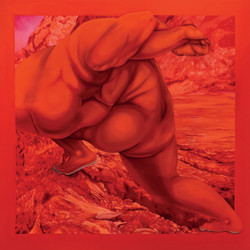
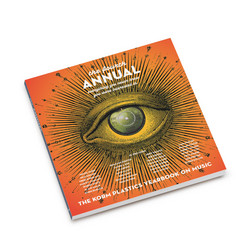
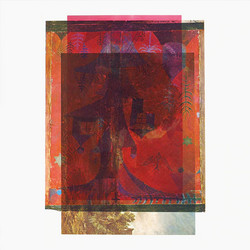
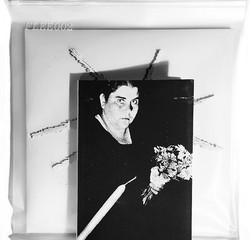
The package itself deserves mention: a beautifully illustrated 32pp book, each track elucidated with artwork by Michael Leigh, photography by Sean Kelly, design by Tim Schwartz. This is curatorial care at every level - a double CD that understands presentation as part of the statement.
Format
© 2025 Reserved ℗ 2025 The 62nd Gramophone Company.
6 Panel digipack with 36 page booklet.
Hype Sticker:
Household Objects
A 50th Anniversary
reimagining of [a45467]'s
unreleased album
Household Objects with
introductory notes by
[a246097]
Made in Czech Republic.
Release notes
© 2025 Reserved ℗ 2025 The 62nd Gramophone Company. 6 Panel digipack with 36 page booklet. Hype Sticker: Household Objects A 50th Anniversary reimagining of [a45467]'s unreleased album Household Objects with introductory notes by [a246097] Made in Czech Republic.
| 1-1 | Trickle Treat | 5:41 | |
| 1-2 | A Woman's Work Is Never Dub | 3:04 | |
| 1-3 | CCS & | 2:39 | |
| 1-4 | In The Studio | 1:31 | |
| 1-5 | Florian's Silvervine-Lick Breakfast | 2:47 | |
| 1-6 | Gift | 3:12 | |
| 1-7 | Three-Nothing Principle | 1:53 | |
| 1-8 | Hhand 2 | 3:45 | |
| 1-9 | In (And Out Of) Sink | 3:21 | |
| 1-10 | Washing Up | 4:55 | |
| 1-11 | No Mouse Is An Island | 4:12 | |
| 1-12 | Drum N Basin | 3:05 | |
| 1-13 | Objects In The House | 5:52 | |
| 1-14 | Cochina Expresso | 4:09 | |
| 2-1 | Mishandled Water Music | 1:55 | |
| 2-2 | End Of It All | 5:51 | |
| 2-3 | Cuppa for Alvin | 3:07 | |
| 2-4 | Pig Crumb Hoover | 0:22 | |
| 2-5 | Pie Wrecks | 4:04 | |
| 2-6 | HOME:WORK | 4:58 | |
| 2-7 | Carnaval Des Objets Maison | 3:01 | |
| 2-8 | Dali's Flies | 4:40 | |
| 2-9 | What's The Title? | 2:36 | |
| 2-10 | Gerald's Acousmatica | 6:07 | |
| 2-11 | H2 Oh! | 5:14 | |
| 2-12 | Metallurgy | 3:38 | |
| 2-13 | The Progressive Rise And Rapid Fall Of Artificial Intelligence | 5:33 |
- Michael Leigh
- Artwork
- Pink Floyd
- Concept By [Original Concept]
- Tim Schwartz
- Design, Layout
- Barry Lamb
- Liner Notes, Producer [Produced By], Administrator [Office Admin And Spreadsheets]
- Nick Mason
- Liner Notes
- William Hayter
- Liner Notes, Producer [Produced By], Compiled By, Sequenced By, Layout [Layout Assistant], Photography By [Photographers Assistant]
- Bob Drake
- Mastered By
- Sean Kelly
- Photography By
- Hipgnosis
- Photography By [Photographic Inspiration]