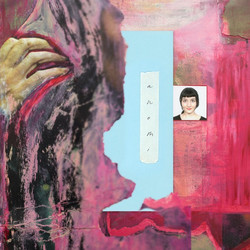
** Edition of 200 ** Hyperit begins in a theatre, with a lawn that doesn’t belong there. For this project Nev Lilit - the musical guise of composer and performer Hedvig Jennefelt - draws directly from her collaborations with philosopher Jonna Bornemark at Orionteatern in Stockholm, where a performance‑lecture gradually morphed into an excavation. Before each appearance, Jennefelt laid down her own temporary terrain on stage: dirt, sand, gravel, rocks, weeds, even a small body of water hidden beneath the turf. Over the course of the performance she would dig into this constructed lawn, going deeper and deeper, microphones attached to shovels and tools, capturing each scrape, crumble and splash as part of a live, unfolding soundscape. The lecture was not simply spoken; it was tunnelled into.
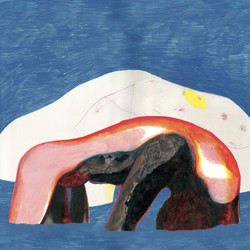
On Hyperit (Swedish for a volcanic rock, “hypersthenite” in English), she reimagines that staged archaeology as a self‑contained world of sound. Rather than simply documenting the performances, Jennefelt uses them as a springboard, building a new set of compositions with electronics, voice and fresh field recordings. The album treats geology not as metaphor but as method: layers of noise, resonance and rhythm are arranged like strata, suggesting meteorites, magma flows and the dense, inaccessible matter of the Earth’s interior. Sub‑bass rumbles feel like tectonic shifts; granular textures resemble soil disintegrating between fingers; high, glassy tones glint like mineral veins suddenly catching light. Vocals slip in as murmurs, chants or wordless exhalations, more like currents of air inside a cavern than conventional foreground melody.
Crucially, Hyperit is not content to gesture at “nature” from a safe distance. Jennefelt aims to evoke the sensation of being inside the eponymous volcanic stone - inside the mountain rather than looking up at it. The music often closes in around the listener, narrowing the stereo field, thickening the midrange until it feels as if the air itself has weight. Moments of near‑silence become pressure zones; sudden irruptions of noise or rhythm register like fractures, drill hits or unseen collapses deeper down. Yet this is not an exercise in mere claustrophobia. Just as the original performances balanced philosophical discourse with physical labour, the record balances heaviness with flashes of eerie beauty: resonant drones that bloom into unexpected harmonies, fragments of voice that sound simultaneously intimate and geological, as if the rock were trying to remember how to speak.