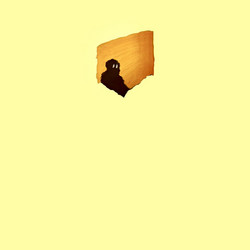
Leosia is the second ECM album by the quartet that trumpeter Tomasz Stanko led in the 1990s with Bobo Stenson, Anders Jormin and Tony Oxley, following Matka Joanna. It holds six Stanko compositions in his brooding "Slavic" manner, set against short duo and trio improvisations. The music is darker and more inward than its predecessor, and it stays away from the standards repertoire many players were revisiting at the time.
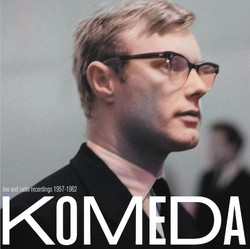
The group was Polish, Swedish and British, and about four years old when it recorded here, in January 1996 at Rainbow Studio in Oslo, with Manfred Eicher producing. Its debut, Bosonossa And Other Ballads, had come out on the Polish label Gowi in 1993, and Matka Joanna was Stanko's first ECM album as leader since Balladyna in 1975. ECM's notes link Stanko and Oxley as pioneers of European free playing. Stanko came up with Krzysztof Komeda, both men worked with Cecil Taylor, and Oxley spent five years as house drummer at Ronnie Scott's. Stenson had recorded for ECM since the early 1970s and played with Charles Lloyd from 1990, while Jormin had made his ECM debut with Lloyd in 1991.
Morning Heavy Song opens the album slowly, the trumpet exposed before the rhythm section enters. Die Weisheit von Le comte Lautréamont pays tribute to the author of Les Chants de Maldoror, with Oxley placing sparse accents around the theme. The middle of the record belongs to the improvisations. Brace is credited to Jormin and Oxley alone and Trinity to the piano trio, while in No Bass Trio trumpet, piano and drums play without Jormin. Hungry Howl, at almost ten minutes, is the longest piece, and the title track closes the set at more than nine.
Stanko's sound is the centre of it all. Writing in The Wire, Stephen Graham described his "bent notes, slurs, smears, and violent fanfares", and Jazz Journal praised his "poetic feeling for cross-rhythmic drama". ECM followed the album with Litania, Stanko's septet tribute to Komeda.
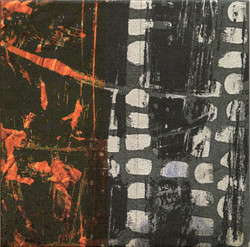
This is the CD edition, ECM 1603, first released in March 1997, in a jewel case housed in an O-card.