Herbie Hancock
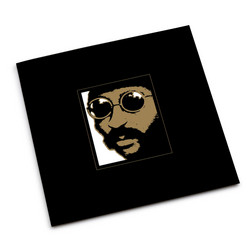
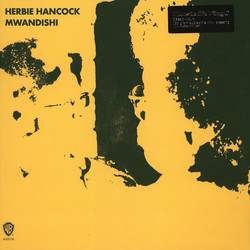
Mwandishi (LP, Green)
In stock (ships within 1-2 working days)
Tracked express shipping from Italy, no customs or import VAT in the EU. Shipping costs
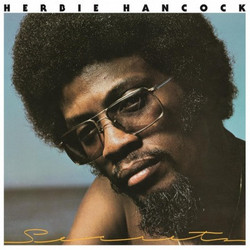
The 1971 entry point into Herbie Hancock's celebrated Mwandishi trilogy, returning here on vinyl. Mwandishi opens what would become the most adventurous and freely exploratory chapter of Hancock's discography, the first record to officially document the sextet that the pianist would shape into one of the great working bands of early seventies jazz.
Recorded at Wally Heider Studios in San Francisco on New Year's Eve 1970 and released in March 1971 on Warner Bros, the album marked Hancock's decisive step away from post-bop into spacier, longer-form territory. The line-up, gathered through 1970 and brought into a single session, drew together a remarkable ensemble of players, each of whom adopted a Swahili name for the project: Mwandishi (composer) for Hancock himself on Fender Rhodes, Mchezaji (the player) for Buster Williams on bass, Jabali (strength) for Billy Hart on drums, Mganga (doctor) for Eddie Henderson on trumpet and flugelhorn, Mwile (body) for Bennie Maupin on bass clarinet, alto flute and piccolo, and Pepo Mtoto (spirit child) for Julian Priester on tenor and bass trombone.
Across three extended pieces, the record extends the electric, suspended-time language Hancock had absorbed from Miles Davis's In A Silent Way into a territory of its own. "Ostinato (Suite for Angela)", dedicated to Angela Davis, rides a 15/4 vamp and is augmented by Leon "Ndugu" Chancler on second drums, José "Chepito" Areas (Santana) on congas and timbales, and a young Ronnie Montrose on guitar. "You'll Know When You Get There" floats on ethereal Rhodes voicings and chamber-like horn arrangements; the twenty-one minute "Wandering Spirit Song", written by Priester, unfolds from elegiac restraint into collective free playing.
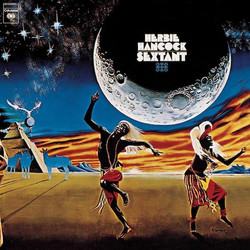
Produced by David Rubinson and engineered by Fred Catero, Mwandishi was followed by Crossings (1972) and Sextant (1973), completing the trilogy that Pat Metheny, among many others, has long held as one of the touchstones of post-Bitches Brew jazz. Its commercial reach at the time was modest, but its reputation has only grown.
Format
Limited edition of 2000 individually numbered copies on green coloured vinyl.
180 gram audiophile vinyl.
Recorded at Wally Heider Recording Studios, San Francisco, Calif.
Release notes
Limited edition of 2000 individually numbered copies on green coloured vinyl. 180 gram audiophile vinyl. Recorded at Wally Heider Recording Studios, San Francisco, Calif.
| A1 | Ostinato (Suite For Angela) | 13:05 | |
| A2 | You'll Know When You Get There | 10:01 | |
| B | Wandering Spirit Song | 21:23 |
- Herbie Hancock
- Arranged By
- Mchezaji / Buster Williams
- Bass
- Mwile / Benny Maupin
- Bass Clarinet, Alto Flute
- Bonnie Schiffman
- Design [Front Cover]
- Robin Mitchell
- Design [Front Cover]
- Jabali / Billy Hart
- Drums
- Ndugu / Leon Chancler
- Drums, Percussion
- Mwandishi / Herbie Hancock
- Electric Piano [Fender Rhodes]
- Aulikki Niitynen
- Engineer [Assistant Recording]
- Fred Catero
- Engineer [Recording, Catero Sound Company]
- Lee Weisel
- Executive-Producer
- Edmund Shea
- Photography By [Back Cover]
- David Rubinson
- Producer
- Pepo Mtoto / Julian Priester
- Trombone [Trombones]
- Mganga / Eddie Henderson
- Trumpet, Flugelhorn