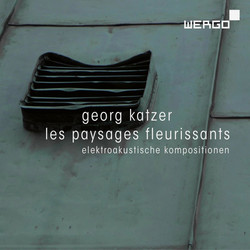
Georg Katzer
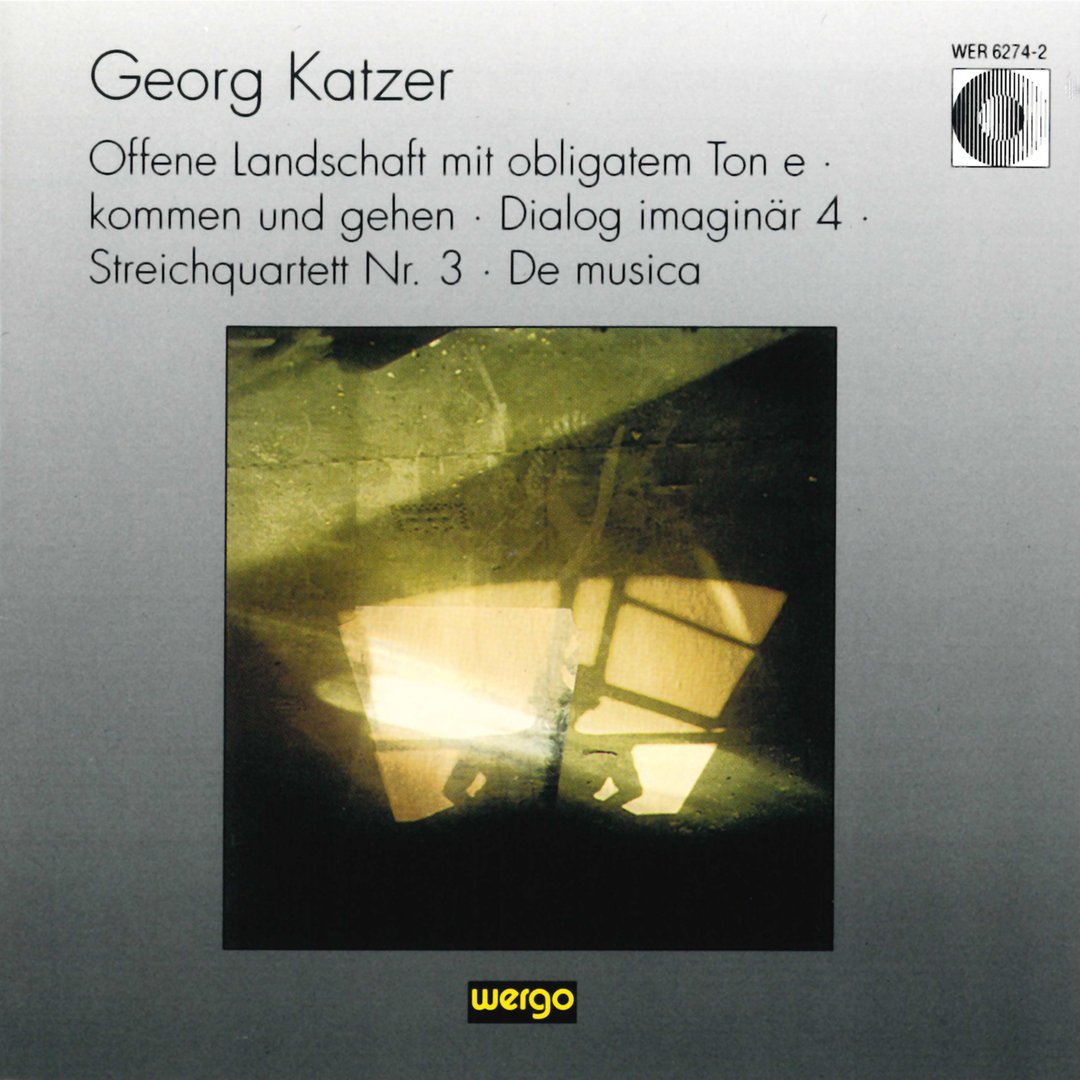
Offene Landschaft mit obligatem Ton e / kommen und gehen / Dialog imaginär 4 / Streichquartett Nr. 3 / De musica
FormatCDLabelWergoGenreComposition
Arriving from the supplier: On backorder (ships as soon as it reaches us)
Tracked express shipping from Italy, no customs or import VAT in the EU. Shipping costs
Five works by Georg Katzer spanning 1977 to 1991, for orchestra, wind quintet with piano, bass clarinet and tape, string quartet and twelve voices. The performers include the Chamber Orchestra of Europe under Peter Eötvös and the Arditti Quartet, and the disc covers nearly every medium Katzer worked in apart from the stage.
Katzer was born in 1935 in Habelschwerdt, Lower Silesia (now Bystrzyca Kłodzka in Poland), and died in 2019. He was the last master student of Hanns Eisler and a pioneer of electronic music in East Germany, where he founded the first studio for it. The recordings come from several sources: Offene Landschaft mit obligatem Ton e (1990) was recorded on 20 February 1991 with the Chamber Orchestra of Europe; kommen und gehen (1981) by the Bläservereinigung Berlin on 13 April 1985; the Third String Quartet (1986) by the Arditti Quartet for Westdeutscher Rundfunk on 15 May 1988; De musica (1977) by the Berliner Solisten under Dietrich Knothe on 14 April 1984. Dialog imaginär 4 (1991), with bass clarinettist Wolfgang Fuchs, was realised at the studios of the Groupe de Musique Expérimentale de Bourges in September 1993.
Offene Landschaft confronts the listener with unrelieved tension, constantly setting musical opposites against each other and producing new sources of conflict. kommen und gehen ("coming and going") grew out of Katzer's work with the Bläservereinigung Berlin; here he uses his own "modi", a technique that yields sonorities beyond tightly packed chords and a wide range of nuance. The Third Quartet, premiered by the Arditti in 1988, is full of the jagged, varied timbres familiar from Webern's op. 5 and carries traces of what Katzer called the "ups and downs of subjective states". De musica for twelve vocalists is a biting musical treatise that warns against a lofty critical stance in matters of music.
The CD was produced with financial support from the German Federal Ministry of the Interior in cooperation with the German Music Council, and its master was prepared with the Staatliches Institut für Musikforschung in Berlin. Stefan Amzoll wrote the booklet notes.
CD, Wergo WER 6274 2, released in 1995 (74'00").
Release notes
Offene Landschaft mit obligatem Ton e (1990) Lizensiert durch Deutsches Rundfunkarchiv Aufnahme: 20. Februar 1991 © 1990 C. F. Peters, Frankfurt kommen und gehen für Bläserquintett und Klavier (1981) Mit freundlicher Genehmigung von DSB Deutsche Schallplatten GmbH, Berlin Aufnahme: 13. April 1985 © 1983 Deutscher Verlag für Musik, Leipzig Dialog imaginär 4 für Baßklarinette und Tonband (1991) Realisiert in den Studios der Groupe de Musique Experimentale de Bourges, September 1993 © 1991 Georg…
| 1 | Offene Landschaft Mit Obligatem Ton E | 17:15 | |
| 2 | Kommen Und Gehen | 13:35 | |
| 3 | Dialog Imaginär 4 | 11:13 | |
| 4 | Streichquartett Nr. 3 | 13:46 | |
| 5 | De Musica | 16:26 |
- Georg Katzer
- Composed By
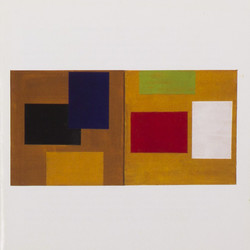
- Rose Schulze
- Cover [Abb.]
- Stefan Amzoll
- Liner Notes
- Bradford Robinson
- Liner Notes [English Translation]
- Gisela Schneider
- Liner Notes [Redaktion]
- Rose-France Raddatz
- Liner Notes [Traduit Par]
- Angelika Katzer
- Photography By [Foto Innenseite]