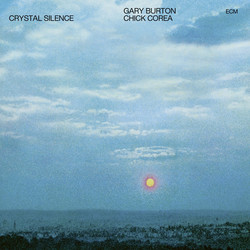
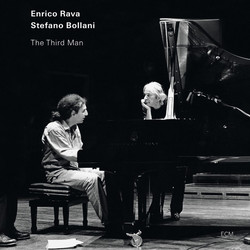
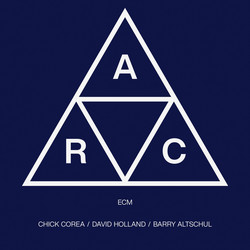
Orvieto is the first recorded collaboration between pianists Chick Corea and Stefano Bollani, taken from their New Year concerts at the Umbria Jazz Winter festival in Orvieto's Teatro Mancinelli. It was also Corea's first new ECM date in more than a quarter of a century. The two men did not rehearse. As Corea wrote, there was "only a choice of songs to use", and the free passages were not arranged in advance.
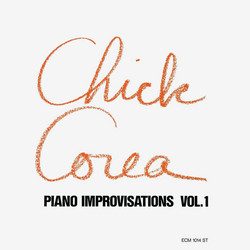
By then the duo had been playing Italian festivals together for more than two years, starting in Ravello in July 2009. Bollani had been listening to Corea since the age of eleven. Corea, who had played two-piano concerts with Herbie Hancock, Friedrich Gulda and Gonzalo Rubalcaba, had already named Bollani as an inspiration in the notes to an ECM reissue of his solo improvisations. Bernie Kirsh recorded the concerts, with Roberto Lioli assisting, and Manfred Eicher produced the album. Both pianists wrote liner notes.
The 75-minute programme is split into two parts, each opening with an Orvieto Improvisation; the second slides into Miles Davis's Nardis, which Corea used to play with its composer. Brazil supplies two Jobim tunes, Retrato em Branco e Preto and Este Seu Olhar, and Dorival Caymmi's Doralice. Fats Waller's Jitterbug Waltz sits beside the standards If I Should Lose You and Darn That Dream. Tirititran, a flamenco-tinged traditional tune, grows from handclapping and drumming on the piano body into a relaxed groove. Near the end comes Corea's Armando's Rhumba, a favourite since the My Spanish Heart era, taken at a fast tempo before a closing Blues in F.
Bollani has said the pair sound like one pianist with four hands, and critics often struggled to tell who was playing what. In The New York Times in 2011, Nate Chinen found their reading of If I Should Lose You "brisk, companionable and practically seamless". The Guardian heard the impulsive Blues in F as "the most creative assertion of their differences as players", and placed it, with Armando's Rhumba, among the best moments of the night.
This is the CD edition, ECM 2222, released on 30 September 2011.