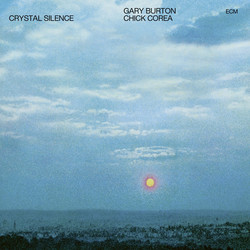
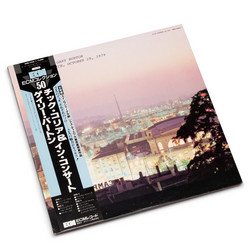
Lyric Suite for Sextet is a seven-part work by Chick Corea for his long-standing duo with vibraphonist Gary Burton, joined by a string quartet. Released by ECM in 1983, it was the pair's fourth album for the label after Crystal Silence, Duet and the live In Concert, Zürich. Here the duo's quick, intimate dialogue is set inside a fully written score for six players, with the quartet as a partner in the counterpoint.
Corea composed the whole suite and plays piano, while Burton plays vibraharp. The quartet consists of violinists Ik-Hwan Bae and Carol Shive, violist Karen Dreyfus and cellist Fred Sherry, a founder of the new-music ensembles Speculum Musicae and Tashi. The sextet recorded in September 1982 at Mad Hatter Studios in Los Angeles, with Bernie Kirsh as engineer. Martin Wieland mixed the tapes at Tonstudio Bauer in Ludwigsburg, and Manfred Eicher produced.
The movements follow a classical plan, from Overture to Finale, and run from under two minutes to more than ten. Sketch (for Thelonious Monk) is a short tribute, and Roller Coaster lasts barely a minute and a half. The centre of gravity is Brasilia, where Corea's piano unfolds slowly, the vibraphone enters in light, separate strokes and the strings take a full part in the conversation. The Waltz and the long Dream give Burton room for the fluid runs that defined the duo, with the quartet shading the harmony beneath them.
Corea and Burton took the suite on the road with strings. Reviewing a concert at Symphony Hall for The Christian Science Monitor in February 1984, Rushworth M. Kidder called it "a tour de force for its composer's love of elusive rhythms". Writing on ECM Reviews in 2011, Tyran Grillo admitted that the strings can first seem superfluous next to the duo, but heard them fuse with it in the second half. He found Corea's delicacy on Brasilia "a wonder". The pairing of duo and string quartet returned decades later, when the two recorded with the Harlem String Quartet on Hot House (2012).
This is the CD edition of ECM 1260 (also numbered 815 274-2), first released in 1983.