Robert Marlow
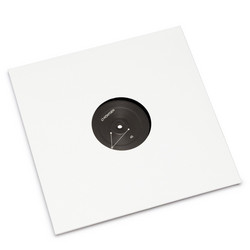
The Blackwing Sessions | Demos 1982 / 83 (LP)
The Blackwing Sessions, Demos 1982/83 offers a rare, granular look into the machinery of early British synth‑pop, peeling back the lacquer from a record long whispered about as a “lost classic”: The Peter Pan Effect by Robert Marlow. These are the primary demo recordings, programmed in the spring of 1982 at co‑producer Eric Radcliffe’s home in Gravesend, with Radcliffe and Marlow’s best friend, synth‑pop architect Vince Clarke, at the controls. Clarke, fresh from founding roles in Depeche Mode and Yazoo, was at the height of his powers as writer, programmer and studio thinker. Pairing him again with Radcliffe - the engineer who had shaped Depeche Mode’s Speak & Spell and Yazoo’s Upstairs at Eric’s - turned Marlow’s solo debut into a kind of Basildon summit meeting. The demos gathered here are the sound of that moment before everything was polished, when ideas still spark and misfire in the same breath.
By 21, Marlow was already a veteran of the Basildon scene. His “baptism of fire” came in 1978 as guitarist for The Vandals, a punk outfit formed by Alison Moyet with school friends Kim Forey and Susan Paggett. Punk’s charge quickly bled into electronics: in 1979 Marlow became the first of the so‑called “Basildon Mafia” to buy a synthesizer, forming The Planwith Clarke on guitar and Perry Bamonte (later of The Cure) on bass. That was followed by French Look, an all‑electronic band he fronted with friend Martin Gore; both Gore and French Look soundman Dave Gahan would soon be drafted into Depeche Mode. A third iteration, Film Noir, teamed Marlow again with Bamonte and synth player Alan, and earned an opening slot for Depeche Mode’s triumphant Basildon homecoming on the Speak & Spelltour in 1981. In other words, by the time The Peter Pan Effect demos were tracked, Marlow was not an outsider pressing his nose to the window; he was woven into the very fabric of that new‑town synth explosion.
The material on The Blackwing Sessions was never meant to stay in the drawer. Yet after the album was shelved by distributor RCA in 1983, it remained unheard until the late ’90s, when Swedish label Energy Rekords finally remastered The Peter Pan Effect. The demos themselves surfaced later as a parallel narrative: songs in rougher clothing, some containing alternate lyrics, all revealing how Marlow, Clarke and Radcliffe initially framed the project. Alongside them sit the strands of a more public story: four singles released through Clarke and Radcliffe’s Reset Records. “The Face of Dorian Gray” and “I Just Want to Dance” appeared in 1983, the latter represented here in an alternate‑lyric version; 1984 brought the string‑driven “Claudette,” and 1985 the gloriously camp “Calling All Destroyers.” The demos lack the sheen of those singles and of the completed album, but they compensate with proximity - you can hear the circuitry hum, the guide vocals straining for a shape, the drum patterns being tested for where the floor will actually move.
Part of the charm, and value, of The Blackwing Sessions lies in their imperfections. Sourced from Marlow’s own analogue archives and painstakingly restored, the tracks carry dropouts, hiss and small distortions that act as a kind of forensic evidence of their origins. Underneath, the Clarke/Radcliffe fingerprints are unmistakable: spring‑loaded arpeggios, crisp, syncopated drum programming, and arrangements that balance icy surfaces with melodic warmth. Marlow’s voice, freed from the expectations that would later cling to synth‑pop frontmen, sounds both boyish and bruised, threading lines about self‑image, desire and escape through a grid of gleaming machines. You hear him as he was meant to be heard in that moment - less an also‑ran from the Basildon orbit than a writer whose timing with the industry simply misaligned.
Framed by Wilcus Stanshall’s 2012 liner essay, this collection positions The Blackwing Sessions as both an entertaining listen and a minor historical intervention: a document of a specific British new‑town phenomenon, where a tight group of teenagers turned cheap synths and access to Blackwing Studios into a pop language that would circle the globe. The dedication that closes the package - to Vince Clarke, Eric Radcliffe, family, friends, labels and fellow obsessives - underlines that this is, finally, a community record: the sound of friendships, shared obsessions and small studios pressing back against the blunt decisions of major‑label logic. Heard now, these demos don’t just illuminate how The Peter Pan Effectcame to be; they restore to the story its rough edges, its experiments and its sense of possibility, reminding us that every “lost classic” was once just a handful of people in a room, chasing an idea before it disappeared.