Jan Bang, Michael Francis Duch, Erik Honoré, David Toop, Mark Wastell
Wunderkammer (LP)
Label: Confront Recordings
Format: LP
Genre: Experimental
In process of stocking: On backorder: usually ships within a few days.
** 2026 Stock ** Wunderkammer documents a singular night at Punkt Festival in Kristiansand on 31 August 2023, where five long‑time explorers of texture and atmosphere convened to build a living cabinet of sonic curiosities in memory of Norwegian poet Nils Christian Moe‑Repstad. In this Anglo‑Norwegian ensemble, Jan Bang and Erik Honoré bring the live‑sampling intelligence that has defined Punkt’s aesthetic, looping and refracting the moment in real time via synthesizers, samples and subtle programming. Michael Francis Duch anchors the music with double bass so slow and deliberate it feels geological, while David Toop and Mark Wastell populate the space with the most fragile of materials: paper, cardboard, leaves, air, aerophones, bone‑conducted sound, cassettes, tam‑tams, gongs, sticks and beaters. Over it all, like a light source glimpsed from another room, drifts Nils Christian Moe‑Repstad’s voice, recorded by Bang in 2014 and now repurposed as the central specimen in this aural Wunderkammer.
The piece unfolds as one continuous, 38‑minute tract rather than a collection of tracks, its form closer to theatre or slow‑motion ritual than to a conventional jazz set. An opening stretch of almost stage‑like mise‑en‑scène establishes the room: faint frictions of paper, distant metallic sighs, barely‑there synth halos and the first shadow of spoken text. Silence is treated as a material in its own right; sounds emerge in high relief from a deliberately vast negative space, every shuffle and shimmer magnified. Wastell’s gongs and tam‑tams don’t crash so much as breathe, sending long, decaying overtones through the air that Bang and Honoré catch, sample and re‑spin into hovering electronic afterimages. Toop’s activated objects - leaves brushed, cardboard flexed, small aerophones stirred into life - add an almost ethnographic layer, like field recordings from an imaginary archive of rituals.
Duch’s bass provides the gravitational field that keeps all this from dissolving into mere atmosphere. His lines are exquisitely slow, often reduced to single notes or glissandi that travel like fault lines under the ensemble, giving Bang’s “slanted synth sphere” and Toop’s vibrations something to lean against. At times, the interplay suggests a distant kinship with Korean court music or other non‑Western chamber traditions: careful strikes, long suspensions, a sense that each gesture has ceremonial weight even at low volume. Yet the language remains unmistakably contemporary, shaped by decades of electroacoustic improvisation, free jazz minimalism and studio‑born sound art. The group navigates through thickets of metallic resonance toward passages of poised chamber‑music poetry, letting densities swell and thin according to an inner, collectively sensed logic.
Moe‑Repstad’s texts, translated into English by Deborah Dawkin, thread through this environment as both voice and absence. Heard via archival recordings, his speech arrives slightly displaced in time and timbre, a reminder that the centre of this music is someone who is no longer physically present. Rather than setting the poetry in a conventional “song” format, the ensemble treats it as another object in the cabinet, sometimes foregrounded, sometimes half‑submerged in the mix, inviting the listener to lean in and catch fragments. The result is a form of posthumous collaboration: his words trigger responses in the musicians, whose sounds in turn seem to edit and re‑frame the text. The piece becomes both tribute and séance, a way of keeping Moe‑Repstad’s cadence in circulation without embalming it.
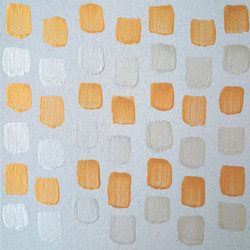
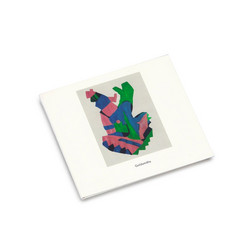
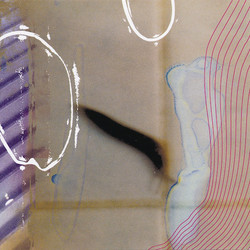
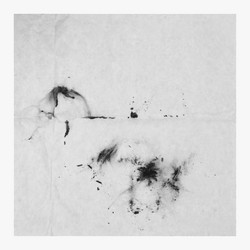
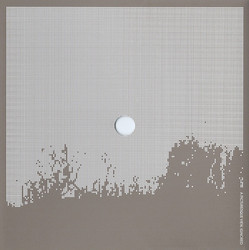
Technical and visual details reinforce the sense of care. The performance was captured on site by Sven Persson and Kjetil Walther, then mixed by Honoré in The Green Room, Oslo, with mastering by Rupert Clervaux to preserve the work’s extreme dynamic range and intricate low‑level detail. Nina Birkeland’s cover image and Matthew Brandi’s design echo the music’s cabinet‑of‑wonders concept: objects glimpsed, not fully explained; connections suggested rather than diagrammed. Produced by Wastell, the project arrives explicitly “in memory of Nils Christian Moe‑Repstad (1972–2022),” with thanks to his close collaborators and family. As a live recording, Wunderkammer feels both fragile and complete - a one‑time alignment of five sensibilities that manages to be zoned‑out, dreadfully quiet and yet charged with a dark, poetic tension, like a room in which every object has been placed with intent, waiting for someone to come in and listen closely enough to hear it hum.