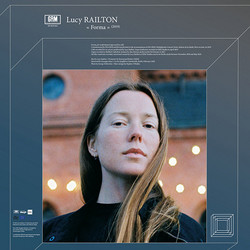
Max Eilbacher, Lucy Railton
Indifferent Rocks Are Rearranged Into A Dam
Tracked express shipping from Italy, no customs or import VAT in the EU. Shipping costs
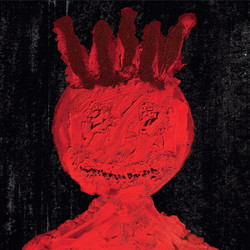
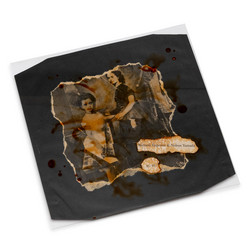
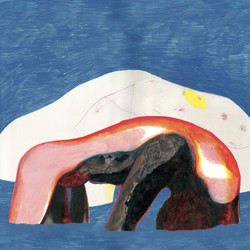
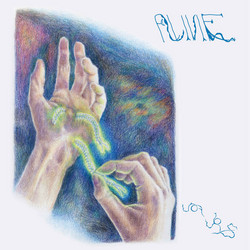
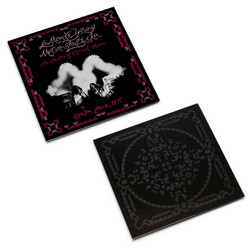
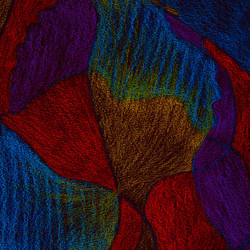
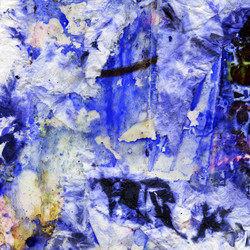
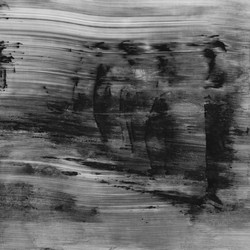
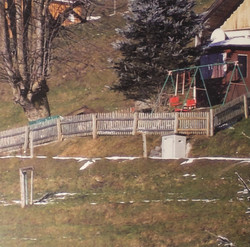
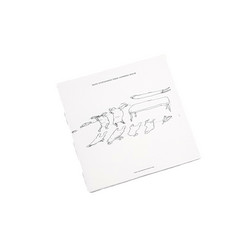
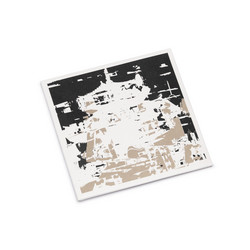
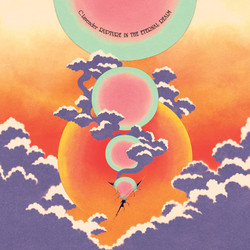
Originally presented as a quadraphonic fixed media piece. Designed by Philip Marshall. Covert artwork by Owen Schuh. Indifferent Rocks Are Rearranged into a Dam takes various - and sometimes competing - understandings of “Interval”, “isolation” and “distance” as its point of conceptual and compositional departure. Taking its title from a line in Elaine Scarry’s book The Body in Pain, Indifferent Rocks… explores different forms of detachment and abstraction present both in the piece’s making, as well as the post-pandemic cultural environment in which it was composed. We were interested in the perceptual limit of comprehending distances both social and musical: between speakers in a room; between partials; between attacks and isolated electronic tones; between virtuosity and fixed media; between performance separated by an ocean to its playback.
The tonal breadth of Lucy’s cello spectra was analyzed and digitally resynthesized as a collection of partials. For the initial analysis process, cello passages of quick fluctuating pitch were chosen. We wanted to break down and approach the sonorous materiality of the cello as a non-musical object. By breaking down the cello into indifferent materials -only to then rearrange and mimic its musical gestures, we wanted to see how meaning can be divested and then reimbued, with an ear to questioning that precise process of “reconstruction” of meaning: just as rocks are indifferent to containing and holding water “for us” until they have been placed into the configuration of a dam.
By focusing on the minutiae of the sound - “zooming in” - the spectral gaze renders the cello as raw inharmonic material. From these collected pitch sets, the distance between each frequency was calculated to construct a harmonic system by which sound was synthesized. At that point, what form could be given to arrange these static tones, to give them life: does that life require re-approximating the sound of its source, a kind of mimicry of cello as an “authentic” source, or is there another kind of life that can be
wrenched from these soundings? In oscillating between these two poles we hoped to reframe the listeners’ relationship with a pitched instrument. We wanted to tease the boundaries through which the cello becomes experienced. The simplified synthetic tones, intervallically arranged against Lucy’s cello parts are the means by which the distance between cello, synthesis, and sonic meaning are ascribed
significance.
Since we were already preoccupied with the uncanny distances between source and output, original and resynthesized mimic - the reductions and slips required in bridging that distance - we felt it suitable to
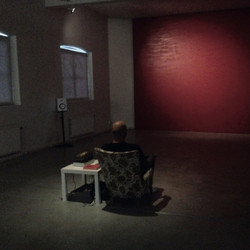
document the multi-channel piece via a simple recording of the abstracted aural gaze of others. Four speakers become two ears, a multi-channel field is reduced to stereo and multiple perceiving bodies in the Fridman Gallery are now simply the backs of heads, watched by two eyes on a screen.
| 1 | Indifferent Rocks Are Rearranged Into A Dam | 26:15 |
- Owen Schuh
- Artwork
- Lucy Railton
- Composed By
- Max Eilbacher
- Composed By
- Philip Marshall
- Design