"Halfway between the Summer Solstice and Autumn Equinox falls the pagan Lughnasadh festival marking the beginning of the harvest season in Ireland. Pas de la Demi-Lune was originally composed and performed for this festival in a celebration event organized by Phelim Ó Laoghaire. For that occasion, Dylan performed the piece in the river crossing leading to the Brennanstown Dolmen in Co. Dublin, a megalith portal tomb estimated to have been erected sometime in 4000-2500 BC.
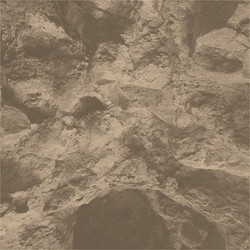
They chose to record in a different type of portal: a cave perched on top of the white jagged cliffs of Les Calanques, which lie just outside of Marseille and overlook the Mediterranean. For those who know Marseille, it is infamous for its scorching heat, animous Mistral wind, and incessant cicadas. The Mistral bears a mythical presence in Marseille, a bracing cold wind blowing south over the sea. It is personified as an ever-present entity, a dance-partner, a threshold keeper, the constant sound of it tempts to loosen the soundness of one’s mind. The environment of Marseille shapes the habits and contours of one's days: humans are more akin to stones buffeted and sculpted by the qualities of the environment.
The environment and the performance sonically bleed into each other across blurred thresholds. The recording of Pas de la Demi-Lune is not only a document of the piece, but a field recording. Through the resonance of the cave and the amplifying qualities of the valley, we hear the buzzing of transducers gliding across metal surfaces, brass bells, and sparklingly high organ pipes alongside insects, birds, wind, boats, and planes. One is invited to hear the performance as akin to a kind of natural object embedded in the landscape, operating in its own synchronic temporal logic, with Dylan melding into the environment like a stone, a piece of lichen, or a buffeting wind howling across the stalactites of the organ pipes
All this comes together to create a space for the listener, the performance, and the environment to be brought into a relationship of co-existence. Soft attention meanders between their performance and the environmental sounds, for they are sometimes only ambiguously delineated. The noisiness of Pas de la Demi-Lune does not vie for attention, but rather maintains a hermetic interiority, even a humility. It ebbs and crashes forward, sometimes withdrawing into taut stillness, sometimes exploding outward, but always maintaining a steady state of sounding. Sound artist and ecologist Francisco López has written about how the concept of a ‘quiet’ nature is a white colonial fabulation meant to control a moral high ground over noisy natural sound environments, and noisy cultures, especially of the global south. Though using post-industrial materials in their performance, we’re invited to recognize that noisiness is not limited to post-industrial soundscapes, but endemic to vibrant natural environments. Read: no docility.
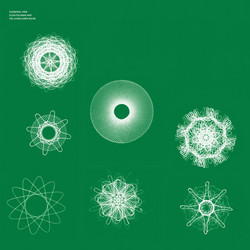
The pitch structure of the sine tones mirrors natural processes, drawing on James Tenney’s algorithm for crystal growth in harmonic space, where each new point added has the smallest sum of harmonic distance to all other points in the set. This process creates a symmetrical crystal growth pattern of increasing harmonic complexity. Tenney’s crystal growth algorithm speaks back algorithms of self-preponderance that permeate the natural world– the reproduction of species, ocean waves, seasonal changes, the procreation of insects. Pas de la Demi-Lune seems to even amplify the qualities of the surrounding environment: strong frequencies cause insect-like small transducers to buzz and hop around the metal trays they perch on, Dylan guides them around nodes of resonant frequencies and keeps them from launching overboard.
‘Pas de la Demi-Lune’ draws its name from the path that Dylan and Lugh hiked to access the cave the day they recorded. But, more speculatively, ‘pas de la demi-lune’ could be read doubly, as rhyming with a type of dance, maybe a cousin of the balletic ‘pas de deux’. When read with this constellation of connotations, one feels they are witnessing a long-occurring, inscrutable yet highly measured ritual that we as listeners are only fragmentarily privy to, having just stumbled upon it on our aural wanderings. It is in no small part that the continual dance of the moon shapes the patterns, productions, and obsessions of the creaturely and animate of the earth." - Madison Greenstone