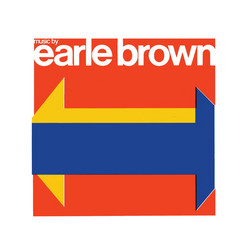
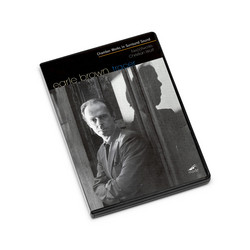
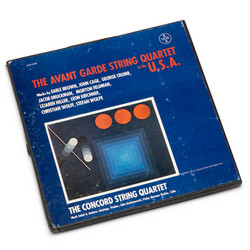
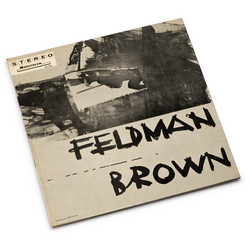
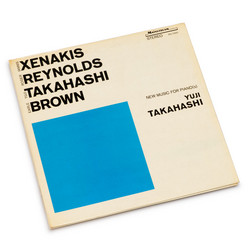
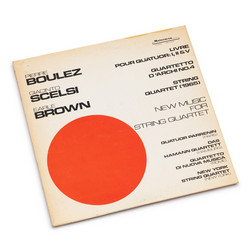
Earle BrownFeaturing: David Tudor
Times Five / Octet I / December 1952 / Novara (LP)
condition (record/cover): EX / EX
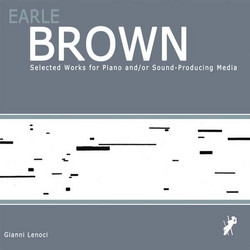
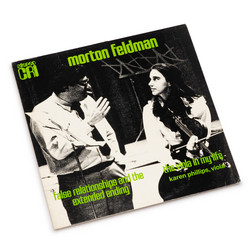
Earle Brown's position in the history of postwar music is both central and undervalued - the composer who, alongside Cage and Feldman, developed open form as a compositional principle, who pioneered graphic notation with December 1952 (a score of abstract marks on a white field, from which performers derive their own readings), and whose Available Forms series pioneered real-time compositional decisions by the conductor during performance. This CRI LP gathers four works that document the range of his practice: Times Five, for five instruments and four-channel tape, a spatial work; Octet I, a dense chamber work; December 1952, the graphic score that has become his most discussed and most reproduced work; and Novara, a later orchestral piece. An essential document of one of the great figures of American experimentalism.