★Wergo
Polifonica - Monodia - Ritmica / Canti per 13 / Canciones a Guiomar / Hay Que Caminar Soñando
Four works by Luigi Nono from 1951 to 1989: Polifonica-Monodia-Ritmica, Canti per 13, Canciones a Guiomar and his last work, "Hay que caminar" soñando for two violins, with Ensemble UnitedBerlin, United Voices and Angelika Luz under Peter Hirsch.
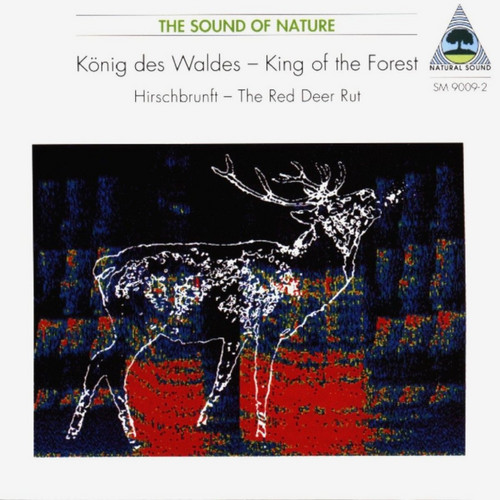
König des Waldes - Hirschbrunft
The red deer rut on the Darss peninsula on the Baltic coast of Germany, recorded by Walter Tilgner in September 1994 with a Neumann KU 100 dummy head, from midday to dawn; booklet with sonograms. Bonus: a 1934 shellac by Ludwig Koch.
Six Chansons / Fünfstimmige Madrigale / Five Songs on old Texts / Kanons a cappella
A cappella choral works by Paul Hindemith: Six Chansons after Rilke (1939), the Zwölf Madrigale on Weinheber texts (1958), Five Songs on Old Texts (1937) and nine canons, sung by the Rundfunkchor Berlin under Stefan Parkman, recorded 1996.
Shadows & Smiles
Duo album by Manfred Schoof (trumpet, flugelhorn) and Rainer Brüninghaus (piano, keyboards), six original pieces recorded in October 1987 and May 1988 at Tonstudio Cornet, Cologne.
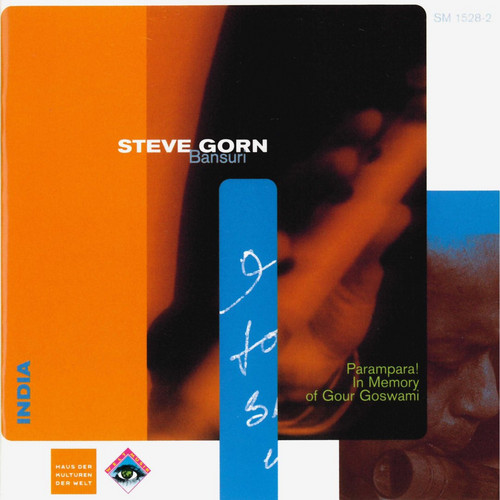
Steve Gorn - Bansuri
Hindustani bansuri music by Steve Gorn, with Samir Chatterjee (tabla) and Annalisa Adami (tanpura), in memory of his teacher Gour Goswami. Recorded on 24 March 1996 at Sender Freies Berlin.
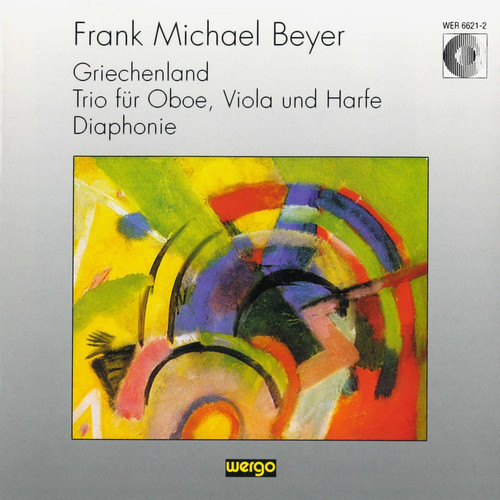
Griechenland / Trio für Oboe, Viola und Harfe / Diaphonie
Orchestral and chamber works by Frank Michael Beyer: Griechenland (1981), the Trio for oboe, viola and harp (1980) with Heinz and Ursula Holliger and Hirofumi Fukai, and Diaphonie (1975), from radio recordings of 1978-1983.
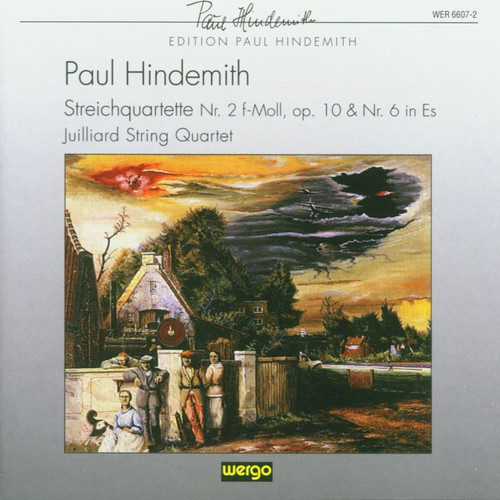
Streichquartett Nr. 2 F-Moll, op. 10 / Streichquartett Nr. 6 in Es
Hindemith's String Quartets No. 2 in F minor, op. 10, and No. 6 in E flat (1943), played by the Juilliard String Quartet (Mann, Smirnoff, Rhodes, Krosnick), recorded in New York in June 1996 for the Edition Paul Hindemith.
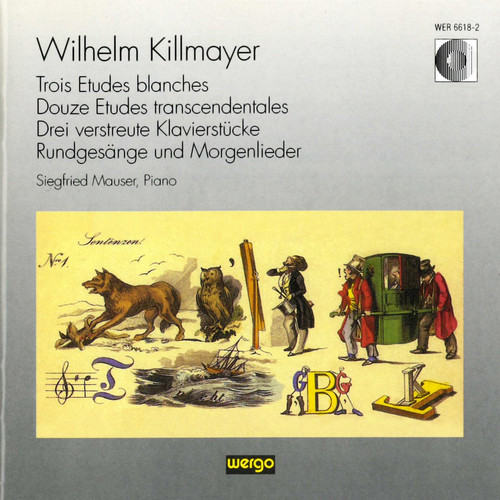
Trois Etudes blanches / Douze Etudes transcendentales / Drei verstreute Klavierstücke: Canto melismatico / Albumblatt / Frühlingslied / Rundgesänge und Morgenlieder
Piano works by Wilhelm Killmayer, from the Trois Etudes blanches and Douze Etudes transcendentales to Rundgesänge und Morgenlieder and three pieces from 1957-1968, played by Siegfried Mauser.
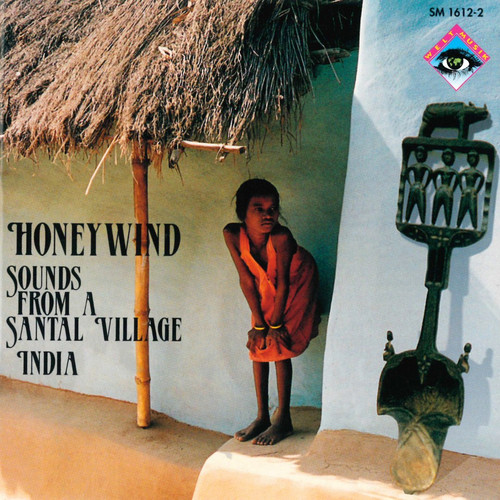
Honey Wind
Soundwalk through a Santal village near Santiniketan, West Bengal, from morning to night, with songs, dances and daily life. Recorded in November 1994 by Peter Pannke and Andres Bosshard.
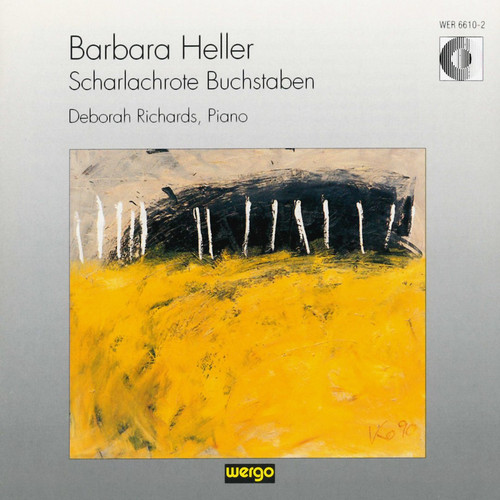
Scharlachrote Buchstaben
Piano works by the German composer Barbara Heller (born 1936), including Scharlachrote Buchstaben, Currants - Johannisbeeren, Das Quintenbuch and Un Poco, played by Deborah Richards.
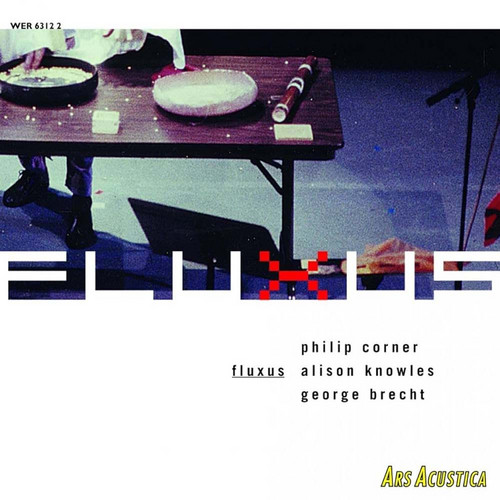
Fluxus
2025 stock. Three rather meditative pieces from the repertoire of Ars Acustica, the series of radio art edited by Klaus Schöning, but nevertheless: Fluxus! Philip Corner, Alison Knowles and George Brecht appeared together in performances, and they are also connected by their relationship to John Cage's aesthetic, by work with chance operations, and by Zen. Explaining Fluxus is like wanting to hold a river in your hand.
Corner's Satie's Rose Cross as a Revelation takes its cue from Erik Satie's m…
Pierrot lunaire Dreimal sieben Gedichte aus Albert Girauds „Pierrot lunaire“ (Melodramen), op. 21
2025 stock WERGO's unique "studio reihe" series continues with a rather special CD release:
The present recording of Arnold Schoenberg's "Pierrot lunaire" was the first long-playing record released by the newly founded label WERGO in 1962, which laid the foundation of the label's decades-long story of success. This important recording –with the soprano Helga Pilarczyk and under the direction of Pierre Boulez – has not been available on CD up to now. Now the label releases this highlight from its…
Komposition Für Streichquartett / Komposition Für Violine / Disappearing Musics
2025 stock Jakob Ullmann's career can be measured by the obstacles placed in his path. It was in the teeth of these obstacles that he learnt his craft: they have left their mark on his artistic stance, and the fact that he ultimately overcame them proved the rightness of his approach. For a number of reasons, Ullmann's works failed to blend into the musical landscape of the former state of East Germany. Avoiding peremptory gestures and unalterable laws, his restrained scores seemed strange and a…
Singbarer Rest / Die Blinden
Walter Zimmermann's Singbarer Rest (1993) for nine high female voices and sampler, on Edmond Jabès, and Die Blinden (1984), static drama after Maeterlinck, with Neue Vocalsolisten Stuttgart and Junges Philharmonisches Orchester Stuttgart under Manfred Schreier.
Offene Landschaft mit obligatem Ton e / kommen und gehen / Dialog imaginär 4 / Streichquartett Nr. 3 / De musica
Georg Katzer: Offene Landschaft mit obligatem Ton e (Chamber Orchestra of Europe, Eötvös), kommen und gehen, Dialog imaginär 4 for bass clarinet and tape (Wolfgang Fuchs), String Quartet No. 3 (Arditti Quartet) and De musica; recordings 1984-1993.
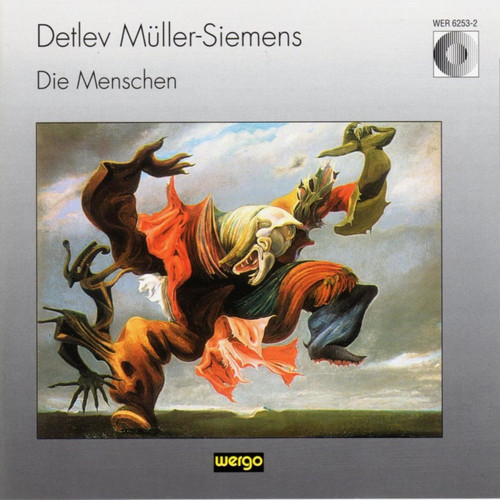
Die Menschen
Detlev Müller-Siemens' opera Die Menschen after Walter Hasenclever, recorded live at the Theater Basel on 14 and 16 February 1993 with Mark Holland, Marianne Larsen and the Basler Sinfonie-Orchester under Michael Boder.
Sieben Worte / In Croce
Sofia Gubaidulina's Sieben Worte (1982) for cello, accordion and strings and In croce for cello and accordion, played by Julius Berger and Stefan Hussong with the Kammerorchester Diagonal under Florian Rosensteiner.
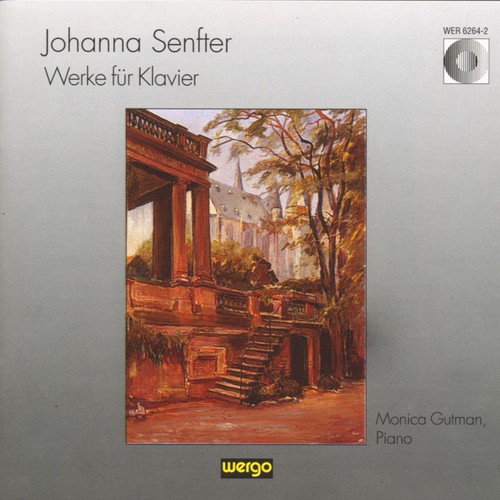
Werke für Klavier
First recording of piano works by Johanna Senfter (1879-1961), Max Reger's pupil, from early character pieces to the late op. 129, played by Monica Gutman; recorded in Mainz in March and April 1994.
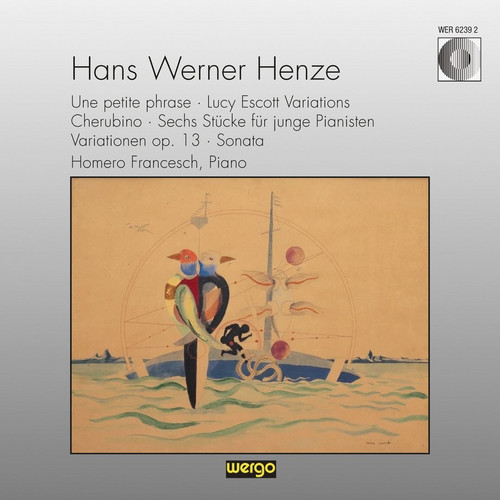
Une petite phrase / Lucy Escott Variations / Cherubino/ 6 Stücke für junge Pianisten / Variationen op. 13 / Sonata
Hans Werner Henze's solo piano music, including Une petite phrase, the Lucy Escott Variations, Cherubino, pieces from Pollicino, the Variations op. 13 and the Sonata per pianoforte, played by Homero Francesch.
Missa Moguntina
Volker David Kirchner's Missa Moguntina for soloists, choir and orchestra, recorded at its premiere in Mainz Cathedral on 21 November 1993 with the Mainz Cathedral choirs and orchestra under Mathias Breitschaft.
Cantabile per Archi / Botschaft / Musica Dolorosa / Symphonie "Stimmen"
String orchestra works by Pēteris Vasks: Cantabile per archi, Vēstījums (Message), Musica dolorosa and the symphony Balsis (Voices), with the Latvian National Symphony Orchestra and the Latvian Philharmonic Chamber Orchestra, recorded in Riga in May 1992.
Héloise
Live recording from Donaueschingen, 17 October 1992: Michael Riessler's project on Abélard and Héloise, with Valentin Clastrier, Michel Godard, Renaud Garcia-Fons, Rabih Abou-Khalil and others, recorded by Südwestfunk.
Das Klavierwerk - Vol. III
Volume III of Siegfried Mauser's Hindemith piano series: the Third Sonata (1936), short pieces from 1920-22, the Kleine Klaviermusik op. 45 no. 4, Wir bauen eine Stadt (1930) and a sonata movement from 1941.
Die Nacht aus Blei / Sappho-Gesänge
Hans-Jürgen von Bose's suite from Die Nacht aus Blei (SWF Symphony Orchestra, Matthias Bamert, May 1983) and Sappho-Gesänge (Liat Himmelheber, Ensemble Modern, Peter Eötvös, live Donaueschingen, October 1983). CD reissue (1993) of a 1985 Wergo LP.
Sheik Chinna Moulana - Nadhaswaram
The nadhaswaram master Sheik Chinna Moulana with S. Kasim and S. Babu (nadhaswaram) and S. Subramanian (thavil), in four Carnatic pieces including a long alap in raga Subha Pantuvarali.

Metal Drops
Three electronic works by Michael Obst, Inside (Infinite Chambers), Metal Drop Music and Ye-Na-Je, realised in 1983 at the Studio for Electronic Music of the Cologne Musikhochschule and, for Ye-Na-Je, with IPEM Ghent.
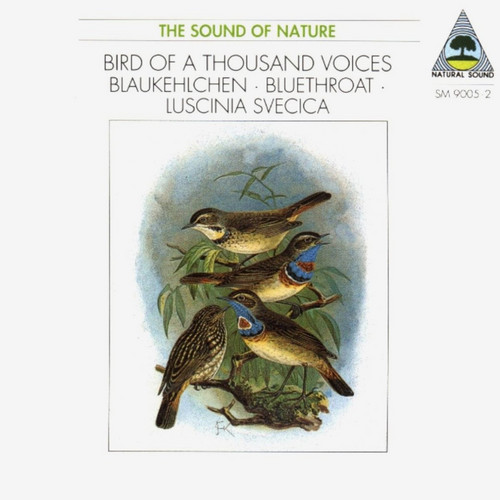
Blaukehlchen / Bluethroat / Luscinia Svenica - Bird of a Thousand Voices
The song of the red-spotted and the white-spotted bluethroat, a mimic of other birds, frogs and bells, recorded digitally by Walter Tilgner; released in 1992 in Wergo's Natural Sound series.
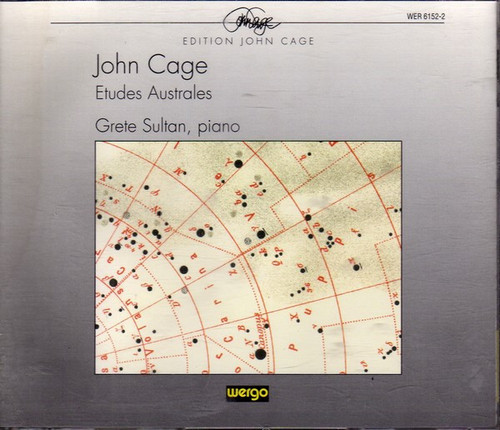
Etudes Australes
'Etudes Australes was composed specifically for Grete Sultan, so this album is among the definitive recordings. As an indeterminate piece for solo piano (okay, well, a "duet for two hands"), this sounds very similar to Music of Changes, Winter Music, etc. Here, though, Cage generates indeterminacy by turning once again to using star charts as tools of composition, as he did previously in the wonderful Atlas Eclipticalis.
In a way, I find the piano to be more suited to star charts than almost any…
Kontakte
Kontakte is a Stockhausen classic from 1959, for electronics, percussion and piano (played here by David Tudor). One of his "moment form" compositions, which "...lead up to no climax, nor do they have prepared, and thus expected, climaxes, nor the usual introductory, intensifying, transitional, and cadential stages which are related to the curve of development in a whole work; they are rather immediately intense and -- permanently present -- endeavor to maintain the level of continued 'peaks' up…
Bildnisse I / Der blaue Harlekin / Trio / Nachtstück
Volker David Kirchner's Bildnisse I, Der blaue Harlekin, Trio and Nachtstück, played by the Hessisches Staatsorchester Wiesbaden (Siegfried Köhler), Bläser Ensemble Mainz, Kreisler Trio and violist Bodo Hersen. CD reissue (1991) of a 1985 Wergo LP.
Sinfonie 'Totentanz' / Requiem 'Messa di Pace'
Volker David Kirchner's Symphony Totentanz, with the Radio-Symphonie-Orchester Berlin under Peter Gülke, and his Requiem Messa di Pace with Maria Bayo, Iris Vermillion, Victor von Halem, the Hamburg Philharmonic and the Riga State Academic Choir under Gerd Albrecht.
Stoicheia
James Wood's Stoicheia (1987-88) for two percussion soloists, two percussion ensembles, keyboards and electronics, played by Steven Schick, Wood, the Darmstadt and Cornwall Percussion Ensembles, recorded at All Saints', Petersham, London.

Zen
Michael Vetter's solo koto improvisations, recorded live without edits at Tonstudio van Geest, Heidelberg/Sandhausen, on 24 March 1985.
Lamento, vier Intermezzi und Marsch / 'Herbstzeit - Autumn' / Streichquartett Nr. 4 'Assonanzen'
Günter Bialas's Lamento, vier Intermezzi und Marsch for piano, the piano quartet Herbstzeit and String Quartet No. 4 Assonanzen, played by Siegfried Mauser, Christian Altenburger, Barbara Westphal, Julius Berger and the Auryn Quartet. Recorded 1988-89.
Kinderlieder / Nacht-Räume / Neun Sonette der Louize Labé
Aribert Reimann's Kinderlieder (1961), Neun Sonette der Louize Labé (1986) and Nacht-Räume (1988), sung by Christine Schäfer and Liat Himmelheber with Axel Bauni and the composer at the piano. Recorded May 1989.
Werke für Violoncello und Klavier - Vol. II
Hindemith's late music for cello and piano: the Sonata (1948), Drei leichte Stücke (1938), Kleine Sonate (1942) and the variations A Frog He Went A-Courting (1941). Julius Berger and Siegfried Mauser, recorded in Munich 1988-89.
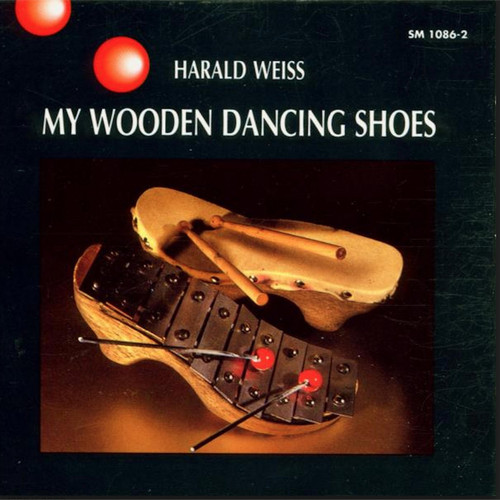
My Wooden Dancing Shoes
Ten original pieces by Harald Weiss, the German composer and percussionist, "for percussion instruments, voices and original sounds". Each takes its title from an old form or dance (Reigen, Country-Song, Nocturno, Marsch, Ländler, Ostinato, Blues, Tango, Rondo, Polonaise) and turns it into something else.
The pieces are honed down to the details, in a highly intelligent and ironically witty style that makes it possible to hear patterns of behaviour, of language and of thought. Weiss speaks, sing…
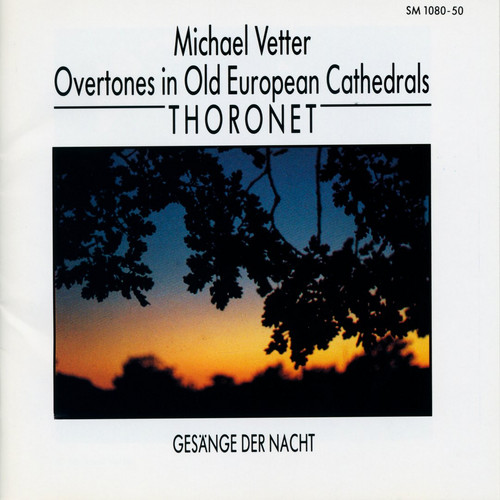
Overtones in Old European Cathedrals Thoronet
Michael Vetter's improvised overtone songs with tambura, Gesänge der Nacht I and II, recorded on 12 and 13 September 1987 in the Cistercian abbey of Le Thoronet.
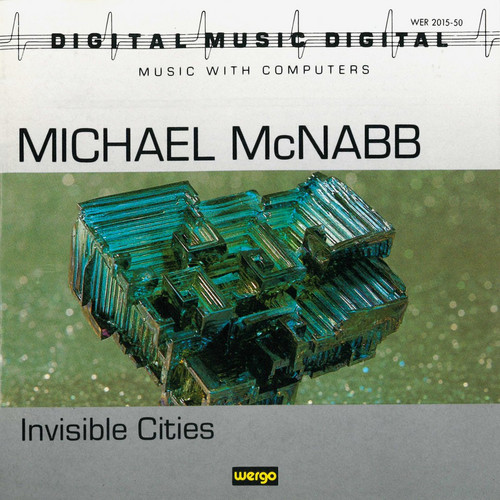
Invisible Cities
Michael McNabb's Invisible Cities, made at CCRMA, Stanford, and first conceived in 1985 for dance theatre after Italo Calvino: six pieces for computer, synthesizer, piano (Artis Wodehouse) and soprano saxophone (McNabb).