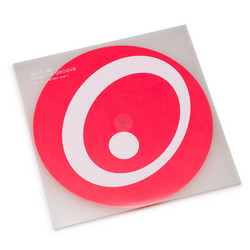
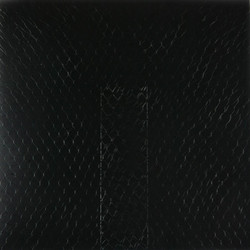
** Hand-numbered 180g Virgin Black Vinyl ** Elyria Sound, the second release from Ojas Music, finds Michael A. Muller standing alone in a Brooklyn room during a winter storm in January 2026, a single guitar feeding a one‑inch analog tape machine in real time. Where his earlier work gravitated toward darker, more atmospheric terrains, and 2024’s Mirror Music threaded together the voices of eleven collaborators, this album is an exercise in radical reduction: one instrument, one space, one take per piece. No overdubs, no safety net, just the most direct path from fingertip to magnetic oxide. That constraint becomes a kind of freedom, revealing how much emotion and architecture Muller can coax from bare, unaccompanied sound.
The title carries a quiet personal mythology. In 2018, housesitting for a friend in Elyria Canyon in the East Los Angeles hills, Muller began sketching the solo music that would eventually form the core of this record. The address became the name of his studio, and when he moved to LA soon after, it crystallised into a way of life that lasted six years: a small domestic cosmos defined by particular lights, smells and textures. Elyria Sound is an intimate homage to that sensorial world. You can feel the fatigue and warmth of late‑afternoon sunlight through a kitchen window; the constant, narcotic wash of helicopters and sirens hovering at the edge of awareness; the blurred glimmer of city lights stretching across the night; the small, tactile details of gravel, dust, lizards and birds. Clacking bamboo, white rose, jade, fig and lemon become more than plants; they’re coordinates in a lived map, markers of a dwelling that functioned as both refuge and reminder that nothing lasts.
To honour that period without embalming it, Muller chose to unsettle his own technique. For Elyria Sound, he developed entirely new tunings, forcing himself to relearn the guitar’s language from the ground up. Familiar chord shapes no longer applied; muscle memory was unreliable. This self‑imposed estrangement keeps the music on a knife‑edge between discovery and fragility. The pieces move between lullaby and lament, built from spare, cyclical figures that circle back on themselves at different angles and tempos. Motifs recur like memories: similar but never identical, slightly warped by time and perspective. There is a sense of someone pacing the same rooms over and over, seeing new shadows each time.
One piece, “Arundel,” reaches outward to acknowledge the lineage from which this music quietly descends, paying tribute to David Pajo (Papa M, Slint, Tortoise) and, by extension, to a strain of guitar playing that prizes texture, patience and understatement over dramatics. The influence shows not as imitation but as ethos: notes allowed to decay fully, silences treated as structural, an aversion to the easy crescendo. Throughout the album, Muller resists big gestures in favour of small, persistent shifts that accumulate weight over time. A single harmonic, a slightly altered bass note, a tiny rhythmic hesitation can feel seismic in this stripped‑down context.
The recording process reinforces that intimacy. Tracked live to one‑inch tape, each performance is a document of a particular moment in the room: the way the guitar resonates against the winter air, the subtle halo of the storm outside, the tension between control and the slight unpredictability of analog equipment. Multi‑Grammy‑winning engineer Jonathan Low records and mixes with a clarity that keeps the instrument close but not claustrophobic, preserving both the grain of the strings and the space they inhabit. The masters are then run to tape and sent to Germany, where Frederic Stader cuts the lacquer; pressing takes place at the former EMI plant on the outskirts of London, in partnership with The Vinyl Factory. The physical LP thus traces a path from Brooklyn’s weather to European vinyl, carrying its own undercurrent of travel and translation.
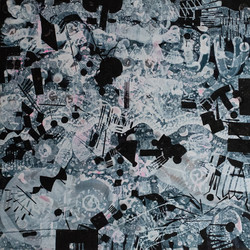
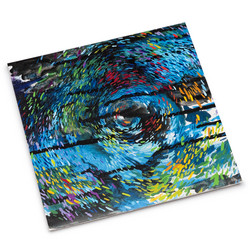
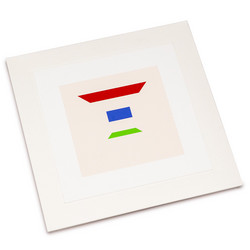
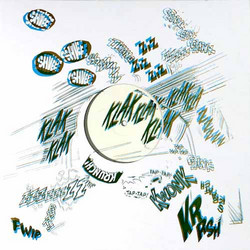
Visually, the record is anchored by cover artwork from Dennis Foster, which serves as a deliberate counterweight to the music’s apparent simplicity. Where the pieces themselves are economical and restrained, the image opens another dimension - hinting at complexity, abstraction or colour fields that the ear might only sense indirectly. It is not an illustration so much as a second surface, another way of thinking about the same material: an externalisation of the inner weather the music tracks.









![data-cosm [n°1] Exibition Booklet](https://cdn.soundohm.com/data/products/2026-04/Ikeda_DataCosmNo1_Book_01-jpg.jpg.250.jpg)


![data-cosm [n°1]](https://cdn.soundohm.com/data/products/2026-02/ikedda-data-cosm-1-jpeg.jpeg.250.jpg)