Pierre Schaeffer
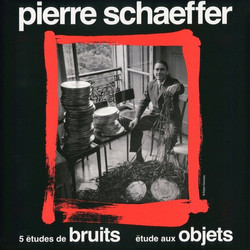
Étude Aux Objets / Étude Aux Allures / Étude Aux Sons Animés / Étude De Bruits / L'oiseau RAI / Suite Quatorze (LP)
Tracked express shipping from Italy, no customs or import VAT in the EU. Shipping costs
condition (record/cover): NM / NM - Silver foil front and back sleeve. Green labels. Pierre Schaeffer didn't just invent musique concrète; he spent decades arguing with his own invention, and the Philips LP gathering Étude Aux Objets / Étude Aux Allures / Étude Aux Sons Animés / Étude De Bruits / L'oiseau RAI / Suite Quatorze documents that magnificent quarrel. These aren't academic exercises despite the pedagogical titles. They're the laboratory notebooks of a man who cracked open the atom of sound and then couldn't stop tinkering with the fallout.
What hits you first is the sheer physicality. Schaeffer's locked grooves and spinning objects carry a weight that later electronic music, all those pristine sine waves, those digital antiseptics, would systematically bleach away. John Cage was liberating silence across the Atlantic; Schaeffer was liberating noise, but noise with mass, with texture you could practically chew. The Étude de Bruits from 1948 remains genuinely shocking: trains, spinning pot lids, the detritus of industrial civilization transformed into something that anticipates Nurse With Wound by three decades.
And yet there's also a Cartesian rigor here that separates Schaeffer from mere provocation. He wasn't interested in chaos; he was interested in taxonomy, in understanding why certain sounds behave like musical objects and others refuse. This tension between the visceral and the analytical is what makes these études inexhaustible. Philips granted prestige-series treatment to work that questioned every assumption prestige usually protects.
Format
A collection of Pierre Schaeffer's études (studies) of musique concrète.
Silver foil front and back cover.
Release notes
A collection of Pierre Schaeffer's études (studies) of musique concrète. Silver foil front and back cover.
| A1 | Étude Aux Objets | 16:40 | |
| A2 | Étude Aux Allures | 3:45 | |
| A3 | Étude Aux Sons Animés | 4:15 | |
| B1 | Étude De Bruits | 12:25 | |
| B2 | L'oiseau RAI | 2:35 | |
| B3 | Suite Quatorze | 9:15 |