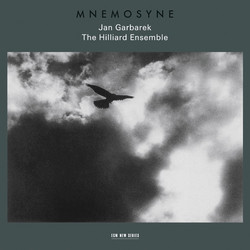
Perotin, The Hilliard Ensemble
Perotin
FormatCDLabelECM New SeriesGenreComposition
Arriving from the supplier (ships as soon as it reaches us)
Tracked express shipping from Italy, no customs or import VAT in the EU. Shipping costs
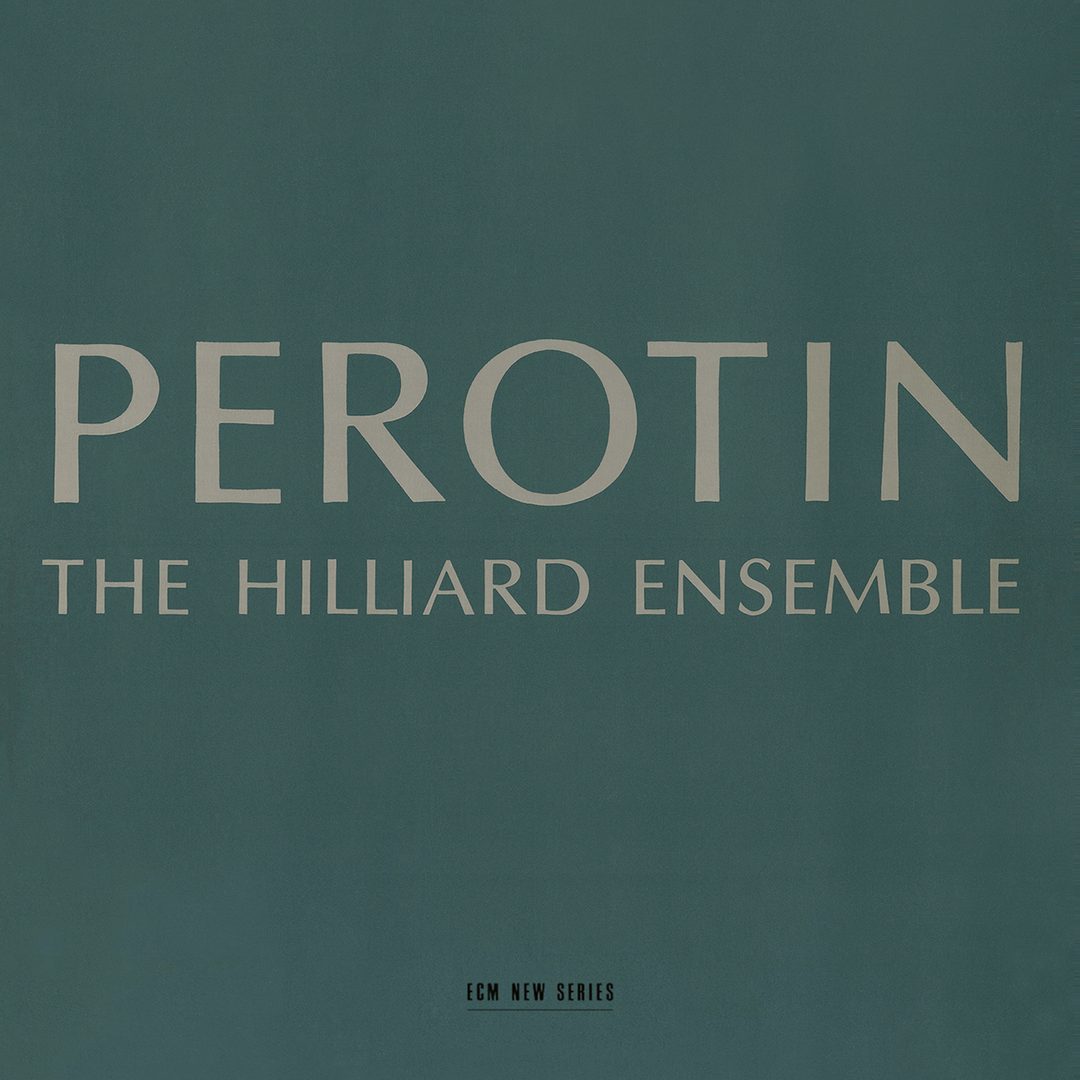
Perotin is the 1988 recording by The Hilliard Ensemble of polyphony from the Notre-Dame school in Paris, the music written for the cathedral around 1200. Perotin, known to a thirteenth-century writer as Magister Perotinus, is credited with extending this polyphony from two voices to three and four. The disc sets five works attributed to him beside four anonymous pieces of the period. At its two ends stand Viderunt omnes and Sederunt principes, the four-voice organa written for Christmas and for St Stephen's Day, each close to twelve minutes long.
The ensemble was directed by the baritone Paul Hillier, who also wrote the booklet notes. The other singers are the countertenor David James, the tenors John Potter, Rogers Covey-Crump and Mark Padmore, and two more voices, with the line-up changing from piece to piece. The whole programme, about 67 minutes of music, was recorded in September 1988 at Boxgrove Priory in Sussex. Peter Laenger engineered and Manfred Eicher produced.
In these organa a plainchant melody is drawn out into long held notes in the lowest voice, while two or three upper voices move above it in patterned rhythms. In Viderunt omnes the texture shifts into a higher register for its final section, a moment Tyran Grillo of ECM Reviews counted among the most sublime in music. Dum sigillum is sung by just two tenors, Potter and Covey-Crump. Beata viscera, a setting of a poem by Philip the Chancellor, is a single unaccompanied line, the only monophonic work credited to Perotin. The anonymous Veni creator spiritus, O Maria virginei and Isaias cecinit sit between the large organa as shorter interludes.
In his 2010 review Grillo wrote that "the interpretations are restrained yet full of overwhelming power." Of the two tenors in Dum sigillum he observed: "They flit and fall, taking one step back for every two taken forward." In a 2006 review for MusicWeb International, Gary Higginson called it a revelatory recording and wrote that "that disc has never been bettered by anyone ... not even by themselves."
This is the CD edition of ECM New Series 1385, first released in October 1989.
Release notes
Digital Recording, September 1988 Boxgrove Priory, Sussex, England An ECM Production ℗ 1989 ECM Records GmbH © 1989 ECM Records GmbH Issued in a standard jewel case with a black tray and a 36-page booklet. Very similar to [r1200324] but different disc label layout. See images.
| 1 | Viderunt Omnes | 11:36 | |
| 2 | Veni Creator Spiritus | 7:29 | |
| 3 | Alleluia Posui Adiutorium | 7:34 | |
| 4 | O Maria Virginei | 4:49 | |
| 5 | Dum Sigillum | 7:37 | |
| 6 | Isaias Cecinit | 1:43 | |
| 7 | Alleluia Nativitas | 8:31 | |
| 8 | Beata Viscera | 6:12 | |
| 9 | Sederunt Principes | 11:54 |
- Gordon Jones
- Baritone Vocals (1, 3, 4, 7 to 9)
- Paul Hillier
- Baritone Vocals (1, 3, 4, 7 to 9), Directed By, Liner Notes [English]
- Perotin
- Composed By (1, 3, 5, 7, to 9)
- David James
- Countertenor Vocals (1, 2, 6 to 9)
- Barbara Wojirsch
- Design [Cover Design]
- Peter Laenger
- Engineer, Recording Supervisor
- The Hilliard Ensemble
- Ensemble
- Danièle Robert
- Liner Notes [French Translation]
- Regine Lienhard
- Liner Notes [German Translation]
- Manfred Eicher
- Producer
- Charles Daniels
- Tenor Vocals (1, 7, 9)
- John Potter
- Tenor Vocals (1 to 3, 5 to 9)
- Mark Padmore
- Tenor Vocals (1, 3, 7 to 9)
- Rogers Covey-Crump
- Tenor Vocals