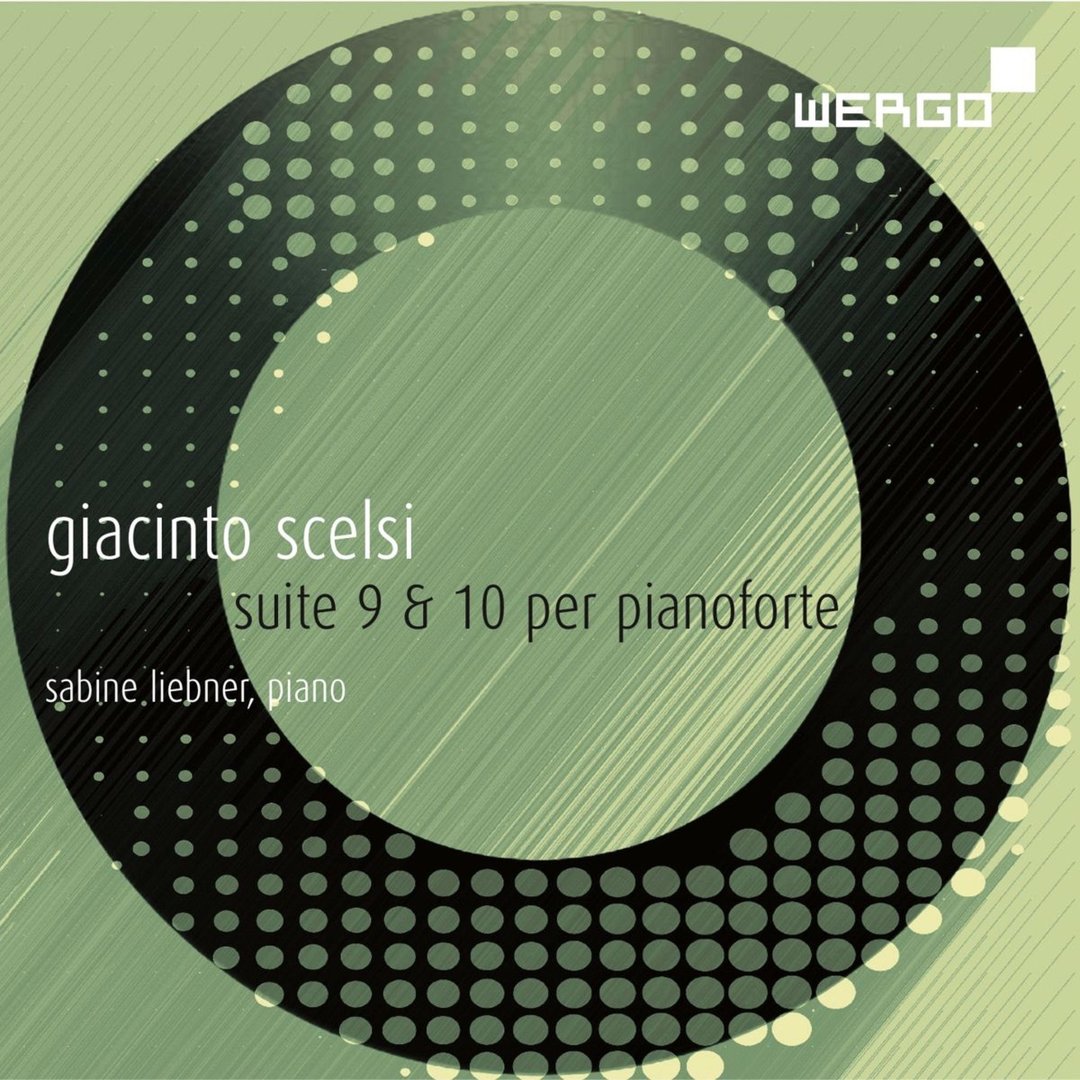
Giacinto Scelsi
Suite 9 & 10 per Pianoforte
FormatCDLabelWergoGenreComposition
Arriving from the supplier: On backorder (ships as soon as it reaches us)
Tracked express shipping from Italy, no customs or import VAT in the EU. Shipping costs
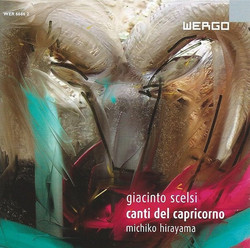
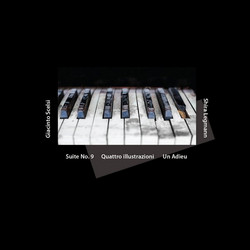
Two of the piano suites of Giacinto Scelsi, played by Sabine Liebner: Suite n. 9 - Ttai (1953), in nine movements, and Suite n. 10 - Ka (1954), in seven. Both come from the years when Scelsi worked by improvising at the piano and having the results written down. Both carry titles taken from Eastern thought, and together they make an hour of slow, concentrated piano music.
Scelsi (1905-1988) never saw himself as a composer in the usual sense. At first he produced sounds and formal ideas that a professional composer then worked out into scores. Later he sought direct access to the sound. He sat at the piano, improvised, recorded the results on tape and had them transcribed as exactly as possible. For these suites the transcriber was Vieri Tosatti. Scelsi called the method "an inspired roll of dice" and liked to describe himself as a "postman" who receives messages and delivers them. Liebner recorded the suites in 2014 in the Kammermusiksaal of Deutschlandfunk in Cologne, in coproduction with Deutschlandradio. The booklet notes are by Friedrich Jaecker.
Scelsi had studied Western philosophy closely and felt at home in the Roman Catholic Church. His outlook was nonetheless shaped by Hinduism, Buddhism, Taoism and Zen. Ttai is based on the eleventh hexagram of the I Ching, "tai", which means peace. In the printed score Scelsi asks that the suite be played and heard with the greatest inner calm, and warns nervous people to stay away. Its opening movement settles into a static texture, and it runs to 36 minutes. Ka is shorter and harder in tone, with markings such as "squillante", "pungente" and "violento". The score says that "ka" has several meanings, the main one being "essence". In Sanskrit it is also an interrogative pronoun, "who?" or "what?", pointing to something unnamable hidden behind appearances.
Reviewing the disc for MusicWeb International, Dominy Clements found Liebner's performances "as convincing as any I could imagine". He praised the recording's "concert-hall perspective with a nice balance between detail and atmosphere". The pieces ask little in the way of conventional virtuosity; their difficulty lies in inhabiting their layered inner world.
CD, Wergo WER 6794 2, released in 2015 (total time 59'36"), part of Wergo's series of recordings by Sabine Liebner.
| Suite N. 9 - Ttai | |||
| 1 | I | ||
| 2 | II | ||
| 3 | III | ||
| 4 | IV | ||
| 5 | V | ||
| 6 | VI | ||
| 7 | VII | ||
| 8 | VIII | ||
| 9 | IX | ||
| Suite N. 10 - Ka | |||
| 10 | I | ||
| 11 | II | ||
| 12 | III | ||
| 13 | IV | ||
| 14 | V | ||
| 15 | VI | ||
| 16 | VII | ||
- DeutschlandRadio
- Co-producer
- Giacinto Scelsi
- Composed By
- Friedrich Jaecker
- Liner Notes
- Sabine Liebner
- Piano