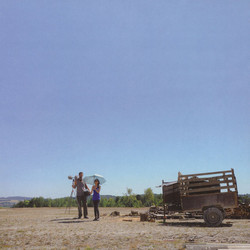
During a 2016 trip to Colombia, I was very fortunate to be welcomed by the staff of the Rio Claro Natural Reserve, located in the central Cordillera. After several days of recording in the caves—the ones open to the public—inhabited by small colonies of cave-dwelling Guacharos (Steatornis caripensis), Juan Guillermo Garcés, director and founder of the Rio Claro sanctuary, allowed me to access a secret location outside of the reserve, home to what ornithologists reckon is one of the largest known colonies of these birds in Colombia.
The only species of its kind, the Cave Guacharos (also known as Oilbird), is a gregarious, cave-dwelling animal that has developed the rare echolocation abilities usually found in cetaceans, bats and, more rarely, mammals. While the vast majority of echolocation signals known to exist in the animal world operate in a spectrum that is inaudible to humans, the signals emitted by Guacharos occur in the medium/high range of our auditory spectrum.
Although Alexander Von Humboldt and Aimé Bonpland reported the existence of these animals to Europe in 1799, and Von Humboldt described them between 1814 and 1817, their nesting sites were already well known to indigenous populations, who saw them as the seat of evil spirits. Traditionally used by these peoples for their meat and cooking oil, the Guacharos were largely decimated by the colonial presence in the area, then hunted until the 1960s before being listed as a protected species in the 1970s.