Giovanni Battista Fontana, Dario Castello, John Holloway, Lars Ulrik Mortensen, Jane Gower
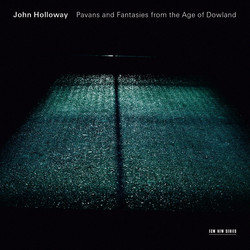
Dario Castello, Giovanni Battista Fontana: Sonate Concertate in Stil Moderno
This album pairs sonatas by two little-documented composers of early 17th-century Italy. Dario Castello led an instrumental ensemble at St Mark's in Venice around 1629, and Giovanni Battista Fontana, born in Brescia, probably died in the plague that reached Padua in 1630. Scholarship can add little more about either man. Their surviving sonatas, though, mark them as remarkable composers for the violin, and violinist John Holloway presents them as territory that early music has still not fully explored.
Holloway plays with harpsichordist Lars Ulrik Mortensen, also his partner on an ECM album of Leclair sonatas, and Jane Gower on the dulcian, the Renaissance forerunner of the bassoon. The trio recorded in June 2008 at the Propstei St. Gerold, a monastery in the Austrian Alps. Stephan Schellmann was the engineer and Manfred Eicher the executive producer. The booklet has an essay by Peter Holman and a performer's note by Holloway, whose other ECM New Series albums include music by Biber, Schmelzer and Veracini.
Castello published two books of Sonate concertate in stil moderno, for one to four parts with continuo, in 1621 and 1629. Six of these sonatas frame the programme. It opens with the Sonata Settima for soprano instrument and bassoon and closes with the Sonata Ottava, the most virtuosic of the set according to the ECM Reviews site. In between come seven of Fontana's eighteen sonatas, published in 1641, some first conceived for other string or wind instruments. Four are for solo violin and continuo, and three set violin against bassoon. These duos, like Castello's sonatas for soprano and bassoon, look ahead to the trio sonata and may count as early examples of it.
Reviewing the disc for The Strad in 2012, Robin Stowell found the playing "stylish, technically assured and rhythmic", with "remarkable precision of ensemble throughout". He also singled out the dance-like passages, the ornamented sections and the contrasts of timbre and range the dulcian brings. Holloway himself calls the sonatas miniatures with an almost operatic range of expression, a description the alternation of slow, reflective episodes and sudden outbursts bears out.
This is the CD edition of ECM New Series 2106, released in March 2012, nearly four years after the recording sessions.