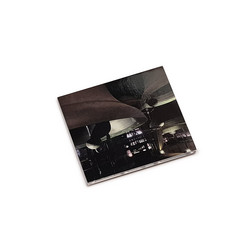
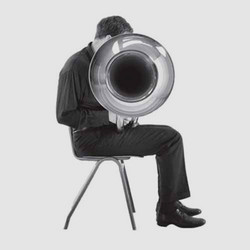
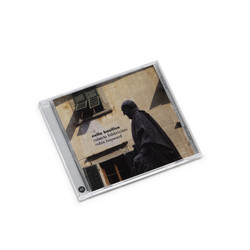
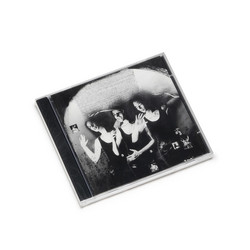
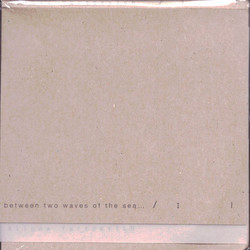
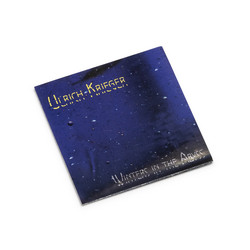
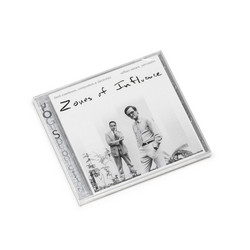
CD, Pogus Productions, 2014. Three pieces, and the first record Robin Hayward made with the fully microtonal tuba he developed in 2009. The title is a name Adolphe Sax gave to an instrument nobody wanted. The saxhorn nouveau basse had six independent valves, each one effectively its own branch of tubing, and it failed: the saxophone went on to a career, this went nowhere. Hayward used Sax's six-valve layout as the model for his own instrument, heavily modified, so that the valves can be operated independently and the octave is divided into steps far smaller than a semitone, giving continuous access to the harmonic series.
The title piece, thirty-two minutes long, then does something with that history. It is written for microtonal tuba and a seven-speaker system: six loudspeakers placed around the room image the six valves of the instrument, one each, with the sound cycling through them and out to a seventh. The independence Sax built into the brass and could not sell is given back to the instrument electrically, a hundred and sixty years late. Writing in The Wire, Richard Pinnell described the effect as Hayward sending multiple signals from the various valves until it sounds like several instruments at once.
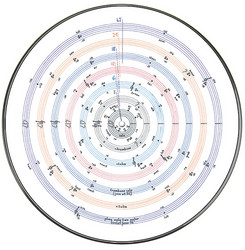
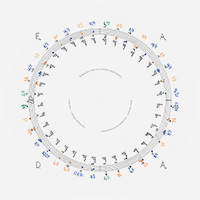
Plateau Square, around twenty-two minutes, is quadraphonic and built on prime numbers. Travel Stain is the odd one out, a duet with Seth Josel on guitar, and lighter in texture than the two solos; Dan Barbiero noted that the ranges and the tone durations of the two instruments pull against each other rather than blending. Hayward has been in Berlin since 1998. Before the microtonal tuba he had already added the noise valve to the instrument's vocabulary, and in 2012 he built the Hayward Tuning Vine, an interface that draws just intonation as a lattice of prime factors rather than as points on a stave, because the tuba he had made needed a notation that did not yet exist. He has worked with Eliane Radigue, Alvin Lucier and Christian Wolff, all of whom sit elsewhere in this selection.
Recorded and mixed by Wilm Thoben with Hayward. Stef, in the Free Jazz Collective, called the result a strange impression of quiet power, harmonious loneliness and solid emptiness.