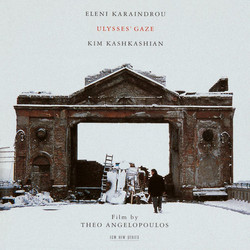
Eleni Karaindrou, Kim Kashkashian
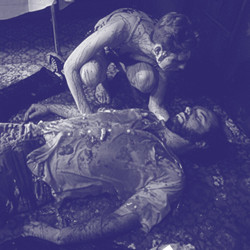
Ulysses' Gaze - Film by Theo Angelopoulos
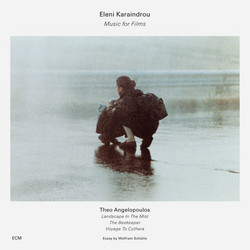
CD version. Ulysses' Gaze is Eleni Karaindrou's score for the 1995 film by Theo Angelopoulos, which won the Grand Jury Prize at Cannes that year. It was the third ECM album of her music for the Greek director, after Music for Films and The Suspended Step of the Stork. The score is built around one mournful theme and its many variations, with Kim Kashkashian's viola as its main voice.
The music was recorded in December 1994 at Sound Studio in Athens, with Lefteris Chalkiadakis conducting a string orchestra and the Eleni Karaindrou Ensemble. Alongside Kashkashian the soloists include oboist Vangelis Christopoulos, accordionist Andreas Tsekouras, cellist Christos Sfetsas and singer Georgia Voulvi, whose voice is wordless. Manfred Eicher produced, with Yannis Smyrneos as engineer. The film follows a director, played by Harvey Keitel, on a long journey in search of three lost reels of an early film by the Manakis brothers.
Most of the seventeen tracks are titled Ulysses' Theme with a variation number, and the theme returns in short episodes between the longer pieces. In one of these the viola leads with the oboe in conversation, and the slow melody turns into a dance as the tempo lifts. The River gives the line to a solo horn over strings, a passage Tyran Grillo heard on ECM Reviews as "like a requiem for a fallen past never to be recaptured". The centre of the album is the seventeen-minute title sequence in five parts. Its closing accordion leads into a short traditional Byzantine Psalm.
In The Christian Science Monitor in 1996, David Sterritt described Karaindrou's music as timeless and unhurried. He recommended this suite and The Suspended Step of the Stork to listeners newly drawn to her work, and quoted her own aim of "looking for the rhythm inside" the images. Gary S. Dalkin, writing for MusicWeb International, found the score repetitive, yet called the viola solos "exquisitely subtle" and singled out the title sequence as the heart of the record. He thought her later score for Eternity and a Day the easier entry point, but heard the more beautiful writing here.
This is the CD edition of ECM New Series 1570, first released in September 1995.